Austin Nieves discovered an uncomfortable truth shortly after becoming a father: while his wife seamlessly entered a network of mothers' groups, parenting classes and supportive friends, he faced isolation in his new role. That realisation sparked a movement that now extends across two Californian counties, as fathers increasingly recognise that modern parenting requires emotional labour and practical skill-building that many men have traditionally received little training for. The gap between readily available maternal support systems and the relative scarcity of paternal equivalents has become stark, prompting men to forge their own communities of care and competence.
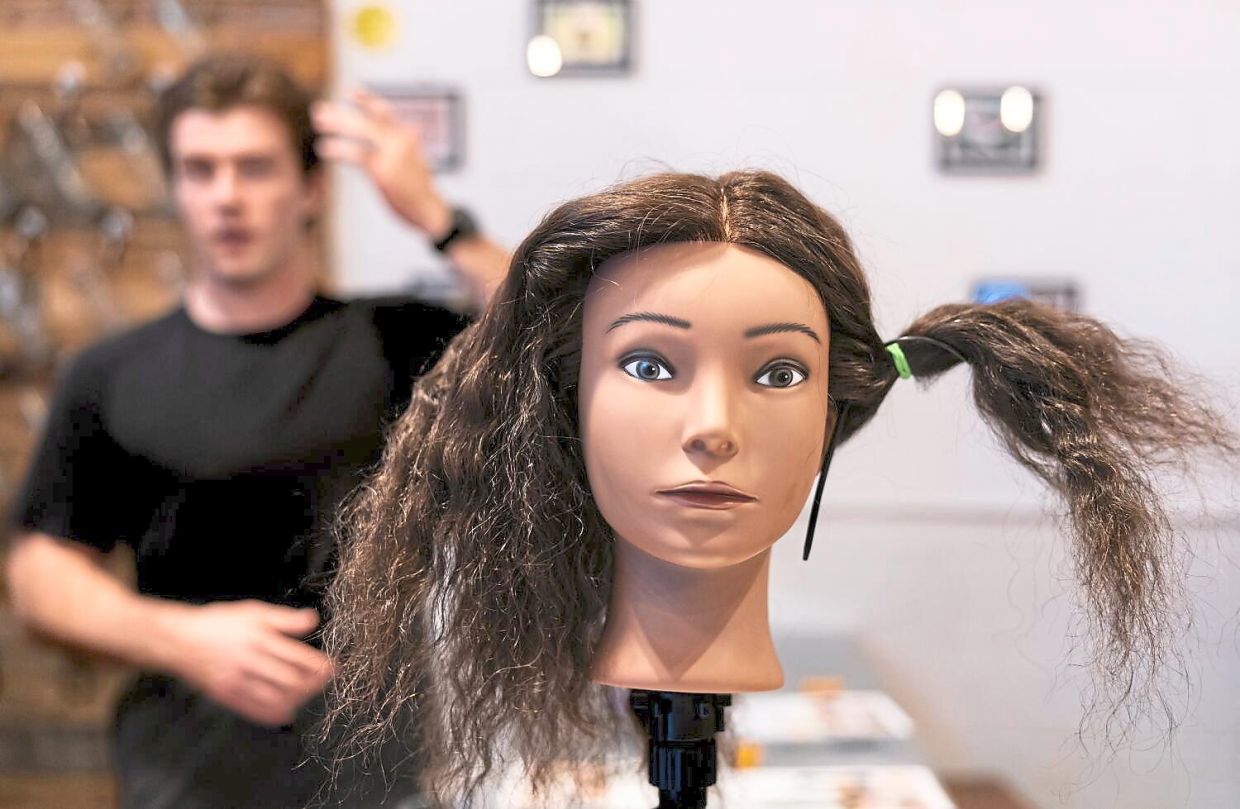
When Nieves relocated from Orange County to Santa Barbara in April 2025, he carried with him the Orange County Dads club he had founded eighteen months earlier. Within weeks of settling into his new home, he had established a Santa Barbara iteration, gathering fifteen men at Captain Fatty's Brewery for what would become the region's talked-about "Pints and Ponytails" event. The evening, modelled on a viral British format, transformed a brewery into an informal training ground where fathers aged thirty to sixty learned fundamental hairstyling techniques from professional stylists working with salon mannequins. What might have seemed an unconventional venue for such instruction became precisely what made participation possible: a casual, male-centred space where vulnerability and learning could coexist with camaraderie.
The appeal of such gatherings lies partly in their acknowledgment of a genuine skill deficit among many contemporary fathers. Austin Jones, a Santa Barbara real estate agent who discovered the group through Instagram, found himself wrestling with the practical challenges of managing his two-and-a-half-year-old daughter's textured curly hair. Before attending the hairstyling session, his capability extended to headbands; the evening's instruction provided him with genuine competence he could deploy at home. For Jones, the value extended beyond hair techniques—it addressed a deeper need he articulated with candour: juggling the roles of husband, father and businessman left him feeling unsupported, operating in isolation despite holding multiple significant responsibilities.
Research has increasingly validated what men like Nieves intuited experientially. A 2006 study published in the Journal of Family Issues by researchers Chris Knoester and David J. Eggebeen documented that active fatherhood correlates with measurable declines in well-being and reduced participation in social activities, particularly as fathers redirect time from friendships to childcare. Clinical psychologists Hillary Halpern and Maureen Perry-Jenkins further identified that the transition from single life to fatherhood frequently triggers emotional turbulence that men often navigate without adequate support structures. More recently, a 2021 study from Stockholm's Karolinska Institute specifically identified father groups as an effective intervention, with participating men reporting not only increased satisfaction but also measurable improvements in self-confidence, relationship quality and reduced loneliness.
The disparity Nieves encountered—his wife immediately joining five mothers' groups while he possessed only his brothers as sounding boards—reflects systemic assumptions about parental roles that persist despite changing family dynamics. The maternal support infrastructure, built over decades and reinforced by cultural expectations, remains substantially more developed than equivalent paternal networks in most communities. This inequality has practical consequences: mothers gain access to expertise, friendship, validation and problem-solving resources; fathers often default to self-reliance or informal networks insufficiently equipped to address their specific experiences and challenges.
When Nieves established Orange County Dads in October 2023, he began modestly with coffee shop gatherings and zoo outings, gradually expanding to include holiday events and practical training like CPR certification. The club's growth proved instructive: wives and partners became critical vectors for recruitment, sharing Nieves' social media content with husbands who might otherwise remain unaware such communities existed. This pattern suggests that even when men recognise their need for paternal peer support, information about such opportunities may not reach them through traditional channels, requiring partners to serve as connectors.
Mikhail Alfon, who attended multiple Orange County Dads meetups with his young son, articulated the straightforward appeal of finding peers at equivalent life stages. The isolation of early fatherhood—watching friends continue childless pursuits while personal life becomes consumed by infant development milestones—creates a profound sense of disconnection. Father groups essentially reconstruct friendship networks around shared circumstance rather than leaving men to stumble through the transition alone or retreat from social connection altogether.
The "Pints and Ponytails" event itself embodied the transformative potential of creating intentional paternal spaces. Nieves observed that arriving fathers displayed visible tension, positioning themselves at the bar's periphery in defensive postures. After initial drinks lowered inhibitions, the group shifted dramatically, moving toward the learning stations with genuine engagement. This progression illustrates how male socialisation often conditions reluctance to admit capability gaps or engage in unfamiliar skill-building, yet appropriate framing and peer presence can dissolve such hesitation remarkably quickly.
For Malaysian readers, the implications warrant consideration. Southeast Asia's rapid urbanisation, changing family structures and increasing female workforce participation mirror patterns in developed nations that preceded the father support movement. As Malaysian fathers increasingly undertake active parenting roles—no longer confined to traditional breadwinner positions—they face similar isolation despite different cultural contexts. The absence of established paternal networks suggests opportunity; communities in Malaysia, Singapore and other regional nations might learn from Nieves' model that father groups require neither elaborate infrastructure nor expertise beyond peer connection and occasional skill-sharing.
The emotional architecture Nieves constructed proves surprisingly straightforward: gather fathers regularly, create low-stakes environments for vulnerability and learning, normalise discussion of parenting challenges, and invite practical skill development. These elements address the core issue that research identifies—fathers' transition to active parenting disrupts their social lives, confidence and well-being, yet few formal systems accommodate this adjustment. Brother-to-brother mentoring, while valuable, cannot substitute for communities specifically designed to validate, educate and sustain fathers through their evolving roles.
Beyond hairstyling or coffee shop meetups, father groups fundamentally reshape how men perceive their own parenting competence and emotional legitimacy. When Austin Jones left the Pints and Ponytails event with renewed capability regarding his daughter's hair care, he gained more than practical technique—he gained belonging within a community that validated his desire to develop fathering skills. That validation matters profoundly in cultures where men traditionally received neither training nor encouragement to excel in domestic domains.
As Nieves plans further Santa Barbara Dads events, and as the Orange County club continues monthly gatherings, the movement reflects broader cultural shifts toward acknowledging that modern fatherhood requires support equivalent to motherhood. The next frontier involves ensuring such communities emerge organically in regions where they do not yet exist, and in this regard, Nieves' documentation of his founding process provides a replicable template. For Malaysian fathers navigating similar pressures and isolation, the message is clear: community around parenting need not be exclusively maternal, and building it requires nothing more than intentional gathering and mutual recognition that the work of raising children deserves recognition, skill-building and friendship.

