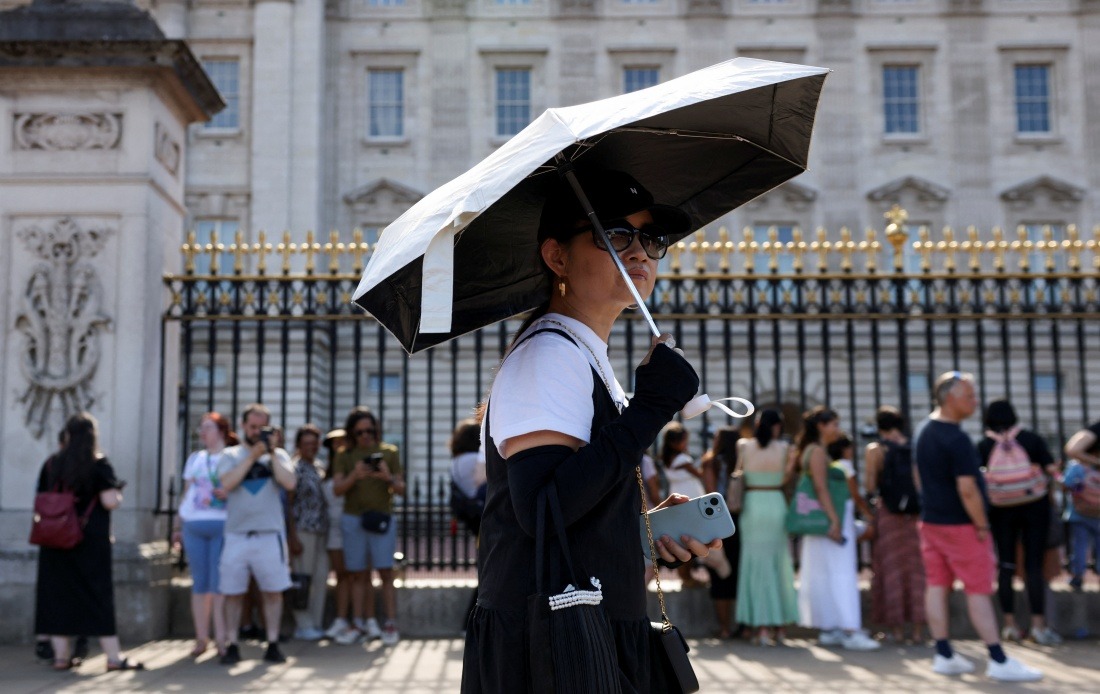
The United Kingdom's Household Division has announced the cancellation of ceremonial guard changes at Buckingham Palace, Windsor, and London this week as the nation braces for what could be the hottest June on record. The decision, made on Tuesday, reflects escalating concerns about public safety and the welfare of military personnel and horses amid an intense heatwave sweeping across the region.
The UK's Met Office issued a red weather warning for the country and Wales on Monday, signalling the severity of the meteorological event. Red alerts—the highest classification in Britain's weather warning system—are rarely issued and indicate conditions that pose a genuine threat to health and safety across the general population. Forecasters expect temperatures to soar to 39 degrees Celsius on Wednesday and Thursday, with some areas potentially exceeding even these already exceptional levels. Such readings would shatter existing June records and represent a significant climate anomaly for a country not accustomed to extreme heat management.
In a formal statement, the Household Division outlined the reasoning behind the unprecedented suspension: "The wellbeing of our soldiers, military working horses, and the public who gather in large numbers to watch these events is always our priority." The cancellation demonstrates a shift in institutional priorities toward safeguarding both military personnel who stand in ceremonial uniforms for extended periods without adequate shade, and the horses that form a centrepiece of these traditions. Additionally, large crowds of tourists and spectators who typically gather at these iconic locations would face serious health risks during peak heat hours.
The Royal Horse Guards' changing ceremony, originally scheduled for Wednesday, will proceed in a significantly modified format. Rather than the full ceremonial spectacle that characterises these events, the ceremony will occur earlier in the morning when temperatures remain comparatively lower. Soldiers participating in the ceremony will be positioned in shaded areas wherever possible and rotated at more frequent intervals to prevent heat-related illness. These adaptations reflect the military's attempt to balance the continuation of national tradition with the imperatives of occupational health and safety.
The heatwave's impact extends far beyond the ceremonial grounds of central London and into the broader fabric of British public life. Educational institutions across southern England have shuttered their doors in response to the extreme conditions. Somerset's local authority confirmed that approximately 100 schools throughout the county will remain closed during the period of peak heat. Similar disruptions have affected Buckinghamshire, where comparable numbers of schools have suspended operations, and Gloucestershire, where more than 80 educational facilities suspended classes. These closures concentrate in areas covered by the Met Office's red weather warning zone, which encompasses the counties mentioned alongside London itself.
The educational disruptions underscore a critical vulnerability in British infrastructure designed for temperate climates. Schools across southern England, like many public buildings, frequently lack adequate air conditioning systems, making them untenable environments during extreme heat events. The decision to close schools rather than attempt remote learning reflects logistical challenges and concerns about student safety during travel to and from educational facilities. In London specifically, nearly ten major schools have cancelled in-person lessons, forcing families to manage childcare arrangements on short notice.
For Malaysian and Southeast Asian observers, this situation illuminates the growing reality of climate volatility affecting even developed nations with sophisticated infrastructure planning. Temperatures of 39 degrees Celsius, which would be exceptional in the United Kingdom, are routine in Malaysia's tropical climate. However, the British experience demonstrates how populations and systems adapted to specific environmental parameters struggle when conditions deviate significantly from historical norms. The decision to suspend ceremonial traditions—events that represent institutional continuity and national identity—signals the magnitude of the threat posed by this particular weather event.
The contrast between British and Malaysian approaches to heat management is instructive. Malaysia's population and institutions have evolved strategies, architectural standards, and scheduling practices specifically calibrated to manage high temperatures as a baseline condition. Air conditioning systems are standard in schools, shopping centres, and public buildings. Work schedules often incorporate afternoon breaks during the hottest hours. Conversely, the United Kingdom's infrastructure, built around assumptions of moderate temperatures, lacks these adaptive features. The heatwave thus serves as a cautionary illustration of how climate change may disrupt systems and routines across diverse geographical regions in unexpected ways.
The broader implication of these cancellations and closures involves questions about resilience and adaptation in an era of climatic unpredictability. The Met Office's issuance of a red alert represents an acknowledgment that conditions have reached levels where standard operational procedures prove inadequate. For a nation with extensive meteorological monitoring capabilities and advanced forecasting, the decision to halt normal operations underscores the seriousness of the threat. Emergency services, healthcare facilities, and utilities face increased demand during such events, placing additional strain on public resources.
Looking forward, the United Kingdom will likely face recurring questions about infrastructure modernisation in response to changing climatic patterns. The suspension of guard ceremonies at Buckingham Palace, while maintaining the iconic role of these traditions through modified formats, represents a pragmatic compromise. It acknowledges that adaptation does not require abandonment of cultural practices but rather creative reimagining of how these practices can continue in a changing environment. As temperatures moderate in subsequent days, the Household Division will likely resume full ceremonial operations, allowing national institutions to return to their customary rhythms.

