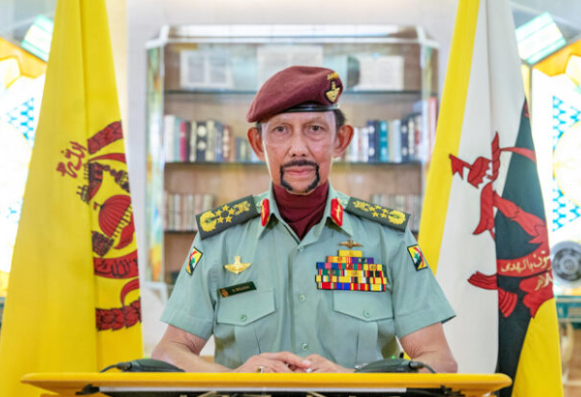
As Brunei Darussalam ushers in the Islamic year 1448 Hijrah, Sultan Hassanal Bolkiah has delivered a wide-ranging address emphasizing that genuine advancement across both material and spiritual dimensions demands unwavering dedication and continuous exertion from all segments of society. The monarch's message, delivered on the occasion of the Islamic New Year, reframes the cultural significance of calendar transitions from being merely symbolic moments to acting as substantive opportunities for citizens to strengthen their resolve and commitment to national and personal objectives.
Central to the Sultan's vision is the acknowledgment that prosperity extends beyond economic metrics and infrastructure development. He articulated a comprehensive understanding of progress that embraces the material realm—encompassing commerce, infrastructure and technological advancement—alongside the spiritual dimension, which encompasses educational advancement, knowledge acquisition and dakwah efforts aimed at strengthening Islamic understanding within the community. This dual framework reflects a governance philosophy increasingly prevalent across Muslim-majority Southeast Asian nations, where policymakers recognize that sustainable development requires attention to both tangible prosperity and moral-spiritual foundations.
The Sultan emphasized that welcoming a new Islamic calendar year should catalyze immediate recommitment rather than delay substantive action. This framing carries particular relevance for Malaysian policymakers and regional observers, as it challenges a common tendency to treat ceremonial occasions as symbolic endpoints rather than launching pads for concrete initiatives. The monarch positioned the arrival of 1448 Hijrah not as a culmination of effort but as a renewal point—a psychological and spiritual reset that obligates citizens to intensify their dedication to unfinished work across multiple domains.
Globalizing his perspective, the Sultan acknowledged the turbulent geopolitical environment characterizing the contemporary world, where military conflicts and humanitarian crises persist across multiple regions. His observation that warfare inevitably generates widespread suffering and affects all parties—regardless of their direct involvement—reflects a careful diplomatic positioning that acknowledges regional instability without endorsing any particular perspective on international disputes. For Malaysian readers observing regional tensions from Gaza to Myanmar, this measured commentary provides context for understanding how Southeast Asian monarchies navigate complex global affairs while maintaining their own internal stability.
Against this volatile international backdrop, the Sultan expressed profound gratitude that Brunei has remained insulated from both armed conflict and major natural disasters, attributing this blessing to the nation's foundation in religious practice. He credited collective spiritual observance—including prayer, remembrance of Allah through zikir, and Quranic recitation—as protective forces that have preserved the nation's tranquility. This theological framing of national stability as contingent upon religious devotion reinforces the foundational relationship between faith and governance that defines Brunei's constitutional structure, where Islam occupies a constitutionally privileged position.
Despite celebrating Brunei's relative peace and security, the Sultan pivoted to address a pressing vulnerability: the proliferation of criminal activity that he characterized as damaging both individual lives and the nation's international reputation. He identified drug-related offences, theft and associated criminal enterprises as particularly corrosive problems that contradict Islamic principles and undermine public confidence. This acknowledgment demonstrates that even nations enjoying remarkable stability cannot ignore internal security challenges, a message with resonance throughout Southeast Asia where drug trafficking and organized crime remain persistent regional challenges.
The Sultan's response to crime emphasizes institutional coordination and specialized focus on religious education as deterrents. Rather than relying exclusively on law enforcement apparatus, he advocated for strengthened dakwah initiatives and Islamic education programs designed to cultivate within communities a principled rejection of criminal behavior rooted in religious conviction rather than mere fear of punishment. This approach aligns with evidence-based crime prevention strategies that prioritize prevention through community engagement and values formation over purely punitive responses. For Malaysia and other regional nations grappling with similar challenges, this emphasis on religious education as crime prevention offers a culturally resonant alternative framework.
The Sultan situated crime prevention within a broader spiritual context, emphasizing that Muslims bear collective responsibility for safeguarding both the religious community and the nation-state. He called for heightened vigilance and intensified spiritual practice, positioning prayer and remembrance of Allah as legitimate national security tools operating in parallel with conventional law enforcement mechanisms. This integration of religious observance into security discourse reflects a governance model where spiritual and temporal authorities are conceptually unified rather than separated, a distinctive characteristic of Brunei's Islamic sultanate system that differs markedly from secular governance models elsewhere in the region.
Emphasizing shared responsibility, the Sultan conveyed confidence that collective vigilance, combined with divine blessing, would enable Brunei to overcome criminal challenges and preserve national stability. His rhetoric carefully balanced human agency—the requirement for active engagement by security agencies, religious authorities and citizens—with divine providence, creating a framework where secular and religious responsibilities reinforce rather than contradict each other. This balanced formulation acknowledges that institutional effectiveness and moral commitment together constitute the foundation for public safety.
The Sultan's concluding remarks, extending greetings from the royal family to all citizens and residents on the occasion of 1448 Hijrah, reaffirmed the inclusive national identity underlying Brunei's multicultural society. Even as the address emphasized Islamic spiritual renewal, the extension of New Year wishes to all inhabitants regardless of religious affiliation signals the monarch's intention to cultivate unity across sectarian and ethnic boundaries. For a Southeast Asian region increasingly preoccupied with questions of social cohesion and inter-communal relations, this gesture carries significance beyond ceremonial courtesy, modeling an approach to religious leadership that emphasizes inclusion alongside Islamic identity.
The Sultan's comprehensive message ultimately reflects a sophisticated understanding of contemporary governance challenges confronting small Southeast Asian nations. By interweaving material development priorities, spiritual renewal imperatives, security concerns and inclusive national identity, he articulated a governing vision that recognizes the interconnectedness of economic prosperity, moral stability, public safety and social harmony. For Malaysia and neighboring countries sharing comparable development aspirations and security challenges, Brunei's experience offers instructive lessons regarding the integration of religious values into secular governance objectives and the cultivation of national unity across diverse populations.