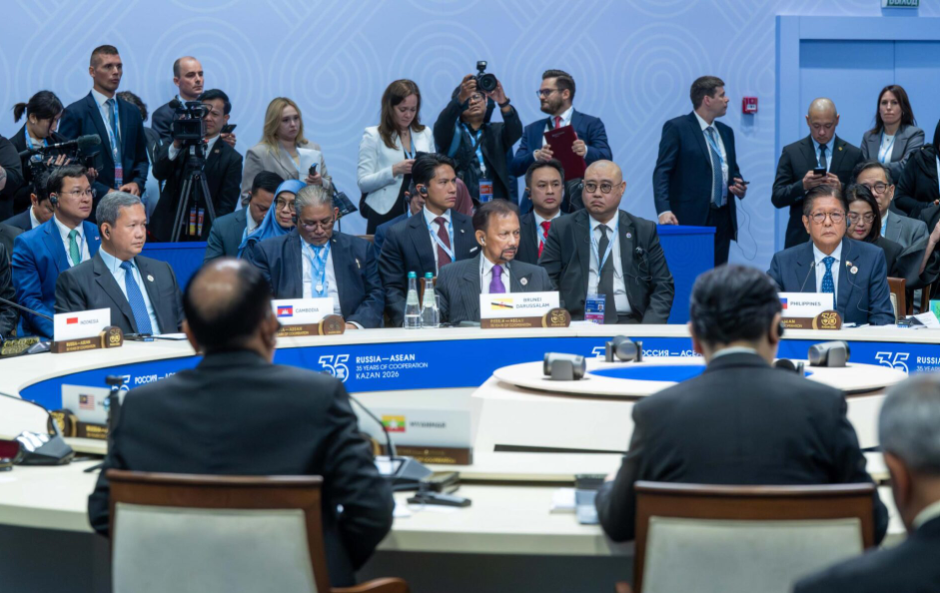
Brunei's Sultan Hassanal Bolkiah has underscored the strategic importance of deepening ties between Southeast Asian nations and Russia, speaking at the Asean-Russia Commemorative Summit held at the Kazan Expo International Exhibition Centre in Kazan on June 18. The monarch expressed gratitude to Russian President Vladimir Putin for his hospitality towards the visiting Asean delegations, whilst also acknowledging the generosity shown by the government of the Republic of Tatarstan and the local people of Kazan. During his remarks, the Sultan extended sympathies to Thailand's Prime Minister Anutin Charnvirakul regarding the death of Princess Bajrakitiyabha. Accompanying the Sultan on the high-level diplomatic visit was Brunei's Minister of Foreign Affairs Prince 'Abdul Mateen.
The commemorative event marked a significant milestone in regional diplomacy, celebrating three and a half decades of formal dialogue between Asean and Russia. Sultan Hassanal Bolkiah characterised this partnership as one that has demonstrated remarkable staying power and growing relevance despite the shifting global landscape. He particularly emphasised how bilateral cooperation has broadened substantially, now extending across all three pillars of the Asean Community framework—political and security cooperation, economic integration, and socio-cultural engagement. This comprehensive approach reflects the maturity of the relationship and its evolution beyond traditional bilateral interests.
The Sultan highlighted the tangible outcomes already achieved through Asean-Russia collaboration, noting how these initiatives have not only yielded concrete benefits for member states but have also strengthened interpersonal connections between peoples on both sides. He positioned these developments as contributing meaningfully to broader regional aspirations for enduring peace, sustained security, and shared prosperity across Eurasia. By framing the partnership in these inclusive terms, Brunei's leader implicitly signalled Southeast Asia's willingness to engage constructively with major powers beyond the Western-aligned frameworks that historically dominated regional security discussions.
Looking forward, the Sultan articulated how Asean-Russia cooperation is integral to advancing the regional bloc's Vision 2045 agenda, an overarching development framework established by member states. He specifically identified multiple contemporary challenges requiring joint attention, including the management of political tensions, the prevention of economic fragmentation, mitigation of climate impacts, and navigation of rapid technological disruption. These priorities reflect broad Southeast Asian concerns about maintaining stability whilst securing inclusive development benefits in an increasingly multipolar world. The invocation of Vision 2045 indicates that Asean leaders view Russia as a constructive partner in achieving long-term regional aspirations, rather than as a competitor or impediment to bloc unity.
Among the most pressing areas for enhanced cooperation, the Sultan singled out energy security and food security—both critical vulnerabilities for Southeast Asian economies. Russia's vast energy reserves and agricultural capacity make it a logical strategic partner for resource-dependent nations in the region, particularly as geopolitical tensions threaten traditional supply chains. The Sultan also underscored the importance of climate action initiatives undertaken jointly, as well as expanded coordination on disaster management and non-traditional security matters such as transnational crime, terrorism, and cyber threats. These security issues extend beyond conventional military concerns and reflect the complex threat environment facing modern Southeast Asian states.
The Sultan placed particular emphasis on human capital development as a cornerstone of the deepening partnership, arguing that educational exchanges, technical training programmes, and people-to-people networks are essential for building sustainable cooperation between the two sides. This perspective suggests a long-term view of Asean-Russia engagement, one that invests in the next generation of leaders, scientists, and professionals capable of tackling future challenges collaboratively. Enhanced educational partnerships could also help Southeast Asian nations benefit from Russian expertise in specific technical and scientific fields, whilst offering Russian institutions valuable exposure to Asian perspectives and methodologies.
The Sultan's formal reception of the Kazan Declaration 2026 represented a significant diplomatic endorsement of the summit's outcomes. His expression of confidence that Asean and Russia would continue building upon decades of accumulated trust signals Brunei's—and by extension, Asean's—commitment to a sustained, rather than episodic, engagement with Moscow. This declaration framework provides structure for ongoing dialogue and cooperation in subsequent years, moving beyond the ceremonial aspects of commemorative events to establish concrete mechanisms for bilateral and multilateral action.
The summit produced four substantive outcome documents that will guide Asean-Russia relations into the next phase. The Kazan Declaration 2026 itself frames the partnership around the theme of unity within diversity, acknowledging that both Asean and Russia encompass significant internal diversity whilst sharing common strategic interests. The Comprehensive Plan of Action covering 2026 through 2030 provides a roadmap for implementing the broader strategic partnership framework, offering specific timelines and deliverables. Joint statements on energy cooperation and cultural cooperation underscore areas identified as priorities, with energy matters particularly significant given ongoing global energy market volatility and Southeast Asia's development requirements.
Subsequent sessions during the summit expanded on these foundational agreements, with a second plenary session held as a working lunch focusing on integration processes across Eurasia. This discussion brought perspectives from the Asean Secretariat's Secretary-General, alongside senior officials from the Shanghai Cooperation Organisation and the Eurasian Economic Commission, indicating overlapping institutional frameworks through which Asean and Russia interact. The inclusion of these international bodies suggests recognition that bilateral Asean-Russia cooperation exists within a broader Eurasian architecture increasingly characterised by alternative institutions to Western-led frameworks.
Parallel to the formal diplomatic programme, the Asean-Russia Business Forum convened on June 17 as a side event, providing platforms for commercial engagement between Southeast Asian and Russian enterprises. The positive reception of this forum's outcomes indicates business community appetite for expanded economic ties, encompassing sectors from energy and minerals to technology and consumer goods. For Malaysian companies and investors, such expanded Asean-Russia commercial channels could create new market opportunities and partnership possibilities, particularly in sectors aligned with Asean's digital economy and renewable energy ambitions.
The summit underscores a broader Southeast Asian strategy of maintaining balanced engagement with multiple major powers, neither fully aligning with Western-led structures nor subordinating regional interests to any single external power. Brunei's prominent role in articulating this balanced approach reflects its position as Asean chair and demonstrates how even smaller member states help shape the bloc's diplomatic posture. For Malaysia and other Southeast Asian nations, the Kazan summit's outcomes provide frameworks and political cover for pursuing deeper ties with Russia across energy, technology, and educational domains, whilst maintaining security partnerships with traditional Western allies.

