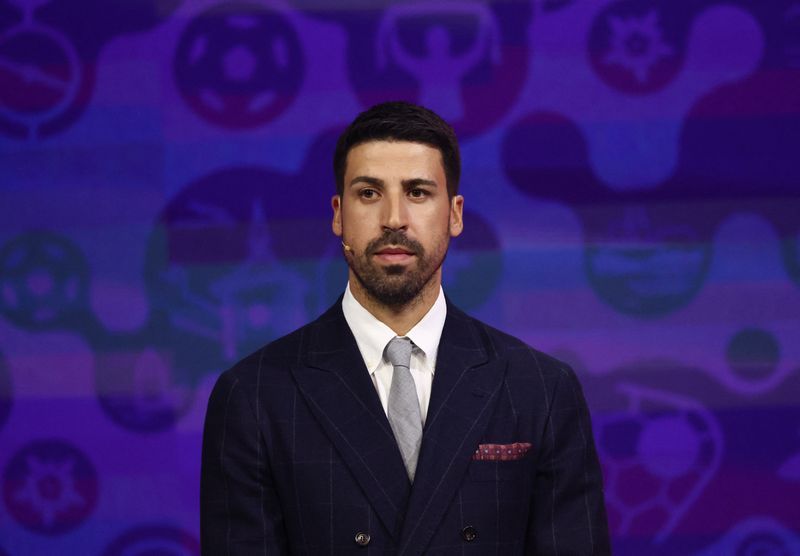
Sami Khedira, a cornerstone of Germany's 2014 World Cup triumph, does not view the emerging phenomenon of siblings competing for opposing national teams as problematic. Instead, the former midfielder regards it as an authentic expression of contemporary sport—one that embraces the fluid nature of identity in an increasingly interconnected world. Speaking at the Home of Football museum in New York, Khedira articulated a refreshingly inclusive perspective on brothers representing different flags at the 2026 tournament, positioning such situations not as conflicts but as celebrations of belonging in a globalized era.
Khedira's own experience as a player with dual heritage shaped his worldview fundamentally. His mother is German and his father Tunisian, grounding him simultaneously in two distinct cultures and national identities. While he represented Germany throughout his playing career, his brother Rani competed at the World Cup for Tunisia, their paternal homeland. Rather than experiencing this division as a source of friction or confusion, Khedira describes it as a natural consequence of modern family structures and migration patterns. The distinction matters profoundly in how he frames the conversation: this is not a problem requiring resolution but rather a reality demanding recognition and celebration.
The midfielder candidly acknowledged the social pressures that accompany such divided loyalties. Throughout his career, questions about his authentic identity persisted—some questioned his Germanness based on his name and appearance, while in Tunisia he could be perceived as fundamentally foreign. His response encapsulates a mature understanding of plural belonging: both affiliations can coexist authentically without requiring compromise or hierarchy. This perspective proves particularly valuable as football increasingly reflects genuine demographic patterns across Europe, where children of migrants naturally inherit connections to multiple homelands.
The 2026 World Cup will showcase eight pairs of siblings, with four sets competing together and four representing rival nations. The Williams brothers exemplify this split arrangement—Inaki and Nico played together at Athletic Bilbao but pursued different international paths, with Inaki representing Ghana and Nico Spain. Similarly, Guela and Desire Doue found themselves on opposite sides when Ivory Coast faced France, while Brian Brobbey and Derrick Luckassen, brothers through their mother but using different surnames, represent Netherlands and Ghana respectively. The Souttar brothers, Harry and John, are divided between Australia and Scotland, while Harry and Lucas Hernandez play for France, Jurrien and Quinten Timber for the Netherlands, and Laros and Deroy Duarte for Cape Verde.
The emotional resonance of this phenomenon struck Khedira powerfully during a recent international friendly between France and Ivory Coast, when the Doue brothers were observed singing both national anthems beforehand. The image crystallized something profound about football's capacity to transcend mere sport and communicate universal truths about human connection. For Khedira, such moments demonstrate football's unparalleled platform for expressing multicultural identity and delivering powerful messages to a global audience watching from homes across continents.
The expanded 48-team format introducing competition to the 2026 World Cup has amplified opportunities for nations historically on football's periphery. Cape Verde, Curacao, and Haiti have gained access to the world's largest sporting stage, enabling them to demonstrate competitive legitimacy previously unavailable. Simultaneously, African and Asian federations have begun narrowing the traditional dominance enjoyed by European and South American powerhouses. Khedira attributed this competitive convergence to systematic improvements in coaching infrastructure, grassroots education, and facility development across traditionally underrepresented regions, though he emphasized that European football maintains responsibility for supporting development at its source rather than simply harvesting dual-nationality talent.
Beyond the celebratory aspects of multicultural representation lies a more uncomfortable reality that Khedira acknowledged with considerable candor. Young players find themselves courted aggressively by multiple national federations at ages when they possess insufficient maturity to comprehend the magnitude of such decisions. The pressure descending upon adolescents forced to choose between legitimate cultural connections represents a genuine burden that football administrations too often overlook. International federations sometimes weaponize heritage, family heritage, or political considerations to influence young players' decisions, subordinating the athlete's authentic preferences to institutional interests.
Khedira emphasized that genuine national allegiance cannot be manufactured through external pressure, political leverage, or ancestral obligation alone. Instead, he described the decision as ultimately rooted in visceral feeling—an internal compass that guides individuals toward communities where they genuinely belong. Recalling his own experience making such choices at approximately eighteen years old, Khedira reflected on the extraordinary psychological burden imposed upon young athletes navigating identity questions that most adults find challenging. Yet he simultaneously acknowledged the positive dimension: enabling youth to exercise agency over such profoundly personal decisions represents progress, even when that exercise occurs amid intense external pressure.
The broader implications for Asian and Southeast Asian football merit consideration within this framework. Malaysia, Singapore, and other regional nations increasingly feature players with transnational backgrounds, some holding citizenship options or competing for nations beyond their birthplace. As regional federation development accelerates and competitive opportunities expand, conversations about identity, belonging, and representative legitimacy will intensify. Khedira's perspective offers valuable guidance: frameworks should prioritize player agency, recognize that plural identity deserves celebration rather than suspicion, and acknowledge that modern football accurately reflects global demographic realities.
Ultimately, Khedira's position invites football communities to reconceptualize divided loyalties as features rather than defects of contemporary sport. The phenomenon of brothers representing different nations does not signal identity confusion but rather demonstrates football's capacity to accommodate the genuine complexity of modern existence. In an era when migration patterns, intercultural families, and transnational communities define demographic reality across continents, football's embrace of such diversity communicates acceptance to watching audiences worldwide. Rather than enforcing singular loyalty, football can instead model how genuine belonging to multiple communities simultaneously enriches rather than diminishes individual and collective identity.

