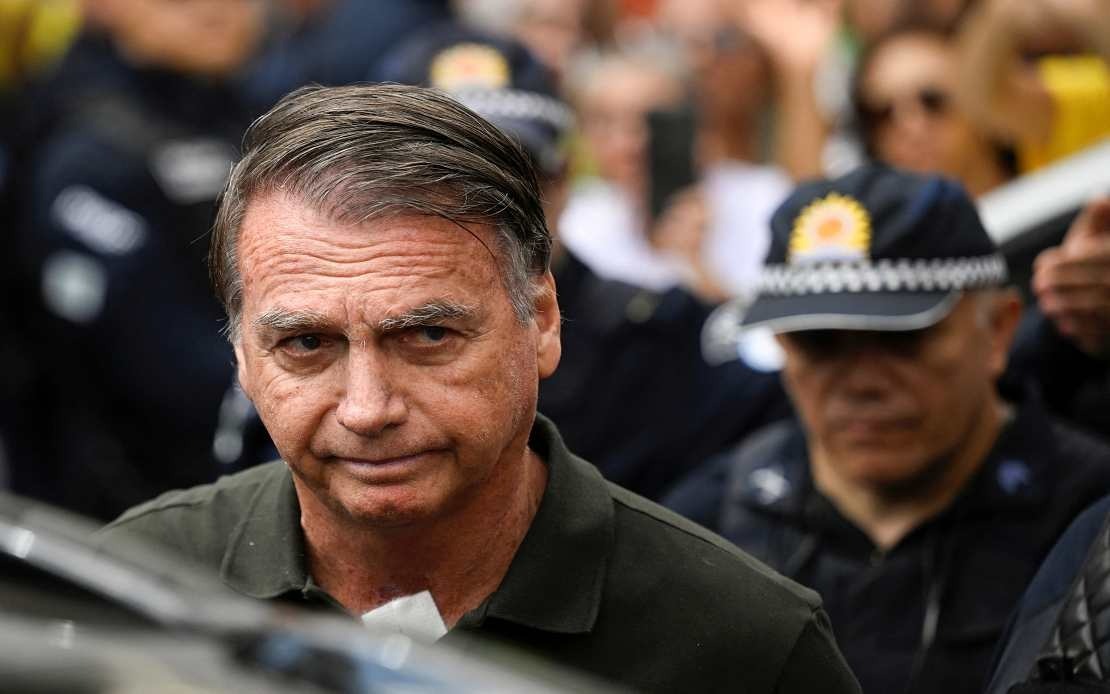
A Brazilian court has barred Argentine President Javier Milei from meeting with former Brazilian leader Jair Bolsonaro at the latter's Brasília residence, in a significant political development that underscores the fraught judicial landscape surrounding one of South America's most controversial figures. The decision by Judge Alexandre de Moraes came swiftly after the Argentine president had announced plans to visit Brazil on July 25, with the explicit intention of demonstrating support for Bolsonaro's son Flávio, who is pursuing his own presidential ambitions.
The rejection of Milei's proposed visit reflects a broader pattern of judicial intervention in Brazilian politics at a critical moment. Just one day before the Argentine leader requested permission for the meeting, Judge Moraes had unilaterally tightened the restrictions governing Bolsonaro's house arrest conditions. These enhanced restrictions now prohibit the former president from receiving visitors of a political or electoral nature through the conclusion of Brazil's presidential election cycle in October. Additionally, Bolsonaro faces a complete ban on disseminating political messages through intermediaries, a constraint clearly designed to limit his influence over his son's campaign efforts.
The trigger for this judicial escalation was unusually direct: Bolsonaro had written a handwritten letter expressing support for his son's presidential candidacy, which Flávio subsequently published across social media platforms. The court interpreted this act as a flagrant violation of the existing house arrest conditions, prompting Judge Moraes to characterise Milei's visitation request as legally "moot" and summarily reject it. For observers of Brazilian politics, this episode illustrates how judicial decisions increasingly intersect with electoral competition, raising questions about institutional independence that resonate beyond Brazil's borders.
Bolsonaro and Milei represent two of the most influential right-wing political figures currently operating across South America. Their planned meeting would have sent a powerful symbolic message to conservative movements throughout the region, particularly given the context of Brazilian electoral politics. Milei's visit was designed to bolster Flávio Bolsonaro's candidacy and demonstrate ideological solidarity among populist and libertarian-leaning leaders reshaping South American politics. The court's intervention effectively prevents this international alliance-building at a moment when Flávio's presidential hopes depend significantly on mobilising support from influential figures both within and outside Brazil.
The legal foundations for Moraes' decision rest on Bolsonaro's existing conviction in connection with an alleged coup attempt, for which he received a sentence exceeding 27 years imprisonment. Rather than serving this sentence in prison, Bolsonaro has been permitted to remain under house arrest—an arrangement nominally justified on health grounds. This arrangement has become increasingly contentious as Bolsonaro continues to exercise considerable influence over his family's political trajectory, particularly his son's election campaign. The enhanced restrictions represent judicial efforts to prevent the former president from leveraging his house arrest status to conduct what amounts to a shadow political campaign.
The broader electoral context shapes the intensity of these judicial interventions. Incumbent President Luiz Inácio Lula da Silva is anticipated to seek re-election, and the contest is shaping up as a direct ideological confrontation between the incumbent leftist government and the right-wing Bolsonaro family apparatus. Flávio Bolsonaro's presidential aspirations directly challenge Lula's political dominance, making the electoral stakes extraordinarily high for both sides. The judiciary's actions, particularly those of Judge Moraes, have become integral to the competitive dynamics of this political struggle.
For Malaysia and Southeast Asian observers, this episode demonstrates how institutional actors—particularly judges—can become primary players in electoral competition within democracies experiencing significant polarisation. The Brazilian case illustrates tensions between protecting electoral integrity and preventing judicial overreach. When courts restrict political activity based on interpretations of prior convictions and house arrest conditions, questions inevitably arise about whether such actions serve legitimate institutional purposes or represent political partisanship wearing a judicial robe. These dynamics are not unique to Brazil; they reflect broader regional patterns where executive-judicial conflicts have become defining features of political competition.
The prohibition against Milei's visit also carries implications for regional diplomacy and conservative international networks. Argentine-Brazilian relations remain strategically important, and deliberate obstacles to high-level political engagement between the countries' leaders—even when justified on specific legal grounds—risk creating diplomatic tensions. Milei's interest in supporting the Bolsonaro family reflects broader ideological alignment among right-wing leaders across South America, a pattern that has intensified as progressive governments have dominated the region's leadership landscape in recent years.
Bolsonaro's house arrest status itself remains extraordinary by international standards. Few former heads of state find themselves confined to their residences while serving sentences for political crimes, and the arrangement has exposed significant contradictions in Brazil's application of its justice system. On one hand, health considerations justified avoiding incarceration; on the other hand, those same health considerations have not prevented Bolsonaro from maintaining extraordinary political influence. The court's progressive tightening of restrictions represents an attempt to reconcile this contradiction, yet the approach raises its own questions about proportionality and the proper boundaries of judicial authority in constraining political expression.
The timing of the court's intervention—imposing new restrictions immediately before Milei's scheduled visit—invites scrutiny regarding whether the judicial action was substantively motivated or strategically designed to prevent a high-profile opposition show of force. Judge Moraes' characterisation of the visitation request as "moot" effectively sidestepped detailed engagement with the legal arguments around whether a foreign leader's political courtesy visit should fall under the prohibition on political activities. This compressed reasoning suggests the outcome may have been determined in advance of serious legal deliberation.
Moving forward, the Bolsonaro family faces constrained circumstances as it attempts to mount a credible presidential campaign while its patriarch remains under judicial supervision. Flávio's candidacy must develop independently of his father's direct participation in campaign activities, yet the reality of their family political enterprise means that such separation remains partially illusory. The court's restrictions attempt to enforce this separation, yet the underlying political reality—that the Bolsonaro family operates as an integrated political force—continues regardless of judicial constraints.

