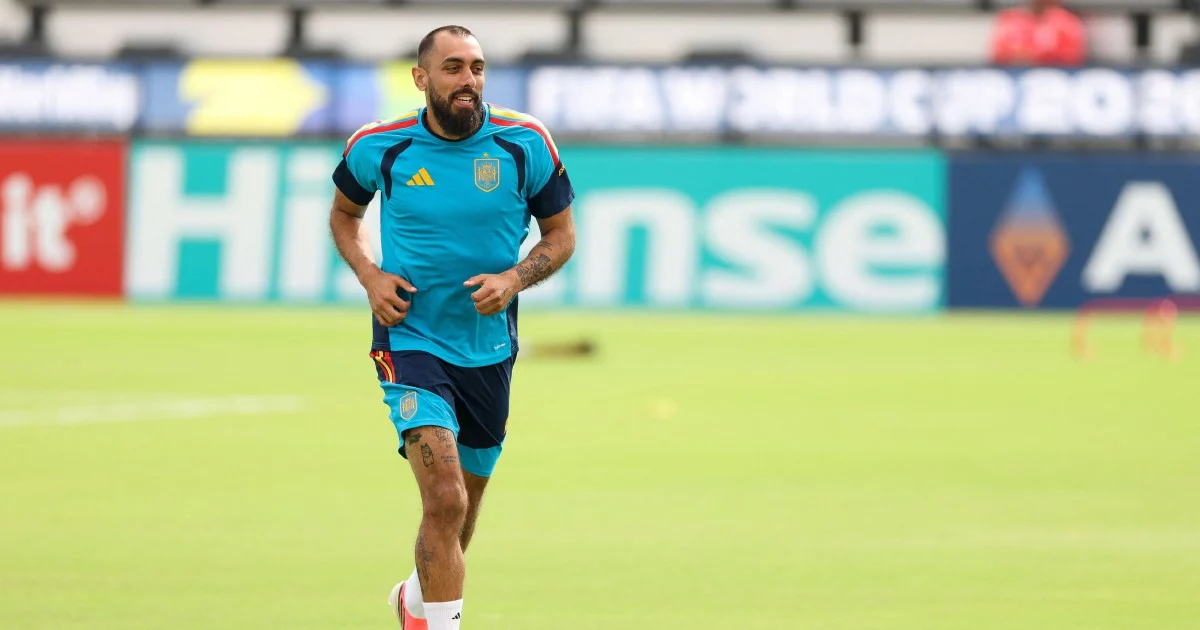
Borja Iglesias, a striker who featured prominently in Spain's World Cup campaign, has emerged as one of football's most outspoken voices on social and political matters, distinguishing himself in a sport where many athletes remain cautious about commentary beyond the pitch. The 31-year-old's willingness to engage with complex issues ranging from the humanitarian situation in Gaza to LGBTQ+ rights has earned him the unflinching characterisation as 'the alien of football'—a label that speaks to how his approach diverges so sharply from the carefully managed public personas that dominate professional athletics.
What makes Iglesias's stance particularly noteworthy is the way he combines substantive engagement with social justice alongside personal expression that challenges conventional masculinity within football culture. His decision to paint his nails represents both a minor aesthetic choice and a statement about individual freedom within an industry that has historically enforced strict conformity to traditional masculine ideals. In a sport where players typically cultivate bland, non-controversial public images to protect sponsorship deals and team harmony, Iglesias's refusal to conform has positioned him as a rare figure willing to accept the professional and social costs associated with authentic self-expression.
The characterisation of Iglesias as an 'alien' within football reflects broader tensions about athlete activism in professional sports. While the past decade has witnessed increasing participation in social movements by global athletes, many still operate within carefully defined boundaries set by clubs, sponsors, and governing bodies. Iglesias's approach transcends these restrictions, suggesting that he views his platform as carrying moral obligations that supersede commercial considerations. This perspective aligns with a growing international movement of athletes who see silence on injustice as complicity, even as such positions risk alienating segments of football's vast, politically diverse audience.
His comments on Gaza reflect a willingness to engage with geopolitical issues that many athletes and institutions deliberately avoid. The Israeli-Palestinian conflict remains deeply polarising globally, and most footballers and sports organisations steer clear of detailed commentary, fearing backlash and accusations of political bias. By contrast, Iglesias's readiness to discuss such matters publicly signals his conviction that humanitarian concerns transcend the boundaries typically maintained between sports and politics. This stance resonates particularly in the Middle East and among diaspora communities across Europe and Asia, where football's global platform carries especial significance as a vehicle for expressing solidarity.
The issue of homophobia within football carries particular relevance for Iglesias's activism. Football remains one of the world's largest sports but has lagged significantly behind other professional athletic domains in creating genuinely inclusive environments for LGBTQ+ athletes and supporters. Despite decades of progress in some Western contexts, homophobic language and attitudes persist widely across player cultures, fan bases, and institutional structures in European and global football. Iglesias's vocal opposition to homophobia addresses this persistent problem head-on, using his status as an established international player to challenge normalised discriminatory behaviour.
For Southeast Asian readers, Iglesias's approach offers an interesting counterpoint to dominant narratives within the region's football culture. Malaysian, Indonesian, Thai, and Vietnamese football communities have increasingly engaged with social issues, but often within frameworks emphasised by major international bodies or Western-aligned agendas. Iglesias represents a model of athlete activism rooted in individual conscience rather than institutional dictation, suggesting that footballers across Asia need not simply receive activist messaging from external sources but can generate their own authentic engagement with local and global justice concerns.
The economic dimensions of Iglesias's position deserve consideration. Professional football operates as a commercial enterprise where reputational management directly affects marketability and earning potential. Sponsors seek athletes whose public images project reliability and broad appeal; controversial political positions introduce commercial risk. Iglesias's willingness to maintain his stance despite these financial incentives demonstrates either exceptional principle or genuine immunity to economic pressure—perhaps reflecting his professional security as an established international player. Yet his example also suggests that audiences, particularly younger demographics increasingly conscious of social justice, may increasingly value authenticity and principle over manufactured propriety.
The reaction to Iglesias within football circles has proven revealing. While he has gained admirers among those valuing athlete activism, he has simultaneously faced criticism from traditionalists who believe footballers should restrict themselves to sporting matters. This polarised response illustrates ongoing cultural conflicts within global sport regarding athlete voice and responsibility. The question of whether athletes should leverage their platforms for social commentary remains contested, with Iglesias representing one end of an expanding spectrum of engagement.
Iglesias's prominence as a World Cup player amplifies the significance of his activism. International tournament appearances elevate athletes' global visibility and influence, creating both greater opportunities and greater pressures regarding public statements. His participation in recent World Cup competition has extended his reach precisely when global attention focuses on football, allowing his messages to penetrate audiences that might otherwise remain unexposed to athlete activism.
Looking forward, Iglesias may increasingly represent a template for younger athletes across Europe and globally who wish to integrate authentic social engagement with professional football careers. His example demonstrates that commercial success and principled activism need not exist in permanent opposition, even as tensions undoubtedly persist. For Southeast Asian football communities seeking to develop their own authentic voices around social justice and representation, Iglesias offers an instructive, if unconventional, model of how platform and principle might align.

