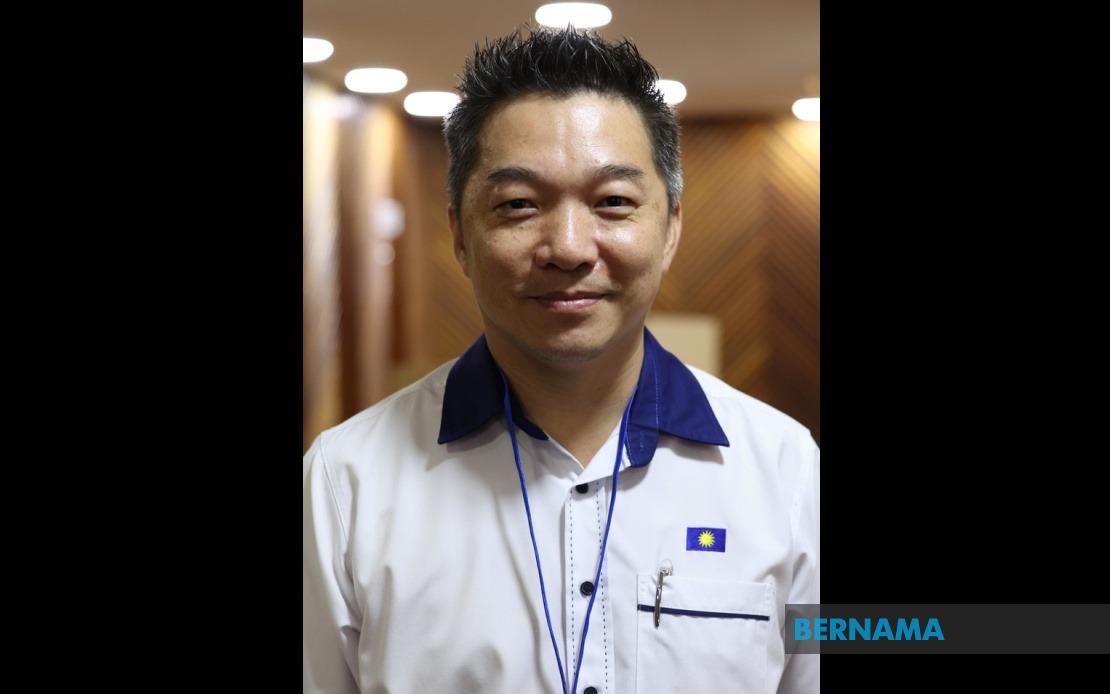
Barisan Nasional's contender for the Stulang state constituency, Bong Seng Heng, is anchoring his electoral appeal firmly on his municipal governance credentials, having spent four years serving as a Johor Bahru City Council (MBJB) councillor. The MCA division chief and council veteran believes this local administrative experience positions him uniquely to understand and address the grassroots needs of residents across the suburban constituency, an argument that reflects a broader BN strategy of emphasizing continuity and institutional competence in the race toward the July 11 polling day.
At campaign stops across Stulang, including a recent appearance at the Taman Pelangi night market, Bong has articulated a philosophy centred on accessibility and direct engagement with constituents. His messaging prioritizes what he terms a "people-first mindset," stressing that consistent presence in the community and responsiveness to resident concerns form the foundation of effective representation. By framing his councillor tenure as a practical apprenticeship in solving neighbourhood problems, Bong is attempting to distinguish himself from rivals by claiming demonstrable evidence of competence rather than merely political lineage or party backing.
The Stulang contest has evolved into a four-cornered race reflecting the fragmentation of Malaysia's contemporary political landscape. Alongside Bong stand Andrew Chen Kah Eng, the sitting assemblyman from Pakatan Harapan's DAP contingent, Stanley Tan representing the relatively nascent Parti Bersama Malaysia (BERSAMA), and Lim Chin Eng, fielded by Perikatan Nasional through Bersatu. This constellation of competitors underscores how even suburban constituencies in peninsular Malaysia now operate as genuine multi-party contests rather than binary confrontations, complicating the calculus for voters who must navigate increasingly crowded ballots.
Bong's confidence rests substantially on the organizational machinery of Barisan Nasional and the coalition's governing narrative in Johor. He explicitly invokes the "Maju Johor" development agenda championed by Menteri Besar Datuk Onn Hafiz Ghazi, positioning his personal candidacy as a local execution point for broader state-level vision. This layered campaigning approach—where the individual candidate anchors their message to both local administrative competence and a state-wide governing platform—reflects an attempt to weave together different scales of political persuasion, from the block-level resident association to the state-wide development framework.
The emergence of BERSAMA as a contesting force in Stulang represents one of the most significant variables in this particular race. The newly registered party, having been established less than three months before the election, commands minimal organizational history and near-zero name recognition in the constituency. When queried about BERSAMA's participation, Bong adopted a diplomatically dismissive stance, characterizing the newcomer as part of healthy democratic competition while implying that its novelty and institutional immaturity render it unlikely to disrupt the substantive contest between the established players. His willingness to welcome the additional competitor paradoxically reflects confidence that splitting anti-BN or anti-incumbent votes among multiple challengers might ultimately redound to his advantage.
The Stulang constituency itself occupies a significant position within Johor Bahru's electoral geography. As a suburban seat incorporating residential areas and commercial districts, it encompasses the economic and demographic concerns that animate much of urban Johor—housing accessibility, municipal service quality, small business support, and community infrastructure. Bong's emphasis on his council record speaks directly to this constituency's preoccupation with the mundane but consequential machinery of local governance: pothole repairs, rubbish collection efficiency, market trading permit processes, and developer relations. By grounding his campaign in these quotidian administrative matters rather than grand ideological claims, he positions himself as a pragmatist responsive to what residents encounter in their daily lives.
The timing of the Johor state election reflects the state's political recalibration following the 2022 federal election and various constitutional adjustments affecting state governance. With 172 candidates contesting across Johor's state assembly seats, this election functions as a significant midterm assessment of BN governance in Malaysia's most economically substantial eastern state. Johor's strategic importance to national politics—its economic heft, demographic size, and geographical position anchoring the southern corridor—renders contests like Stulang meaningful beyond their immediate constituency boundaries.
Bong's campaign messaging also implicitly acknowledges voter scepticism about party-imposed candidates and rhetoric emphasizing personalistic performance. By repeatedly stating that he represents Barisan Nasional while simultaneously stressing his individual accessibility and record, he attempts to marry institutional affiliation with personal accountability. This rhetorical balance reflects broader tensions within Malaysian politics between party discipline and representative responsiveness, between top-down governance frameworks and bottom-up accountability mechanisms. His invocation of Maju Johor serves as the connective tissue binding his personal candidacy to the state's governing apparatus, framing local voting choices as contributions to larger development initiatives.
As the campaign intensifies toward the early voting date of July 7 and the main polling day of July 11, constituencies like Stulang will see increasing ground activity from all four competing camps. The contest will ultimately turn on which candidate succeeds in consolidating support among the diverse demographic groups that compose the constituency—established residents concerned with municipal management, young professionals seeking economic opportunity, small traders dependent on business-friendly regulations, and newer migrant populations navigating their integration into established communities. Bong's strategy of emphasizing administrative experience and accessibility attempts to appeal across these demographic lines by focusing on governance competence rather than ideological or generational distinctions.
The broader political context surrounding Stulang's contest remains shaped by BN's national resurgence following its 2018 nadir and subsequent reorganization under federal leadership. Johor, as BN's most securely held major state, serves as a crucial proving ground for the coalition's capacity to maintain dominance in an era of volatile and fragmented voting patterns. Individual races like Stulang contribute to this larger test of BN's political viability, even as they turn on localized factors specific to the constituency. Bong's candidacy, grounded in municipal governance experience and a people-focused campaign methodology, represents one version of how BN candidates are positioning themselves for electoral success in this contested environment.

