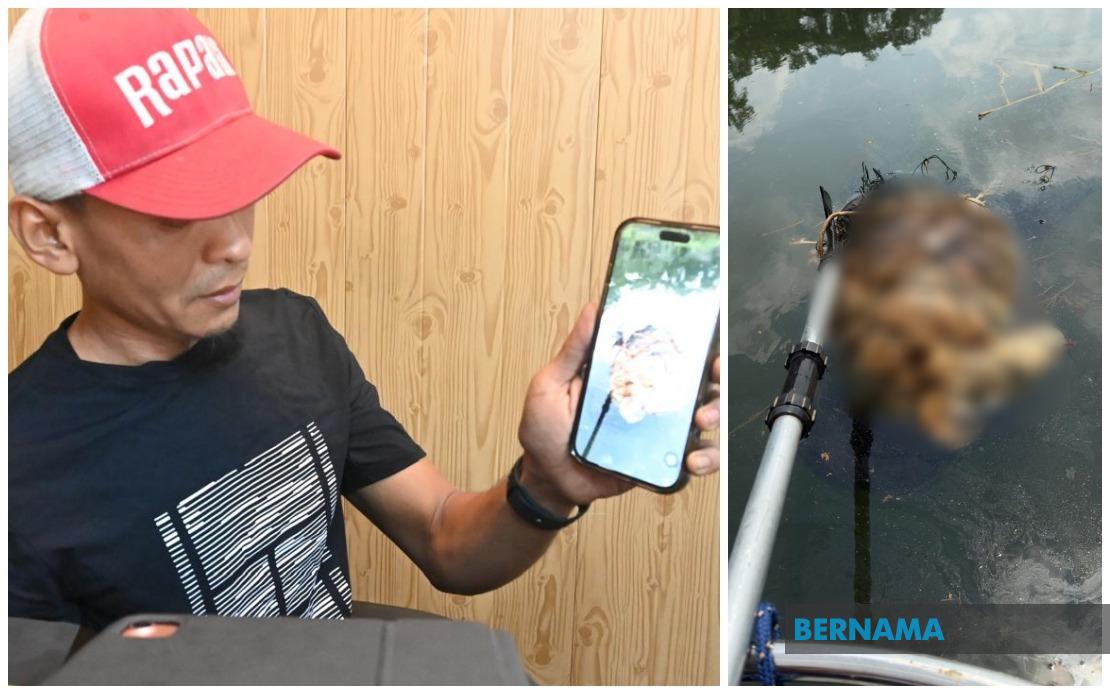
The discovery of human remains in Sungai Tanjung Sembrong at Parit Raja in Batu Pahat has reignited concerns about safety along Johor's waterways. What began as a routine fishing expedition turned into a grim discovery when Muhamad Zul Fikri Borhanodin, 33, encountered a floating object emitting a strong unpleasant odour while attempting to film content for social media. His quick thinking and familiarity with the river environment transformed a casual outing into a critical lead in what police are now treating as a serious investigation.
When Muhamad Zul Fikri first spotted the object around 11 am on August 3, his initial instinct was that it might be another animal carcass, a common sight along this stretch of the Tanjung Sembrong waterway. Fishermen and locals who frequent the area have grown accustomed to discovering dead animals in the river, so the discovery itself did not immediately alarm him. However, the intensity of the odour coupled with the sight of netting wrapped tightly around the object prompted him to investigate further rather than dismiss it as routine.
The moment Muhamad Zul Fikri recognised a pair of jeans wrapped within the netting, he understood the gravity of the situation. Acting swiftly, he contacted a companion who was nearby on another boat and together they alerted authorities. This timely response proved instrumental in preserving evidence and initiating the police investigation. Muhamad Zul Fikri's two decades of experience fishing along the river gave him both the knowledge to recognise something amiss and the composure to handle the discovery appropriately.
This marks the second time Muhamad Zul Fikri has encountered a body at this location. A similar incident occurred several years earlier when someone fell into the river, highlighting a recurring pattern of deaths or suspicious incidents at this particular stretch of Sungai Tanjung Sembrong. Such discoveries underscore the risks associated with waterway environments and raise questions about whether adequate safety measures and monitoring exist along these natural water passages.
Police received notification of the discovery at approximately 12.30 pm on August 3. The swift response led to preliminary investigations that quickly yielded significant leads. Authorities were able to connect the discovery to a missing person report filed by a woman seeking information about her husband's disappearance. This report, lodged on July 29, indicated that the man had vanished from Mutiara Rini in Iskandar Puteri, providing crucial context that suggested the body recovered from the river was not a random discovery but rather connected to an active missing person case.
The Johor deputy police chief DCP Hoo Chuan Huat announced that three men aged between 26 and 40 were arrested in the Batu Pahat area on the same day the body was discovered. These arrests came as part of initial investigative efforts to establish the circumstances surrounding the death and the apparent wrapping and weighted placement of the body in the river. The arrests suggest that authorities are treating this as a potential crime rather than an accidental death, though investigations continue to determine exact circumstances.
The deliberate wrapping of the remains in netting and the subsequent placement in the river indicates intentionality that distinguishes this case from a simple drowning or accidental death. The sophistication of concealment suggests premeditation, prompting investigators to focus on understanding the relationships between the deceased, the missing person report, and those detained for questioning. The gap of several days between the reported disappearance on July 29 and the body's discovery on August 3 will be crucial to establishing a timeline of events.
For residents in the Batu Pahat and broader Johor region, this incident highlights vulnerabilities in river safety and the potential for waterways to be used for concealing evidence of crimes. The case also demonstrates how ordinary citizens engaging in recreational or professional activities can inadvertently become witnesses to serious crimes. Muhamad Zul Fikri's willingness to investigate and report rather than ignore the situation likely prevented further deterioration of evidence and ensured that the deceased received proper handling and investigation.
The investigation now enters a critical phase where forensic analysis, autopsy results, and interrogation of the detained individuals will determine whether foul play was involved and, if so, the specific charges to be pursued. The involvement of multiple suspects suggests this may not be an isolated incident but rather part of a coordinated series of actions. As authorities work through evidence and statements, the case will likely reveal details about the relationship between the victim and those arrested, potential motives, and the methods used to attempt concealment.

