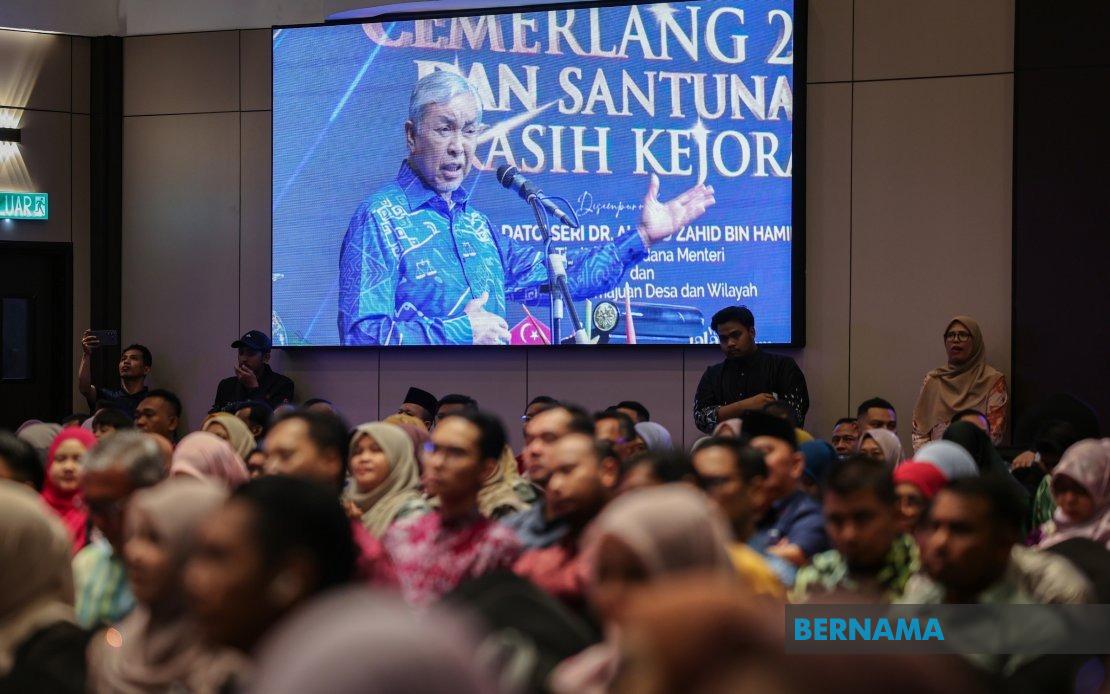
Barisan Nasional chairman Datuk Seri Ahmad Zahid Hamidi has rejected characterisations of the coalition's campaign for the upcoming Johor state election as lacking energy or momentum, arguing instead that such assessments reflect political perception rather than observable reality. Speaking in Kota Tinggi on July 2, Zahid maintained that BN's electoral machinery remains active across the state and that the coalition is confident in its preparations for polling day.
Zahid's comments address growing commentary from rival political quarters questioning whether BN's campaign intensity matches expectations for a coalition defending a state government. The Deputy Prime Minister framed such criticisms as a matter of perspective, noting that BN welcomed diverse viewpoints from other coalitions but stood by its own assessment of campaign performance. He underscored that BN would ultimately be judged by voters at the ballot box on July 11, when the effectiveness of campaign efforts would become apparent through actual electoral results.
One recurring concern among political observers has centred on potential voter confusion stemming from BN's formal cooperation with Pakatan Harapan at the federal level through the Unity Government arrangement. Critics have suggested that this alliance could alienate traditional BN supporters in Johor who may view such collaboration as ideologically inconsistent. However, Zahid dismissed this concern, emphasising Johor's distinct political context as a state where the BN-led government was already formed before the federal Unity Government came into existence.
Zahid highlighted the unique constitutional position of Johor, where the state administration under Menteri Besar Datuk Onn Hafiz Ghazi had established governance structures independently of later federal arrangements. This temporal distinction, he argued, meant that cooperation between state and federal governments did not represent a sudden political shift but rather a practical continuation of existing governance patterns. He characterised relations between the state and federal BN leadership as professional and coordinated, with both levels working constructively toward shared policy objectives.
The state government's financial performance has emerged as a central element of BN's campaign messaging in Johor. Zahid pointed to the Johor government's revenue generation of RM2.26 billion in the previous year, describing this figure as the highest recorded among Peninsular Malaysian states. This revenue achievement reflects improved tax collection, business investment, and economic activity within the state under BN administration. Zahid suggested that this fiscal strength demonstrated effective governance and capacity to fund development programmes outlined in the coalition's electoral manifesto.
BN is contesting all 56 state assembly seats in the election, a comprehensive approach reflecting confidence in its candidates and organisational reach across Johor's constituencies. The coalition is pursuing what Zahid termed a "resounding victory" to secure a stronger mandate for the next five-year term. A decisive BN result would consolidate the administration's legislative position and provide political cover for pursuing more ambitious policy initiatives in areas including infrastructure, education, and economic diversification.
The Johor electoral landscape has become increasingly crowded, with multiple coalitions and independent candidates seeking representation. Pakatan Harapan is fielding 56 candidates to match BN's full slate, positioning itself as the primary opposition. Perikatan Nasional has entered 33 candidates, while smaller coalitions including Bersama (15 candidates), MUDA (four), and individual parties such as Parti Orang Asli Malaysia, Parti Sosialis Malaysia, and six independent candidates round out the ballot. This fragmented field could influence campaign dynamics and voter behaviour, as candidates from smaller parties may struggle for campaign resources and media attention.
PAS president Tan Sri Abdul Hadi Awang recently called for voters to outright reject Pakatan Harapan in all contests, including straight fights where BN was competing. This stance has created complexity for opposition coordination in Johor. Zahid responded by reiterating that BN preferred to campaign on the merits of its candidates and policy platform rather than relying on negative messaging about opponents. He suggested that BN's professional approach contrasted with what he characterised as more antagonistic campaign strategies adopted by rival coalitions, positioning the ruling coalition as focused and disciplined in its electoral conduct.
Zahid expressed confidence that BN's campaign message would resonate with Johor voters, particularly given the state government's administrative track record and policy achievements. The coalition appreciates support from various quarters and hoped such backing would translate into votes secured for BN candidates on election day. Campaign intensity has ramped up as the July 11 polling date approaches, with candidates conducting door-to-door engagement, attending community events, and articulating their parties' policy platforms across the state.
Early voting is scheduled for July 7, allowing those unable to vote on the main polling day to cast ballots in advance. This arrangement accommodates voters who may be travelling or otherwise unavailable on July 11, potentially increasing overall electoral participation. The structure of voting arrangements reflects lessons learned from previous elections regarding accessibility and inclusivity in the democratic process.
For Malaysian observers and stakeholders with interest in regional political trends, the Johor election carries significance beyond state boundaries. Johor is Malaysia's second-most populous state and a traditional stronghold of BN support, making it a bellwether for federal political dynamics. An unexpectedly weak BN performance could signal shifting voter sentiment or organisational challenges, whereas a strong BN result would reinforce the ruling coalition's political dominance and policy direction.
The election also provides an early test of how the Unity Government arrangement at federal level is received by voters in a strategically important state. If BN wins decisively in Johor despite the ongoing formal partnership with Pakatan Harapan, this would suggest that voters have largely accepted the Unity Government framework and do not view federal cooperation as delegitimising for state-level BN campaigns. Conversely, any significant erosion of BN's Johor support could indicate underlying tensions between the need for federal cooperation and traditional state-level political identities.

