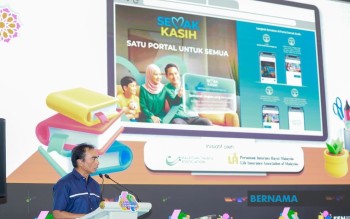
Bank Negara Malaysia has introduced a new digital initiative to address a significant blind spot in the Malaysian financial landscape: thousands of unclaimed insurance and takaful benefits gathering dust in corporate ledgers while grieving families remain unaware of their existence. Launched during the Terengganu Financial Literacy Carnival in Kuala Terengganu, the Semak Kasih portal represents a collaborative effort between Malaysia's central bank, the Life Insurance Association of Malaysia (LIAM), and the Malaysian Takaful Association (MTA) to simplify the claims process and ensure protection meant for loved ones reaches those who need it most.
The scale of the problem is both substantial and sobering. Industry estimates suggest that approximately 50,000 insurance policies and takaful certificates carrying death benefits remain unclaimed, a situation that reflects not malice but rather a profound information gap. Many Malaysians do not realise that their deceased relatives purchased protection specifically designed to provide financial security during life's most difficult moments. BNM Deputy Governor Adnan Zaylani Mohamad Zahid emphasised that this issue demands urgent attention because insurance and takaful serve critical functions: covering medical expenses during unexpected health crises, providing replacement income following accidents, and offering recovery support after property damage from fires or natural disasters.
The digital portal functions as a searchable database where Malaysian citizens can verify whether deceased family members held active insurance or takaful coverage. Users can access the system without extensive bureaucratic procedures, dramatically reducing the friction that typically characterises claim verification. Once a match is identified, the portal facilitates direct contact between beneficiaries and relevant providers, initiating the formal claim process. This technological solution addresses a persistent challenge that traditional methods—including direct mail campaigns and agent outreach—have failed to resolve comprehensively.
For Malaysian families, the implications are substantial. Insurance and takaful products exist fundamentally to provide peace of mind during crises, yet their protective value evaporates entirely if beneficiaries remain unaware of their existence. A sudden medical diagnosis, workplace accident, or death in the family typically arrives accompanied by financial stress that makes researching potential benefits feel overwhelming. The Semak Kasih portal eliminates this friction point, allowing grieving families to quickly determine whether deceased loved ones left behind financial protection. For those struggling with immediate expenses—medical bills, funeral costs, mortgage payments—discovering unclaimed benefits through the portal could prove transformative.
The launch reflects a broader concern at Malaysia's central bank regarding financial vulnerability among citizens. BNM has prioritised financial literacy as a cornerstone response to mounting economic pressures facing Malaysian households. Rising costs of living, volatile global economic conditions, and increasing complexity in financial products have created an environment where many Malaysians feel unprepared for economic shocks. Insurance and takaful represent foundational financial protection mechanisms, yet take-up rates and awareness levels remain concerningly low in certain demographic segments, particularly among lower-income households and rural communities where the need for protection is often greatest.
Beyond the Semak Kasih initiative, BNM's broader financial inclusion agenda encompasses multiple complementary programmes addressing different vulnerability points. The central bank continues supporting micro, small, and medium enterprises (MSMEs) through financing schemes providing up to RM100,000 without requiring collateral or guarantors—a structural reform that democratises access to working capital. A RM5 billion allocation under the SME Stabilisation Relief Facility specifically targets enterprises affected by geopolitical disruptions, reflecting recognition that external shocks require coordinated policy responses. These interventions acknowledge that financial resilience requires support across multiple life stages and business circumstances.
The iTekad initiative demonstrates measurable progress in improving income prospects for ordinary Malaysians. With more than 14,000 participants benefiting nationally and approximately 600 in Terengganu alone, the programme generates tangible improvements in living standards through skills development and income support. Such initiatives matter because financial protection—including insurance—becomes accessible only when underlying income levels permit households to absorb premium costs. BNM's multifaceted approach recognises this interdependency: financial inclusion requires simultaneous improvements in income opportunities, product access, and consumer awareness.
Digitalisation presents both promise and peril in this context. Expanding digital financial tools has created unprecedented convenience for Malaysian consumers, enabling instant transactions and instant credit approval. Yet research cited by BNM reveals concerning behavioural patterns: approximately 37 per cent of Malaysians acknowledge making impulsive online purchases, while 26 per cent report carrying unsustainably high debt burdens. These statistics suggest that technological access has outpaced financial discipline among significant population segments. The proliferation of buy-now-pay-later platforms, digital lending applications, and seamless e-commerce transactions creates frictionless pathways to overspending precisely when household budgets face unprecedented pressure.
Addressing this paradox requires educational intervention starting from childhood. BNM's initiatives—including the MyDuitStory competition and the FEN Proaktif 2.0 Programme developed in partnership with Universiti Malaysia Terengganu—implant financial discipline concepts during formative educational years. By establishing savings habits and decision-making frameworks in young people before they accumulate complex financial obligations, these programmes build foundations for wiser financial choices throughout adulthood. The principle is straightforward: individuals who practice disciplined saving and mindful spending from adolescence develop psychological resistance to impulsive consumption patterns and better understand the value of protection through insurance and takaful.
The Malaysian Takaful Association and Life Insurance Association leadership presence at the Semak Kasih launch signals industry commitment to resolving the unclaimed benefits problem. Mark O'Dell from LIAM and Mohd Radzuan Mohamed from MTA recognised that this initiative aligns with industry interests: successful claims processing and increased financial protection awareness drive long-term customer engagement and industry legitimacy. By facilitating easier access to claimed benefits, the portal paradoxically strengthens the insurance and takaful sectors by demonstrating their tangible value to Malaysian families.
For policymakers and financial regulators across Southeast Asia, Malaysia's Semak Kasih portal offers a replicable model addressing a region-wide problem. Similar information gaps likely persist throughout Southeast Asian insurance markets, where family-oriented cultural norms coexist with limited financial literacy. The portal's design—simple, accessible, and integrated with regulatory oversight—demonstrates that technological solutions can bridge awareness gaps relatively efficiently. Other regional economies facing comparable challenges in insurance penetration and benefit realisation might adapt Malaysia's framework to their particular institutional contexts.
Moving forward, the success of the Semak Kasih portal will be measured not merely by claim volumes processed but by the broader conversation it catalyses about financial protection. BNM's push for comprehensive financial literacy reflects mature recognition that economic vulnerability stems not from insufficient financial products but from gaps in consumer awareness and decision-making capabilities. As Malaysian households navigate mounting economic pressures and increasing cost of living, ensuring they understand and access existing protection mechanisms becomes essential policy work. The portal represents incremental progress toward an economy where financial security reaches those for whom it was originally intended.

