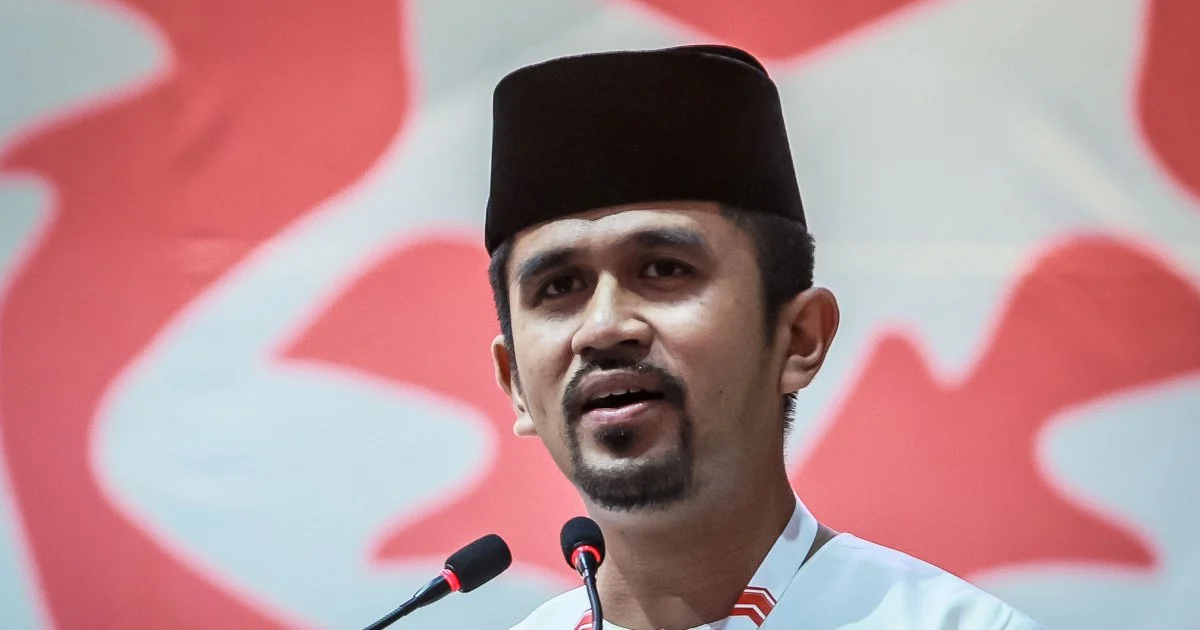
The Barisan Nasional and Umno Youth secretary-general Hafiz Ariffin has raised questions about conspicuous gaps in Johor's Pakatan Harapan candidate roster for the upcoming July 11 state election, highlighting what appears to be the exclusion of several major party figures from the southern state. The remarks underscore growing scrutiny of opposition coalition strategies as the electoral contest enters its critical phase, with both camps now locked in their final preparations for what is shaping up to be a closely contested battle for control of one of Malaysia's largest and most economically significant states.
The timing of such observations reflects the heightened political intensity preceding state-level contests in Malaysia, where the composition of electoral slates often reveals deeper questions about party dynamics and leadership confidence. When major political personalities are noticeably absent from candidate lists, it invariably draws commentary from rival camps and generates public speculation about the underlying reasons. In the Johor context, where Pakatan Harapan has worked to establish itself as a credible alternative to the long-dominant Barisan Nasional, the exclusion of prominent voices could signal internal calculations about electoral viability or disciplinary measures within the coalition.
Johor represents particularly significant political terrain for both coalitions. As the second-most populous state and a crucial economic powerhouse in Malaysia's southern region, the state election carries implications that extend beyond provincial politics. Control of the Johor state government influences resource allocation, infrastructure development, and the broader political momentum heading into potential federal-level contests. For Pakatan Harapan, Johor has been viewed as a strategic opportunity to broaden its geographical footprint and challenge Barisan Nasional's traditional stronghold. The opposition coalition's performance in the July 11 poll will substantially impact its national standing and credibility.
Candidate selection in Malaysian state elections operates within a complex framework of party calculations, coalition negotiations, and strategic positioning. The decision to exclude or include specific personalities can reflect assessments about which figures possess the strongest electoral appeal in particular constituencies, considerations about internal party balance between coalition partners, and judgments about who has demonstrated loyalty or faced organisational challenges. When opposition parties construct their candidate line-ups, they must also consider how selections might affect broader narratives about governance competence and leadership renewal that they wish to project to voters.
The Umno Youth leadership's public questioning of these absences carries political weight in Malaysia's divided political landscape. Umno, as the dominant component of Barisan Nasional, maintains significant organisational presence in Johor and has long viewed the state as core territory. By highlighting apparent gaps in the opposition's candidate slate, Barisan Nasional amplifies questions about the depth of Pakatan Harapan's bench strength and the stability of its internal coalition dynamics. Such interventions are calculated to undermine confidence in the opposition's capacity to govern effectively should voters entrust them with state power.
For Malaysian observers and political analysts, such developments reveal how electoral competitions at state level increasingly involve sophisticated strategic communication about candidate composition and leadership availability. The visibility of senior figures on electoral slates carries symbolic importance beyond their individual constituencies, signalling to voters that parties are marshalling their most capable personnel for the contest. Conversely, the absence of expected faces may generate questions about why particular individuals have been sidelined, whether through voluntary withdrawal or party decision.
Packatan Harapan's coalition structure in Johor comprises multiple parties with distinct organisational interests and political constituencies. Navigating candidate selection across this multiparty arrangement requires balancing representation, electoral prospects, and internal coalition stability. The coalition's leadership must weigh considerations about which candidates can most effectively appeal to Johor's diverse electorate while maintaining the careful equilibrium necessary for multiparty cooperation. These internal negotiations sometimes result in decisions that surprise observers or appear strategically questionable when viewed from outside the coalition's deliberations.
The July 11 state election will ultimately be decided by voters evaluating both coalitions' records, personalities, and policy commitments. However, the period immediately preceding elections is characterised by intensive scrutiny of party preparations and strategic positioning. Opposition candidates and campaign teams analysing Johor's electoral dynamics will likely pay attention to how Pakatan Harapan's candidate list is ultimately received by voters and whether any perceived gaps in leadership representation prove consequential at the ballot box.
Barisan Nasional's questioning of opposition candidate composition forms part of its broader campaign strategy to contrast what it portrays as its stability, experience, and readiness with alleged uncertainty or disunity within Pakatan Harapan's ranks. Such messaging aims to persuade undecided voters that the incumbent coalition offers predictable governance, while the opposition remains untested or fractious at the state level. The electoral battle in Johor will test whether such arguments resonate with voters or whether Pakatan Harapan's alternative vision proves sufficiently compelling despite questions about its constituent parts and the individuals leading its campaign effort.

