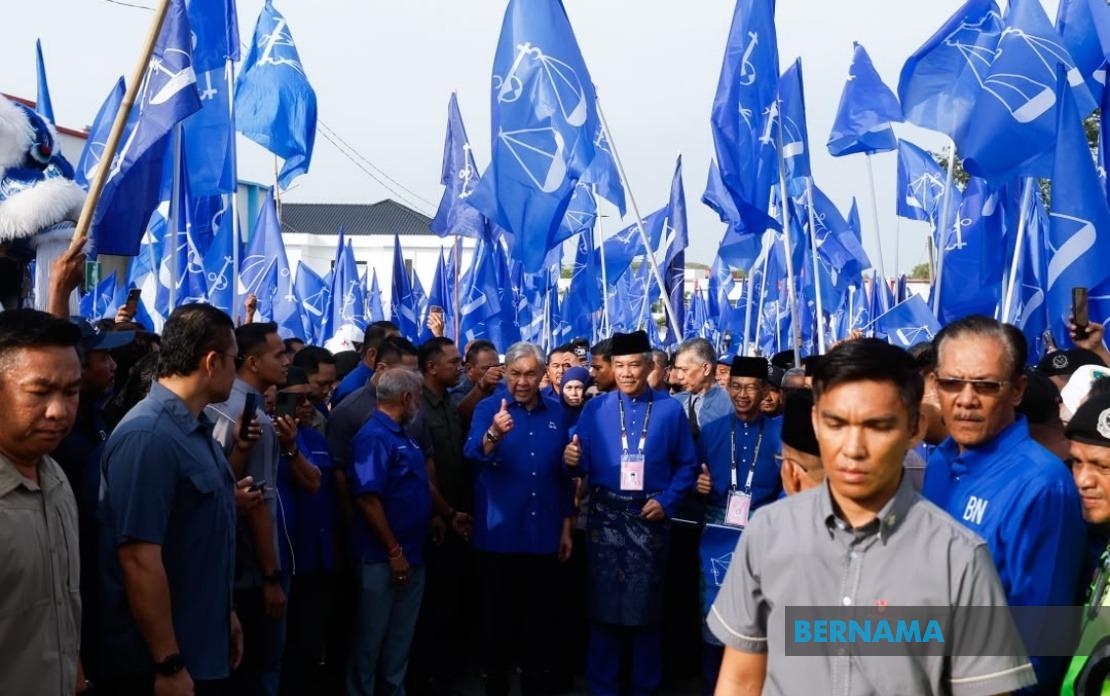
The Negeri Sembilan state election campaign officially commenced on Thursday with a show of force from Barisan Nasional's hierarchy, as senior coalition figures personally escorted their party's nominees through the nomination process at eight simultaneous centres across the state. The ceremonial accompaniment by prominent leaders served as a tangible signal of BN's confidence heading into the August 1 polling day, transforming the administrative filing exercise into a high-visibility political event with symbolic weight.
At the Dewan Seri Rembau centre in Rembau, UMNO President Datuk Seri Dr Ahmad Zahid Hamidi arrived at 8.40 am alongside Barisan Nasional's deputy chairman Datuk Seri Mohamad Hasan, who filed papers to retain the Rantau seat he has represented since 2004. The presence of Zahid, who simultaneously holds the BN chairmanship, underscored the high stakes surrounding Mohamad's re-election bid in a seat considered crucial to the coalition's overall performance in the state legislature.
The nomination centres operated during a compressed one-hour window beginning at 9 am, with all eight locations opening and closing in unison to maintain electoral standardisation. This coordinated timing meant that multiple senior figures could coordinate their appearances across different constituencies, maximising media coverage and voter visibility for their respective nominees throughout the morning session.
In Port Dickson, BN Secretary-General Datuk Seri Dr Zambry Abd Kadir personally presented Datuk Mohd Faizal Ramli, who is mounting a campaign for the Linggi state seat. Meanwhile, UMNO Vice-President Datuk Seri Johari Ghani fulfilled a similar role for Suhaimizan Bizar, contesting the Gemencheh seat located within the Tampin parliamentary constituency, further demonstrating the party's determination to field competitive candidates across diverse electoral divisions.
The Jempol parliamentary area received particular attention from senior UMNO administration officials. UMNO Secretary-General Datuk Dr Asyraf Wajdi Dusuki personally accompanied three BN nominees—Datuk Mustapha Nagoor for the Palong seat, Datuk Mohd Zaidy Abdul Kadir for Jeram Padang, and Chong Fui Ming for Bahau—suggesting this region represents a significant focus area for coalition resources and organisational efforts during the campaign period.
Beyond UMNO's contingent, coalition partner PAS also demonstrated institutional commitment through its president Tan Sri Abdul Hadi Awang, who personally supported Mohd Fairuz Mohd Isa's nomination for the Serting state seat. This visible cooperation between UMNO and PAS reinforces their ongoing electoral partnership in Negeri Sembilan, a state where such collaboration has proven instrumental in past BN victories.
Smaller coalition component Parti Orang Asli Malaysia likewise projected unity when party president Rashid Ka escorted Dayana Dal, the nominee for the Jeram Padang seat within Jempol parliamentary territory. The appearance of ASLI's leadership at nomination ceremonies signals the coalition's inclusive posture toward its smaller member parties and their contribution to the broader electoral machinery.
The Negeri Sembilan state assembly underwent formal dissolution on June 5 following approval from Tuanku Muhriz Tuanku Munawir, the Yang Dipertuan Besar of Negeri Sembilan, setting the administrative machinery in motion for this 16th state election cycle. The extended timeline between dissolution and nomination filing allowed parties adequate preparation for coordinating leadership appearances and candidate vetting processes.
The August 1 polling date provides campaigning organisations with a fortnight to mobilise supporters and communicate messages to voters following the nomination deadline. Early voting has been scheduled for July 28, permitting voters with mobility constraints or employment conflicts to participate in the electoral process without delaying the final ballot count.
These choreographed leadership appearances at nomination centres carry broader implications for Malaysian electoral politics beyond Negeri Sembilan. The visible deployment of senior figures signals party strength and internal cohesion at a moment when both elements influence voter perceptions. For the BN coalition, demonstrating unified leadership across UMNO and its partners projects continuity and organisational stability in a political environment where opposition movements frequently emphasise reform narratives.
For Malaysian voters and regional observers, the state election provides meaningful data about electoral trajectory in a traditionally BN-leaning state. Performance metrics in Negeri Sembilan will influence calculations about coalition viability ahead of potential federal electoral contests, making Thursday's nominations more than symbolic ritual but rather a testing ground for organisational capacity and grassroots resonance during the campaign phase.

