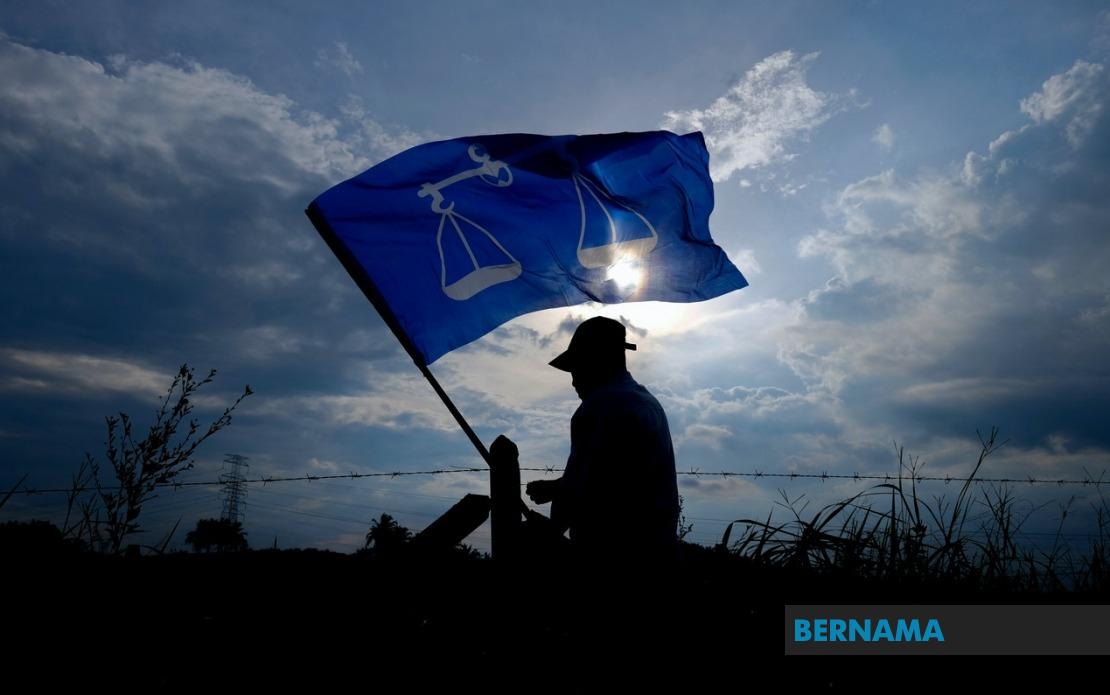
Barisan Nasional will tailor its approach to the upcoming Negeri Sembilan state election by carefully analysing the state's unique demographic profile and voting patterns, party chairman Datuk Seri Dr Ahmad Zahid Hamidi announced this week. The coalition's political formula and candidate selection process will be specifically calibrated to reflect conditions on the ground in Negeri Sembilan, which the Deputy Prime Minister noted differs considerably from other Malaysian states in several critical respects.
In remarks to journalists following a briefing session on technical and vocational education initiatives, Ahmad Zahid stressed that Negeri Sembilan presents a distinct political landscape that demands differentiated strategies. The number of available seats, the composition of the state's population across different regions and communities, and established patterns of voter behaviour all contribute to a political environment requiring careful recalibration of BN's standard approach. This recognition of Negeri Sembilan's particularities signals a shift toward more granular, state-specific political planning within the coalition.
The timing of this strategic review comes on the heels of BN's significant victory in the Johor state election, which Ahmad Zahid attributed to the coalition's mental fortitude and creative problem-solving during the campaign period. That success, however, does not translate directly to a uniform playbook applicable across all Malaysian states. Instead, the BN leadership appears to be applying lessons learned from Johor while simultaneously recognising that each electoral contest requires its own careful calibration. The Negeri Sembilan candidacy announcements were expected to be made within the same week, underscoring the urgency with which BN is approaching preparations.
Regarding ongoing discussions with PAS about potential cooperation arrangements for Negeri Sembilan, Ahmad Zahid adopted a notably cautious tone. He clarified that no formal agreement currently exists between BN and PAS, despite media reports and public speculation about candidate arrangements, including a proposed candidate for the Menteri Besar position. According to the UMNO president, any dialogue between the two parties remains at the level of preliminary understanding rather than binding commitment. This distinction carries significant weight in Malaysian coalition politics, where informal understandings often precede formal arrangements and can shift depending on political developments.
The BN chairman's circumspection regarding PAS talks reflects the complexities inherent in managing coalition dynamics at multiple political levels simultaneously. While BN and other parties are bound together in the federal Unity Government, state-level electoral mathematics sometimes demand different partnership configurations. The Negeri Sembilan situation appears to present precisely such a scenario, where BN is exploring options without locking itself into irreversible commitments before fully understanding the electoral arithmetic and strategic advantage of various arrangements.
When pressed on calls from certain quarters for Housing and Local Government Minister Nga Kor Ming to step down, Ahmad Zahid demonstrated the diplomatic balancing act required of Unity Government principals. He suggested that robust criticism of coalition partners, while potentially appropriate in opposition politics, becomes problematic when parties are jointly responsible for government. Nga Kor Ming, who serves as DAP deputy chairman, has been subjected to pressure from some constituencies dissatisfied with certain policy directions or administrative decisions. Ahmad Zahid's defence of his colleague and assertion that they maintain a personal friendship indicated an effort to stabilise coalition dynamics despite underlying policy differences.
The BN chairman's commitment to meeting with Nga Kor Ming and discussing concerns in a collegial manner underscores an implicit understanding within the Unity Government that internal disagreements should be managed through private dialogue rather than public confrontation. This approach reflects a deliberate choice to prioritise governmental stability and coalition cohesion over allowing disparate voices to fragment the administration's public messaging and unity.
According to Ahmad Zahid, interpersonal relationships and professional cooperation among federal-level Unity Government leadership remain sound, with all participating parties continuing to function as an integrated team. This characterisation serves both as genuine assessment and strategic reassurance to stakeholders concerned about potential fracturing of the governing coalition. The emphasis on good relations and unified teamwork suggests BN's confidence in managing coalition dynamics through the remainder of the administration's term, despite occasional policy disagreements or external pressure.
For Malaysian observers, the Negeri Sembilan election strategy announcement reflects broader trends in contemporary Malaysian politics. Increasingly, major coalitions are recognising that cookie-cutter, one-size-fits-all approaches to elections yield suboptimal results compared to carefully researched, demographically informed, and locally resonant strategies. BN's explicit acknowledgement that Negeri Sembilan demands custom-tailored planning indicates maturation in coalition political management and a move away from centralised command structures toward more sophisticated, data-driven electoral approaches.
The ongoing PAS negotiations also illustrate the continuing complexity of coalition formation in Malaysian politics. At the federal level, PAS participation in the Unity Government represents a significant achievement in stabilising the administration. Yet at state levels, BN maintains flexibility to pursue different partnership arrangements depending on local conditions. This multi-level, adaptive approach to coalition building allows BN greater strategic optionality than rigid, nationwide partnership structures would permit.
Looking ahead, the Negeri Sembilan state election will serve as a test of whether BN's demographic and voter-behaviour-informed strategy translates into electoral success. Success in Negeri Sembilan would validate the coalition's investment in sophisticated electoral analysis and customised campaign approaches. Conversely, any setbacks would prompt internal review of whether the strategic adjustments adequately captured local political dynamics. For broader Malaysian politics, the election results will also provide insight into whether the Unity Government coalition remains an attractive prospect for voters or whether fatigue with the governing arrangement is beginning to register at the ballot box.

