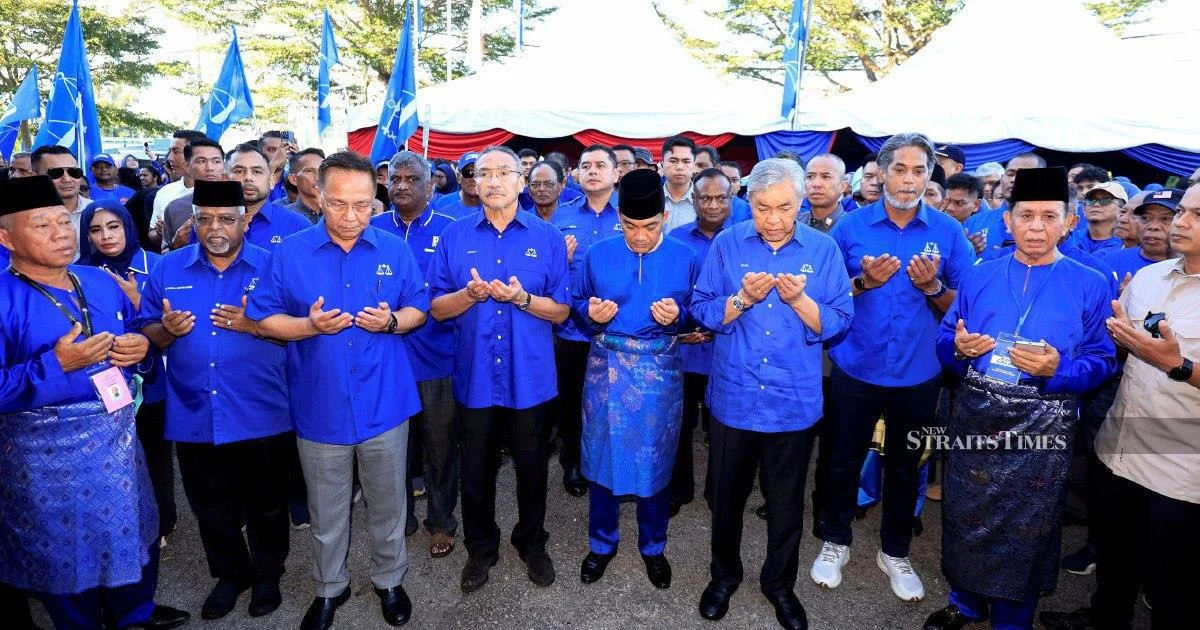
Barisan Nasional's senior echelon descended on Simpang Renggam District Council to throw their collective weight behind Datuk Onn Hafiz Ghazi, a carefully orchestrated display of solidarity that reflects the coalition's determination to maintain its grip on Johor ahead of upcoming electoral contests. The convergence of high-profile BN figures sends a powerful signal about the party's prioritisation of the southern state, which remains a traditional stronghold but increasingly faces competitive pressures from rival coalitions.
The timing of the gathering at Simpang Renggam carries considerable symbolic weight. The district has long been viewed as a bellwether for broader political sentiment in Johor, and BN's decision to stage this show of force there underscores the coalition's recognition that consolidating support at the grassroots level remains essential. By visibly aligning themselves with Onn Hafiz, the assembled leaders are attempting to project an image of unity and purpose, qualities that polling data suggests voters increasingly question across the Malaysian political landscape.
Onn Hafiz, as the Menteri Besar of Johor, occupies a pivotal position within both BN and the larger political firmament. His continued electoral viability is intrinsically linked to BN's capacity to retain control of the state, an outcome that cannot be taken for granted given the fractures that have emerged within the coalition since the 2018 federal election. The presence of multiple heavyweight endorsers suggests that party strategists view the Johor situation as demanding high-level intervention and visible commitment from the national leadership.
The rally reflects broader dynamics within Malaysian politics where state-level contests have assumed outsized significance. Unlike federal elections, which distribute electoral competition across 222 parliamentary constituencies, state elections concentrate political messaging and resources within defined geographic areas. This geographic concentration allows coalitions and opposition blocs to achieve saturation media coverage and grassroots mobilisation that would be economically impossible on a national scale. For BN, this means that Johor represents an opportunity to generate momentum that could reverberate across multiple electoral battlegrounds simultaneously.
Within the Malaysian political context, Johor occupies exceptional strategic importance. The state consistently delivers among the highest absolute vote counts to any coalition, and its loss would fundamentally alter the calculus of national politics. The incoming administration following any federal election requires Johor's parliamentary representations to achieve majority status, making the state less a regional concern and more a question of foundational national stability. This explains why BN's most senior figures would commit their schedules to district-level engagements that might appear administratively modest on paper.
The demonstration at Simpang Renggam also serves an internal party function beyond external messaging. By assembling together, BN's heavyweight contingent sends signals to lower-ranking party officials and grassroots members that the leadership prioritises the contest and expects comparable commitment cascading downward through the party structure. This mechanism of visible high-level engagement functions as both incentive and accountability measure, communicating expectations regarding resource allocation and volunteer mobilisation throughout BN's local machinery.
For Malaysian voters observing these developments, the spectacle of senior BN figures gathering to endorse Onn Hafiz conveys important information about confidence levels within the coalition's upper echelons. In electoral politics, the presence or absence of leadership visibility frequently communicates subliminal judgments about contest competitiveness that sometimes contradicts official public statements. When senior figures personally campaign, voters reasonably infer that internal polling or strategic assessments suggest competitive threats requiring high-level countermeasures. Conversely, leadership absence can suggest either complacency or capitulation.
The regional implications extend beyond peninsular Malaysia. Johor's geographic position adjacent to Singapore and its role as a hub for cross-border commerce and human movement make its governance trajectory relevant to broader Southeast Asian economic and diplomatic questions. A BN government in Johor typically signals continuity in state-level relationships that private sector actors and international investors view as predictable and manageable. Electoral transitions introduce uncertainty regarding policy continuity and the competence of incoming administrations, factors that international actors monitor when making long-term investment and operational decisions.
The Simpang Renggam gathering also reflects calculations regarding opposition momentum in the state. The momentum that opposition coalitions achieved during the 2022 federal election persists in certain constituencies and demographic segments, meaning BN cannot rely on historical voting patterns or established organisational advantages. Johor has witnessed increasing electoral volatility over successive contests, with vote shares shifting between BN and opposition blocs in patterns that defy traditional predictability. This volatility explains why BN considers high-level intervention justifiable and necessary.
For Datuk Onn Hafiz personally, the convergence of BN heavyweights represents both validation and constraint. The public endorsement strengthens his position within Johor politics and signals that national leadership backs his continued stewardship of the state. However, this visibility simultaneously elevates expectations regarding his performance and links his political fortunes more directly to national BN outcomes. Should broader BN electoral efforts encounter difficulties at the federal level, Onn Hafiz's position becomes more vulnerable by association, a dynamic that senior politicians understand but tolerate when perceived benefits outweigh risks.
The implications for opposition coalitions operating within Johor deserve consideration. When BN deploys its most senior figures and concentrates organisational resources in particular districts, opposition parties must decide whether to match this intensity through comparable leadership mobilisation or pursue alternative strategies emphasising ground-level organising and voter contact that relies less on mass rallies and more on distributed grassroots engagement. The opposition's response to BN's show of force will substantially influence the character and competitiveness of the electoral contest that emerges.
Moving forward, observers should monitor whether BN sustains this intensity of high-level engagement across multiple Johor constituencies or whether the Simpang Renggam gathering represents a singular intervention aimed at bolstering specific constituencies facing particular vulnerabilities. The pattern of leadership deployment reveals much about where BN's internal analysts believe competitive pressures mount most acutely, information that opposition coalitions can leverage to identify areas where grassroots organising produces maximum electoral impact. The Johor election, whenever called, will likely prove determinative for Malaysia's broader political trajectory during the coming years.

