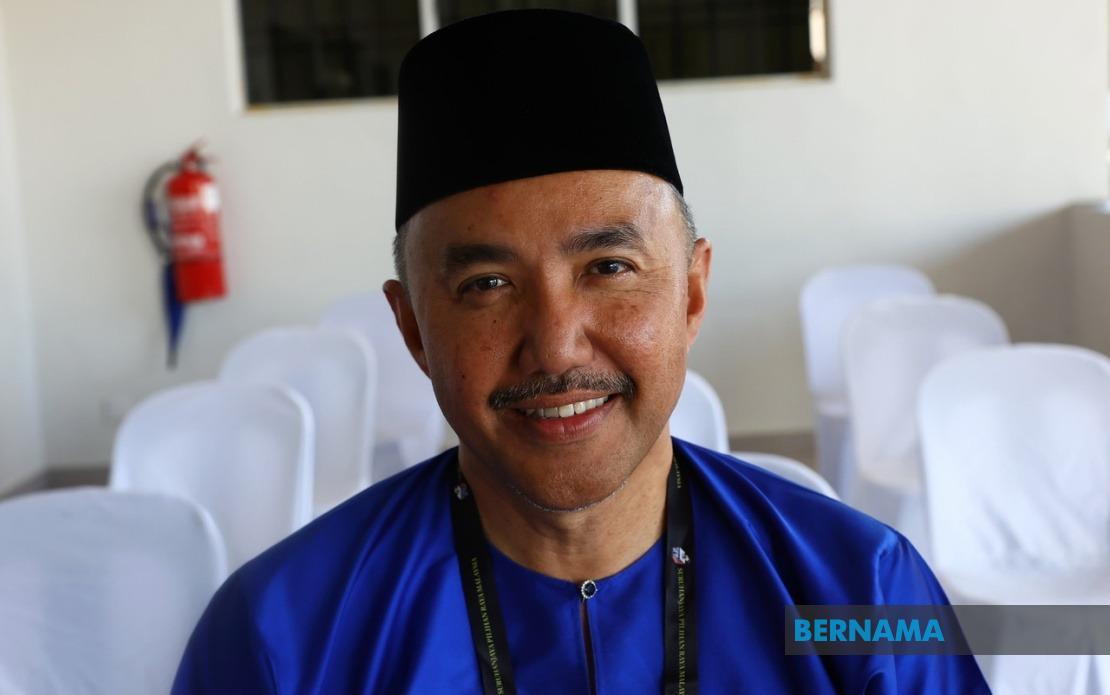
Barisan Nasional is banking on robust support from Federal Land Development Authority communities in the Kulai parliamentary constituency ahead of the 16th Johor state election scheduled for July 11. The coalition's optimism centres on FELDA settlements that collectively represent a significant voting bloc, with political strategists recognizing the traditional importance of rural and agricultural communities in state-level contests across the peninsula.
The four FELDA settlements in question—Taib Andak, Inas, Bukit Permai, and Bukit Batu—encompass approximately 7,000 registered voters distributed across multiple state constituencies. Datuk Mohd Jafni Md Shukor, who chairs the Kulai BN division and is himself defending the Bukit Permai state seat, attributes the coalition's confidence to tangible improvements in FELDA welfare under the current Menteri Besar administration. This constituency-level focus underscores how rural agricultural communities remain central to broader electoral calculations, particularly in Johor where such settlements have historically swung outcomes.
The BN's narrative hinges on demonstrating policy continuity and concrete benefits to FELDA populations over the past four years. Jafni acknowledged that the 2018 state election marked a significant setback for the coalition among FELDA voters, a phenomenon that resonated across rural Malaysia during that period of political realignment. However, he pointed to recovery signals in the 2022 general election, suggesting that strategic interventions and improved governance messaging have begun reversing earlier losses. This trajectory—decline, stabilization, and gradual recovery—mirrors patterns seen in other traditional BN strongholds nationwide.
Among the government initiatives cited as confidence-builders is the Johor Education Foundation's education assistance programme for FELDA children, directly addressing a perennial concern for settler families seeking to improve their children's prospects. Education funding has consistently ranked among top priorities for rural constituencies, making such programmes potent electoral tools. Beyond immediate welfare measures, the state government has also tackled the long-standing land title issue that has frustrated FELDA communities for decades. According to Jafni, 99.9 percent of land ownership applications have now been resolved, a development that could substantially improve sentiments within these communities toward the ruling coalition.
Jafni's broader appeal extends beyond FELDA-specific constituencies to encompass all of Johor, framing the election as a mandate renewal for continued development initiatives. He emphasized that one term remains insufficient for completing the state government's agenda, positioning the upcoming election as a choice between continuity and uncertainty. This messaging strategy attempts to leverage the incumbent advantage while implicitly cautioning voters against disruption, a tactic particularly resonant among communities dependent on government schemes and infrastructure projects.
The political contest in Bukit Permai, where Jafni is contesting, has become a four-way race reflecting the fragmented opposition landscape in contemporary Malaysian politics. His challengers include Muhammad Aidil Riduan Mohd Yusof representing Parti Bersama Malaysia, Mohamad Shafwan Ani of Pakatan Harapan, and M. Lina Manoh of Perikatan Nasional. This multi-cornered arrangement complicates vote distribution calculations and potentially advantages the incumbent if opposition support splits sufficiently. Jafni's 2022 majority of 4,755 votes provides a baseline, though constituency boundaries and voter registration changes invariably affect subsequent contests.
The broader Kulai parliamentary constituency encompasses three state seats, with BN pursuing not merely defensive retention but offensive gains. This ambition suggests internal polling or ground intelligence indicating improved positioning compared to previous cycles. The strategy of articulating ambitious targets—defending Bukit Permai while targeting Bukit Batu and Senai—serves dual purposes: energizing grassroots activists and projecting confidence that could itself influence undecided voters. Early voting commences on July 7, providing a testing ground for campaign effectiveness among those able to exercise that option.
For Malaysia's broader political discourse, this election cycle demonstrates how Johor remains a critical battleground for determining national parliamentary balance and government stability. FELDA constituencies specifically hold outsized importance because they represent geographically dispersed communities whose electoral behaviour has proven susceptible to both incumbent performance records and opposition mobilization. The coalition's emphasis on tangible welfare outcomes and land tenure resolution reflects recognition that rural voters increasingly demand concrete evidence of government responsiveness rather than traditional patronage patterns alone.
The timing of the election also intersects with economic pressures affecting agricultural communities nationwide, from palm oil price fluctuations to input cost inflation. BN's messaging about sustained government commitment must therefore compete with economic realities beyond state administration's immediate control. How effectively the coalition links its welfare programmes to broader economic security narratives will substantially influence FELDA voter decisions. The result in Johor will carry implications extending well beyond the state boundary, potentially influencing political calculations nationwide regarding coalition viability and opposition momentum.

