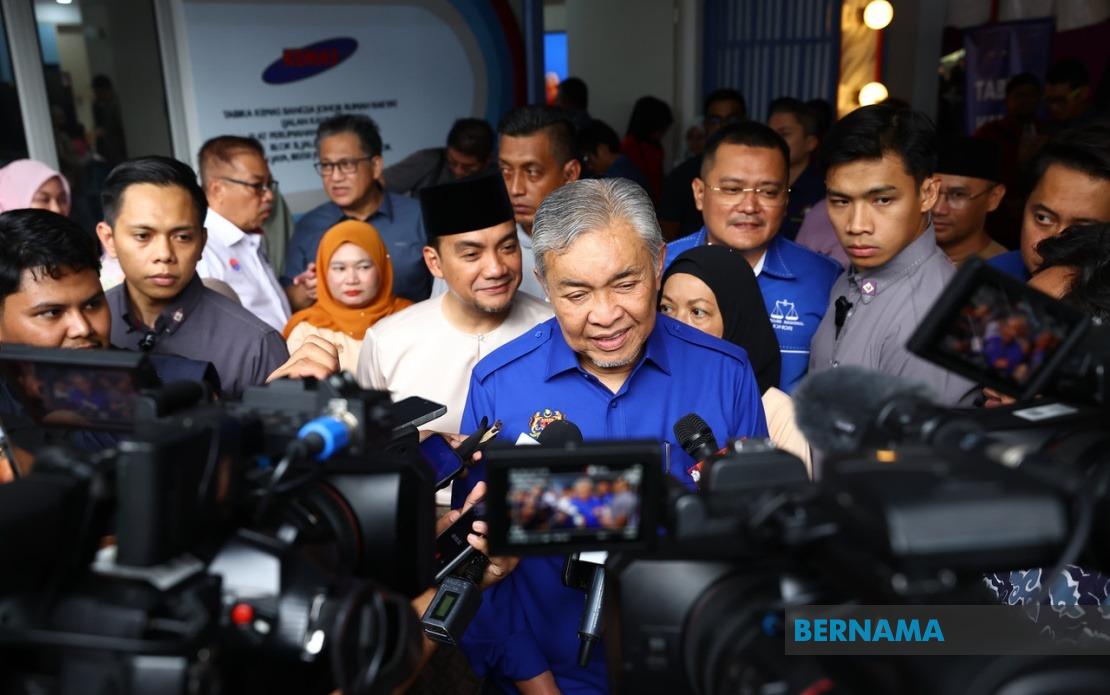
Barisan Nasional's leadership has signalled openness to Pakatan Harapan's electoral platform for the upcoming Johor state election, with BN Chairman Datuk Seri Dr Ahmad Zahid Hamidi stating that his coalition welcomes the opposition's policy proposals as part of healthy democratic competition. Speaking in Johor Bahru on July 3, Ahmad Zahid, who also serves as Deputy Prime Minister, characterised BN's acceptance of rival manifestos as consistent with Malaysia's democratic traditions, where multiple parties contribute ideas to shape public discourse during election campaigns.
Pakatan Harapan unveiled an ambitious 10-point manifesto aimed at addressing key voter concerns across the state. The proposals encompass a dedicated Johor Health Scheme designed to improve healthcare accessibility, financial assistance for first-time property buyers to address the housing affordability crisis, and a substantial RM500 million investment in youth development programmes. Additionally, PH has committed to strengthening educational institutions across all levels, recognising that education remains a pivotal concern for Johor families seeking economic mobility and quality schooling for their children.
Ahmad Zahid's measured response reflects BN's confidence in its own record and vision for Johor. He pointed to the coalition's previous term of governance, during which BN completed over 90 per cent of its promised initiatives, framing this as evidence of institutional competence and voter accountability. This performance metric carries particular weight in Malaysian electoral politics, where voters increasingly evaluate parties based on tangible outcomes rather than rhetoric alone. By invoking this track record, BN seeks to distinguish itself as a proven administrator capable of delivering promised benefits.
The ruling coalition's own manifesto emphasises comprehensiveness and inclusivity, deliberately designed to serve all demographic segments without excluding any ethnic or socioeconomic group. Ahmad Zahid elaborated that BN's policy framework spans the entire lifecycle, starting with maternal and child health support, extending through primary and secondary education, encompassing university students, and including targeted assistance for single parents of both genders. This cradle-to-grave approach attempts to position BN as the coalition most attentive to Malaysians' evolving needs across different life stages.
Central to Ahmad Zahid's messaging is the concept of "Bangsa Johor," a unifying identity that transcends traditional ethnic and class divisions. By declaring that any resident of Johor qualifies for the same benefits regardless of background, BN seeks to reframe governance as based on citizenship and contribution rather than communal affiliation. This rhetoric, while inclusive in principle, also serves BN's strategic interest in broadening its electoral coalition beyond its traditional demographic strongholds, particularly among urban and younger voters who increasingly vote across communal lines.
The election itself represents a significant political test for both coalitions. With 172 candidates competing for 56 state seats, the 16th Johor state election offers a crucial barometer of voter sentiment in Malaysia's largest and most economically significant state outside the Klang Valley. Polling is scheduled for July 11, with early voting opportunities on July 7, allowing for a more accurate assessment of genuine popular preference than past elections sometimes reflected. Johor's electoral outcome could influence national political dynamics and BN's strategic positioning ahead of future federal contests.
Ahmad Zahid's personal commitment to Johor's development carries additional significance given his role as Rural and Regional Development Minister. His pledge to continue supporting the state's progress as long as he leads the ministry demonstrates integration of national and state-level policy priorities. This linkage between federal ministerial portfolios and state electoral promises reflects how Malaysian politics increasingly operates as a multi-level system where federal resources and state autonomy are negotiated simultaneously.
The strategic context matters considerably for understanding both coalitions' approaches. BN, accustomed to near-dominance in Johor politics for decades, faces a resurgent PH that has gained electoral momentum in recent years. Neither coalition can take voter support for granted, necessitating substantive policy platforms that address genuine concerns about healthcare costs, housing affordability, youth unemployment, and educational standards. The willingness to acknowledge rival proposals, as Ahmad Zahid has done, may reflect recognition that voters demand concrete solutions rather than purely partisan posturing.
For Malaysian and Southeast Asian observers, this election encapsulates broader questions about democratic maturity and institutional performance in the region. Malaysia's experience demonstrates that multiparty competition can coexist with institutional stability when contestants accept electoral legitimacy and engage in policy-focused debate. The Johor election provides voters with genuine choice between competing visions of governance, with tangible policy differences distinguishing the coalitions' approaches to social welfare, economic development, and inclusive citizenship.
The election's implications extend beyond Johor's borders. As Malaysia's most developed state outside federal territories, Johor's governance patterns influence regional economic dynamics and investor confidence throughout Southeast Asia. Voters' choices regarding economic management, public service delivery, and multicommunal governance will send signals about Malaysian society's priorities and expectations, potentially affecting how regional partners perceive Malaysia's institutional maturity and democratic health.

