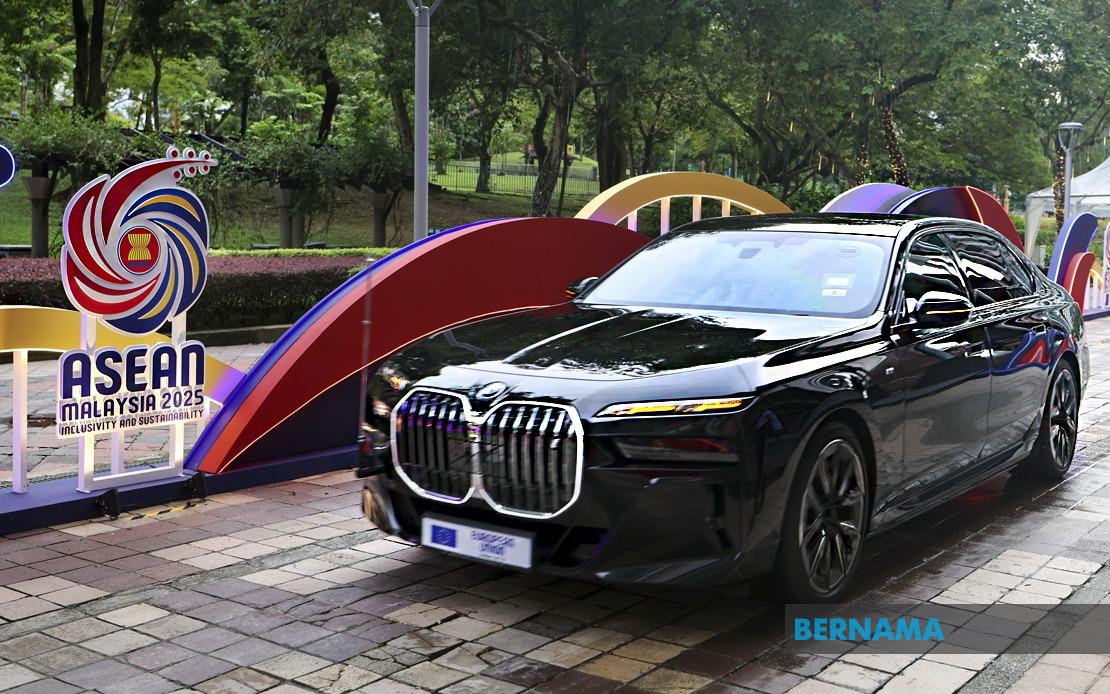
The Prime Minister's Department has moved to dispel widespread speculation on social media by confirming that a luxury BMW recently deployed for Prime Minister Datuk Seri Anwar Ibrahim's use is an existing government asset rather than a newly acquired official vehicle. The clarification, issued jointly by JPM and the Ceremonial and International Conference Secretariat Division (BIUPA), addresses mounting public curiosity about the high-profile vehicle that sparked debate across digital platforms regarding government expenditure and procurement practices.
According to the official statement released through Facebook on July 6, the BMW remains under BIUPA's management as part of the government's fleet specifically reserved for diplomatic and ceremonial purposes. The vehicle fulfils a dedicated function within Malaysia's official logistics operations, serving purposes that extend beyond the routine transportation of senior government officials. This distinction carries significance in understanding how nation-states allocate resources for international engagement and security-sensitive movements.
The primary justification offered by JPM centres on the vehicle's specialised security capabilities and its role in meeting international protocols. According to the department, the BMW has been engineered to comply with demanding security standards that govern the movement of heads of state and government leaders visiting Malaysia. These specifications are not mere luxury additions but rather essential protective features designed to counter contemporary security threats faced by senior dignitaries during official visits and domestic engagements.
The vehicle's defensive specifications represent a substantial engineering commitment. The BMW incorporates ballistic reinforcement capable of withstanding high-caliber gunfire, explosive device countermeasures, and modern asymmetric threats including unmanned aerial vehicle attacks. Such security enhancements are standard practice among governments hosting international dignitaries, reflecting the evolution of security risks in an era of sophisticated weaponry and organised threats against state leaders. Malaysia's investment in such vehicles aligns with international norms rather than representing exceptional expenditure.
JPM's statement emphasises that the Prime Minister's temporary use of the vehicle followed a security assessment and recommendation by the Royal Malaysian Police (PDRM). This procedural detail suggests that the deployment was not an arbitrary decision but rather a response to specific security circumstances or intelligence assessments. The involvement of PDRM in recommending the switch indicates that professional security evaluators determined the temporary reassignment to be operationally justified, lending institutional credibility to the decision.
The timing of the vehicle's deployment coincided with scheduled maintenance of the Prime Minister's principal official vehicle, which was gifted by the Yang di-Pertuan Agong. This disclosure addresses potential concerns about the permanence of the arrangement and suggests the BMW's use represents a temporary solution during a necessary maintenance cycle rather than a policy shift toward enhanced transportation. The connection to the Agong's gift also underscores the formal nature of Malaysia's highest office and the ceremonial significance attached to the Prime Minister's official transport arrangements.
The social media speculation that prompted the clarification reflects broader public interest in government asset management and official spending. In Malaysia's digital media environment, questions about high-value government purchases often generate significant engagement, particularly when luxury vehicles feature prominently in news cycles. The decision by JPM to issue a formal clarification demonstrates recognition of the importance of maintaining public confidence in transparent governance, even on technical matters of asset deployment and security protocols.
Understanding the context of diplomatic vehicle standards requires recognising that such equipment serves functions extending beyond individual convenience. International security protocols stipulate that host nations provide appropriately protected transportation for visiting dignitaries, reflecting both security imperatives and diplomatic courtesy. Similarly, a nation's own leaders require protection standards consistent with their position and exposure to security risks. Malaysia's allocation of specialised vehicles for such purposes reflects these established international practices rather than exceptional or unusual governance choices.
The clarification also highlights the distinction between asset acquisition and asset utilisation within government operations. BIUPA's existing fleet of security-equipped vehicles represents capital investment made previously according to diplomatic and security requirements. The decision to temporarily deploy an existing asset addresses an immediate operational need without generating new expenditure, which represents efficient resource management during scheduled maintenance periods. This practical approach to asset rotation demonstrates how government departments manage fixed assets to maintain service continuity.
For Malaysian observers and regional analysts monitoring governance practices, the episode illustrates how contemporary political communication must address public perception alongside operational necessity. The swift clarification by JPM reflects understanding that government credibility depends not merely on acting appropriately but on explaining those actions transparently to citizens. As Malaysia continues developing its international role and hosting high-level diplomatic engagements, the standards applied to protecting visiting dignitaries and national leadership remain consistent with regional and global expectations for state security protocols.

