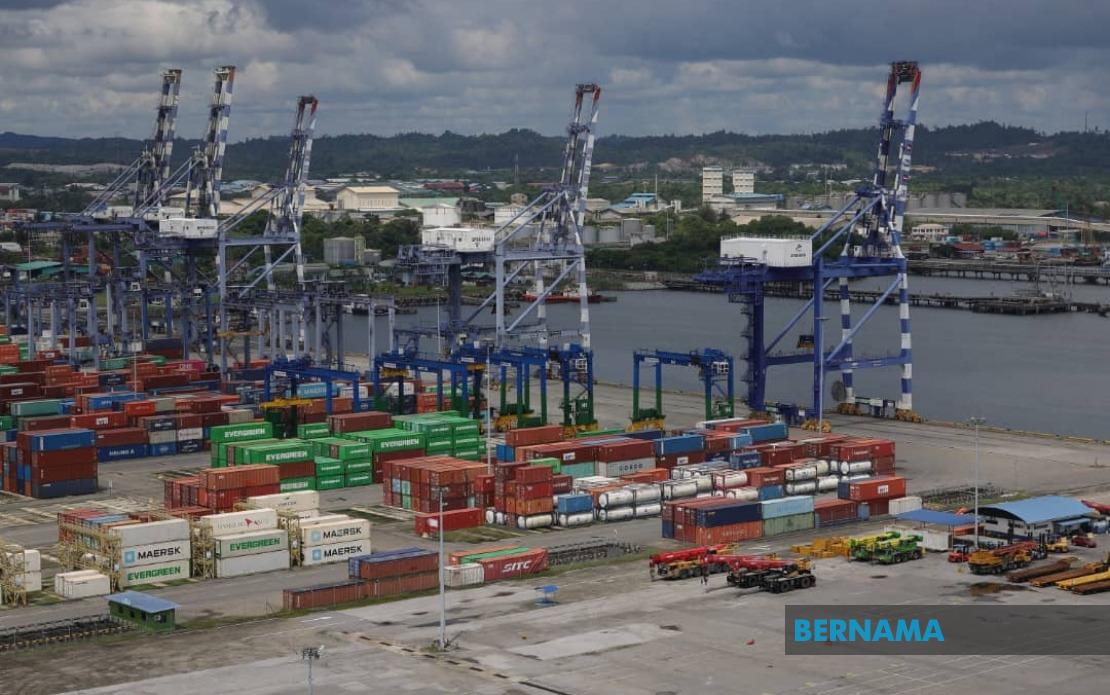
A landmark shift in the governance of Sarawak's critical maritime infrastructure has unfolded in Kuching, with the state government assuming full regulatory control of Bintulu Port from federal authorities. The transition, formalized through a ceremonial cheque handover in Bintulu, reflects what federal officials describe as a watershed moment in implementing the Malaysia Agreement 1963—the foundational compact that brought Sabah and Sarawak into the Malaysian federation six decades ago. Prime Minister Datuk Seri Anwar Ibrahim and Sarawak Premier Tan Sri Abang Johari Tun Openg both attended the event, underscoring the political significance of this restructuring at the highest levels of government.
Datak Mustapha Sakmud, who oversees federal relations with both Malaysian Borneo states, framed the handover as validation of Sarawak's standing as a founding partner with legitimate claims to resource and infrastructure autonomy. His statements suggest that the federal government views this transfer not as a diminishment of central authority but rather as a strategic recognition that devolving control over regional economic assets can strengthen the federation's overall architecture. This rhetorical framing is politically important, as it attempts to position the move as mutually beneficial rather than as a concession extracted by Sarawak through sustained advocacy or constitutional pressure.
Bintulu Port has evolved far beyond its origins as Malaysia's primary liquefied natural gas export facility. The facility now functions as a diversified hub encompassing industrial operations, logistics infrastructure, and emerging green energy initiatives. This transformation reflects broader global trends in which port authorities are repositioning themselves as comprehensive economic zones rather than single-commodity terminals. For Sarawak, the timing of regulatory transfer coincides with the state's strategic pivot toward renewable energy industries and low-carbon manufacturing sectors that can capitalize on its abundant hydroelectric resources.
The relocation of Bintulu Port from federal to state jurisdiction carries significant implications for Malaysia's regional economic strategy. Sarawak's control over the facility provides the state government with direct authority over port development planning, tariff structures, operational decisions, and industrial zoning—levers that can be deployed to attract foreign investment in green industries and climate-conscious manufacturing. Companies operating under emissions reduction mandates or seeking renewable energy integration may find Sarawak's proposal increasingly compelling, particularly as electricity generated from state hydroelectric facilities can directly support industrial operations at the port.
Sarawak's renewable energy endowment represents a distinctive competitive advantage in Southeast Asia's transition toward cleaner industrial operations. The state's hydroelectric capacity, developed through projects like the Bakun Dam and others, has historically supplied power to heavy industries including aluminum smelting and petrochemicals production. By positioning Bintulu Port as a node within a broader renewable energy ecosystem, Sarawak can market itself to multinational corporations seeking supply chain resilience and sustainability credentials. This approach aligns with investor trends favoring jurisdictions that combine abundant clean energy, sophisticated port infrastructure, and progressive regulatory environments.
The geographic positioning of Bintulu Port amplifies its strategic value for regional trade patterns. Located on Sarawak's northern coast, the port serves as a natural gateway for trade flows throughout the Asia-Pacific region. Its deepwater capabilities accommodate modern container vessels and bulk carriers, while its expansion potential remains significant compared to many competing Southeast Asian ports that face space constraints. Control by the state government may accelerate port enhancement projects designed to capture greater shares of regional transshipment traffic and facilitate integration with Brunei and other neighboring economies.
Implementation of the Malaysia Agreement 1963 has been episodic rather than comprehensive, with various provisions remaining contested or unimplemented across the decades since Sabah and Sarawak joined the federation. The Bintulu Port transfer represents a tangible outcome from sustained diplomatic and political engagement aimed at fulfilling the original constitutional commitments. However, other contentious items—including federal-state revenue sharing arrangements, immigration matters, and land and resource rights—continue to generate disagreements between federal authorities and Sarawak's leadership, suggesting that this port handover, while significant, addresses only one dimension of the broader MA63 implementation agenda.
The symbolism of federal officials acknowledging Sarawak's founder status and associated rights carries domestic political importance within the state. Sarawak has long maintained that its distinct constitutional position merits treatment differentiated from peninsular states and that the federation's power structures should reflect the partnership model established in 1963 rather than treat Sarawak as a subordinate entity. By visibly transferring control of a major economic asset, the federal government validates aspects of this argument, potentially affecting political dynamics heading into future state elections and federal-state negotiations over resource allocation and policy autonomy.
For Malaysian policymakers, the Bintulu Port decision illustrates how devolving certain economic functions to state governments can unlock regional potential while maintaining overarching federal coherence. The approach suggests receptiveness to asymmetric federalism—arrangements in which different states enjoy differentiated powers based on their constitutional history and circumstances. This model contrasts with more centralized approaches that keep all significant infrastructure under federal administration. Whether this represents a genuine shift in federal philosophy or a tactical concession to forestall political tensions remains an open question that will become clearer as subsequent MA63 negotiations unfold.
The port's evolution into a green energy hub also positions Sarawak within Malaysia's broader climate commitments and regional net-zero transition initiatives. As the federal government pursues carbon reduction targets, having states develop renewable energy-dependent industrial clusters serves national decarbonization objectives while granting states tangible authority and economic benefits. This alignment of environmental goals with devolved governance structures may establish a template for future infrastructure transfers, particularly those related to energy production and distribution.

