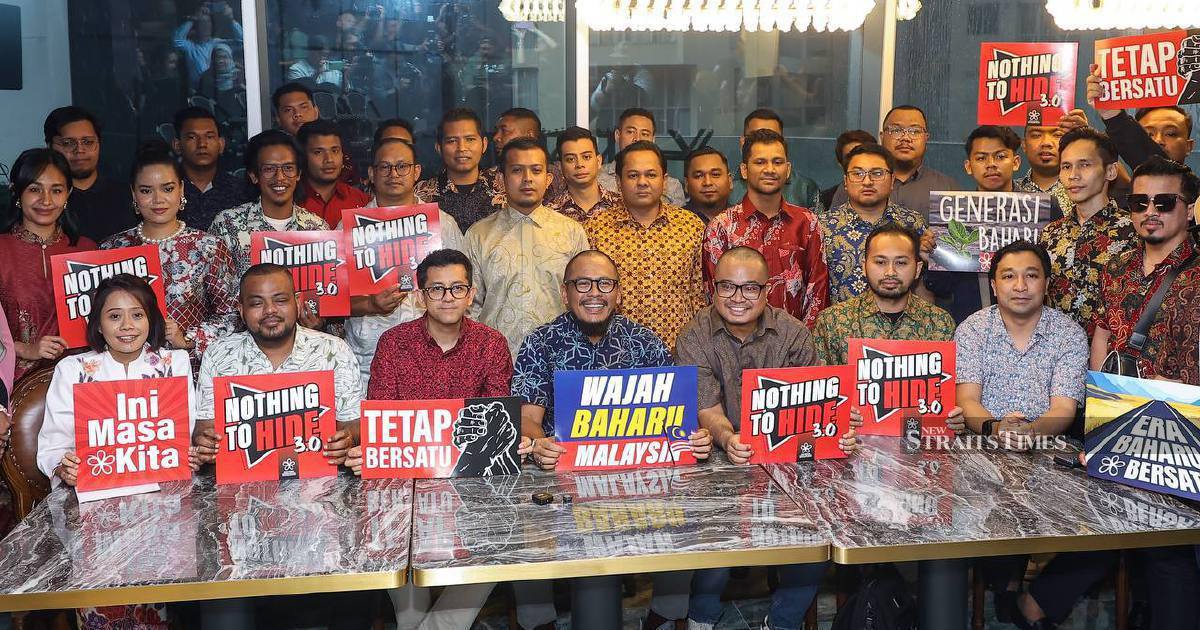
Bersatu leadership believes the recent friction between PAS and its Perikatan Nasional (PN) coalition partner can be overcome, despite mounting signs of strain within Malaysia's main opposition alliance. Kota Siputeh assemblyman Mohd Ashraf Mustaqim Abdul Munir offered a measured perspective on the tensions, suggesting that the two Islamist-oriented parties remain fundamentally committed to their alliance despite surface-level disagreements.
The optimism from the Bersatu camp reflects a pattern of reassurance that has become familiar in Malaysian politics—the notion that temporary friction between coalition members does not signal deeper ruptures. However, the frequency and intensity of recent disputes between PAS and Bersatu have raised questions about whether the PN arrangement can withstand the pressures of parliamentary politics and internal competition for influence within the conservative Malay-Muslim voting bloc.
Mohd Ashraf's comparison of the relationship to a married couple quarrelling under the same roof carries particular resonance in the Malaysian context, where coalition politics often resembles family arrangements rather than purely transactional alliances. The metaphor suggests an assumption of permanence—that disagreements are surface manifestations rather than fundamental incompatibilities. Yet this framing also acknowledges that real tensions exist and require management, lending credibility to his assertion that work must be done to maintain cohesion.
The Perikatan Nasional alliance, which swept to prominence during the 2020 political upheaval that ousted Pakatan Harapan, has always been somewhat awkward in its composition. Bersatu brings former Umno members and the political machinery associated with Mahathir Mohamad's legacy, while PAS represents Islamist grassroots organisation and a more consistent ideological positioning. These fundamental differences in origins and philosophy have occasionally surfaced as sources of tension regarding policy direction and resource allocation.
Recent weeks have seen multiple flashpoints between the two parties, ranging from disagreements over parliamentary tactics to competition for influence in federal and state governments where PN holds power. Such friction is hardly unusual in multi-party coalitions, yet the relatively young age of the PN arrangement means that established mechanisms for managing internal disputes may not yet be robust. Unlike Barisan Nasional, which developed institutional frameworks over decades to mediate between members, PN still operates with considerable fluidity in its decision-making structures.
For Malaysian voters and political observers, the health of the Bersatu-PAS relationship carries implications beyond the two parties themselves. The PN coalition's stability directly affects the stability of the current government, since its parliamentary numbers determine the government's majority. Any significant rupture between Bersatu and PAS could trigger realignments with unpredictable consequences for ministerial positions, policy direction, and the broader political landscape that Malaysians navigate.
The timing of Mohd Ashraf's reassurance is noteworthy, arriving during a period when PN faces scrutiny from multiple directions. Opposition parties actively attempt to exploit any signs of coalition weakness, while within government, different coalition members occasionally pursue divergent agendas regarding economic policy, religious matters, and constitutional issues. Building consensus across such diverse interests requires constant attention and relationship management.
From a strategic perspective, Bersatu has strong incentives to maintain stability within PN. The party's electoral performance remains dependent on the coalition framework, and any collapse of the arrangement could diminish its political relevance significantly. This reality likely underlies the optimistic messaging, which should be understood partly as a form of confidence-building designed to reassure party members and coalition partners alike that the arrangement remains viable.
The broader question facing Malaysian politics concerns whether PN can evolve beyond its initial shock-alliance character into a genuinely integrated coalition with shared long-term vision. Previous Malaysian coalitions have managed this transition through extensive negotiation, institutional development, and the cultivation of personal relationships between party leaders. Whether Bersatu and PAS can accomplish similar evolution while maintaining their respective bases of support remains an open question.
For now, Mohd Ashraf's characterisation suggests that Bersatu at least remains willing to invest effort in maintaining the relationship. The married couple analogy, while potentially comforting to supporters, also implicitly acknowledges that the relationship requires work and that marital disputes, left unaddressed, can escalate into more serious problems. The coming months will likely test whether this optimism proves justified or whether deeper structural tensions eventually force a reckoning within the coalition.

