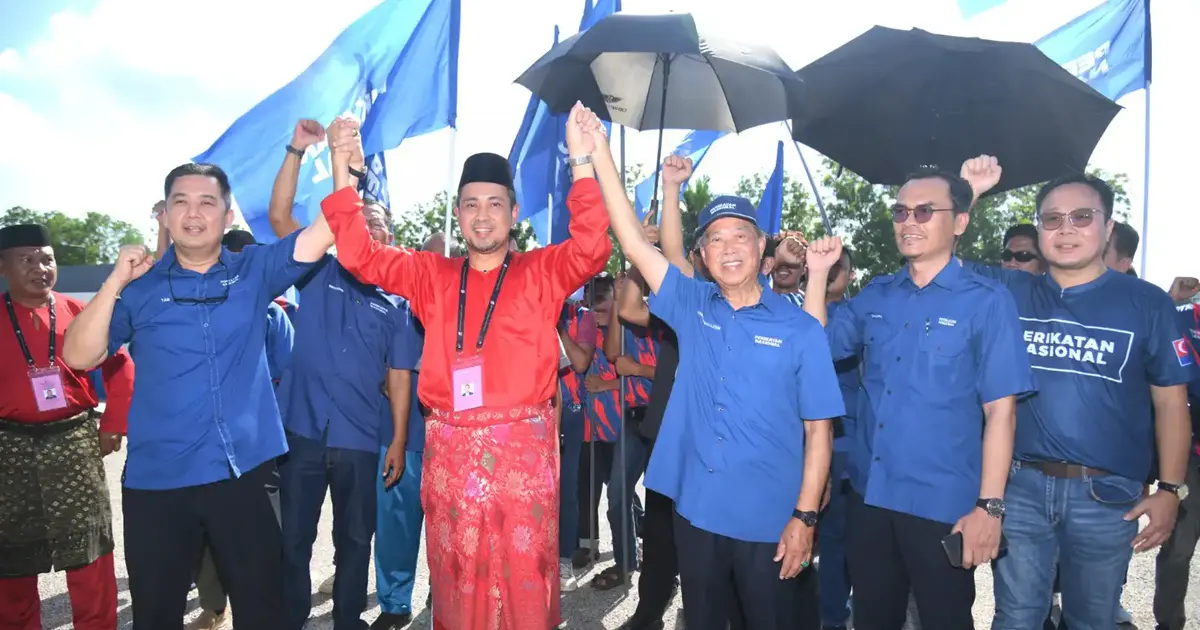
Bersatu president Muhyiddin Yassin has adopted a measured tone regarding reported tensions within the Perikatan Nasional coalition, signalling his party's willingness to accept PAS's decision to withhold organisational support without escalating the disagreement. The stance reflects Muhyiddin's attempt to preserve coalition cohesion at a time when internal friction between the two major PN components has become increasingly visible to the public and political observers across the region.
Muhyiddin's public reassurance centres on a philosophical principle he has long championed within Perikatan Nasional: that the alliance functions best when member parties operate from shared conviction rather than obligation. By framing Bersatu's acceptance of PAS's refusal as consistent with PN's foundational values, the Bersatu president seeks to recast what might otherwise appear as a coalition setback into a demonstration of principled governance. This rhetorical pivot carries particular weight given the scrutiny Malaysia's complex multi-party system attracts from observers tracking coalition stability and inter-party dynamics across Southeast Asia.
The underlying tension reflects broader questions about resource allocation within Perikatan Nasional and the extent to which larger components like PAS should automatically mobilise their grassroots networks to support smaller allies. PAS, with its established machinery across multiple states and substantial rural membership base, represents significant organisational firepower that Bersatu has historically sought to leverage. The Islamic party's apparent reluctance to commit these resources unconditionally signals evolving power calculations within the coalition and suggests PAS leadership may be recalibrating its support mechanisms based on shifting political priorities.
For Malaysian political observers and international analysts monitoring coalition dynamics, Muhyiddin's response carries multiple implications. First, it demonstrates a pragmatic acceptance of coalition realities—that partners cannot be coerced into full cooperation regardless of formal alliance agreements. Second, it reveals Bersatu's acknowledgment of its relatively weaker organisational position compared to PAS, necessitating a diplomatic rather than confrontational approach when seeking party cooperation. This recognition of hierarchy within PN, though diplomatically obscured, reflects the practical limitations faced by Bersatu as it attempts to consolidate its political standing without overwhelming grassroots infrastructure.
The Perikatan Nasional framework itself emerges as a significant context here. Unlike the more hierarchical structures sometimes observed in other Southeast Asian coalitions, PN has been constructed on explicitly voluntary cooperation principles. Muhyiddin's invocation of these principles represents a return to the coalition's theoretical foundations at a moment when practical strains threaten to expose the weaknesses of consensus-based alliance management. By emphasising that PN rejects compulsory mutual support models, Muhyiddin simultaneously reinforces coalition legitimacy while acknowledging its inherent structural vulnerabilities.
PAS's apparent decision to limit machinery deployment likely stems from multiple considerations beyond simple intra-coalition dynamics. The Islamic party may be protecting resources for its own political initiatives, managing internal priorities as it navigates its own organisational challenges, or signalling to its supporters that it maintains independent agency within Perikatan Nasional rather than functioning as a subordinate entity. Such calculations are entirely rational within Malaysia's competitive political environment, where maintaining distinct party identity remains crucial for member retention and electoral sustainability.
The timing of this apparent tension and Muhyiddin's public response suggests strategic communication objectives beyond the immediate machinery dispute. By publicly accepting PAS's position with grace and philosophical consistency, Muhyiddin attempts to demonstrate Bersatu's maturity as a coalition partner while subtly reinforcing that his party possesses sufficient self-sufficiency to proceed without constant external support. This positioning becomes particularly important given Bersatu's ongoing efforts to establish itself as a credible, long-term political force rather than merely a transitional arrangement dependent on larger allies.
Regional political observers note that coalition stability matters significantly for Malaysia's broader governance trajectory and regional standing. A Perikatan Nasional that functions smoothly carries different implications for policy continuity, institutional development, and Malaysia's diplomatic relationships than a coalition plagued by internal friction. Muhyiddin's diplomatic handling of the PAS machinery issue thus extends beyond managing immediate party-to-party tensions to encompassing broader questions about coalition sustainability and effective governance architecture.
The voluntary cooperation framework that Muhyiddin champions also reflects deeper philosophies about alliance management that deserve scrutiny. While principled flexibility sounds admirable in abstract terms, maintaining functional coalitions ultimately requires mechanisms ensuring sufficient collaboration for collective action. The tension between respecting partner autonomy and achieving necessary coordination represents a perpetual challenge for Malaysian political coalitions, and Perikatan Nasional's response to this tension will significantly influence how similar issues arise and resolve in future.
Looking forward, Muhyiddin's measured acceptance of the machinery situation establishes precedent for how Bersatu will handle future cooperation requests and rejections. Should the party consistently accept refusals without asserting its interests more forcefully, perceptions of Bersatu's coalition leverage may diminish over time. Conversely, Muhyiddin's emphasis on principled cooperation without coercion suggests Bersatu intends to build coalition relationships on foundations of genuine alignment rather than tactical necessity, potentially producing more durable partnerships despite increased near-term flexibility costs.
The broader significance of this episode lies in what it reveals about contemporary Malaysian coalition politics and the management challenges facing multi-party alliances in competitive, pluralistic democracies. Perikatan Nasional's evolution as a governing coalition continues to generate lessons applicable across Southeast Asia, where coalition-based governance increasingly characterises political systems navigating complex electoral landscapes and diverse constituent interests.

