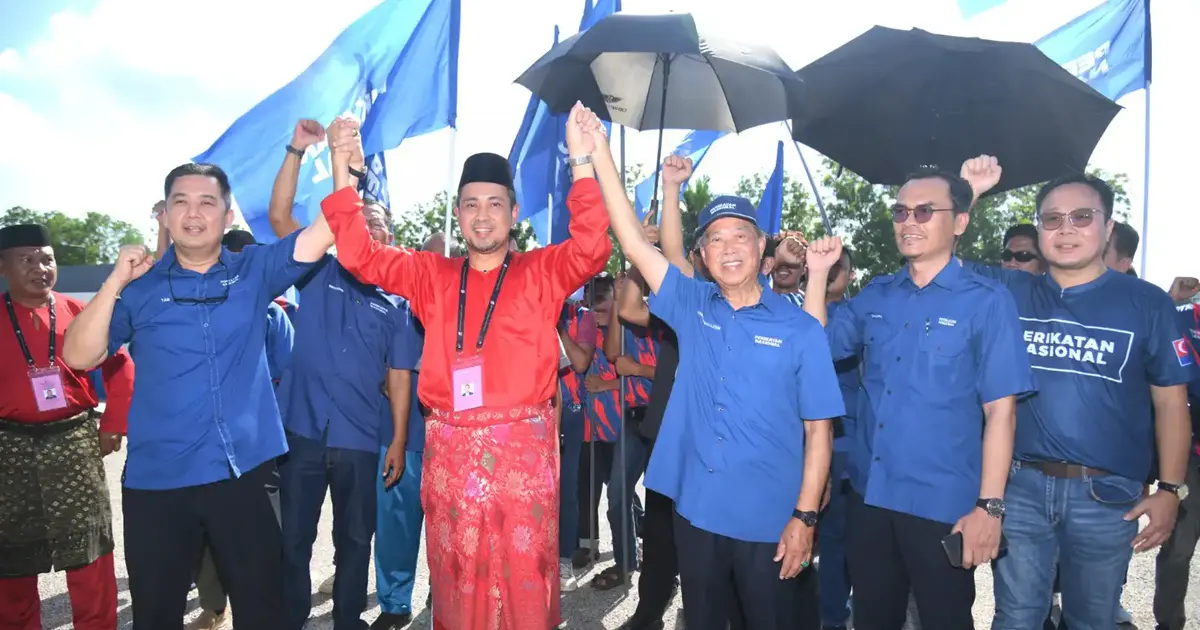
Bersatu president Muhyiddin Yassin has adopted a measured stance following PAS's apparent unwillingness to mobilise its party machinery to assist Bersatu, framing the setback as consistent with the voluntary principles underpinning the Perikatan Nasional coalition. Rather than escalate tensions or express disappointment publicly, Muhyiddin emphasised that while mutual aid and coordinated effort represent foundational values of the PN partnership, his party will neither demand nor expect other members to provide material support against their wishes.
The statement reflects a delicate balancing act within Malaysia's ruling coalition at a moment when internal strains have become increasingly visible. Perikatan Nasional, which consolidated power following the 2022 general election, has long been portrayed as a unity vehicle bringing together Bersatu, PAS, and other component parties around shared governance principles. However, the relationship between Bersatu and PAS—the coalition's two heavyweight players—has occasionally shown signs of friction as they compete for influence, resources, and electoral positioning ahead of future contests.
Muhyiddin's philosophical stance on this issue carries particular weight given Bersatu's own organisational vulnerabilities. As a relatively younger party compared to PAS's deep institutional roots and mass membership, Bersatu has invested significantly in building cadre networks and grassroots presence. The party's capacity to mount independent electoral machinery remains a work in progress, making cooperation from larger partners theoretically valuable. Yet by publicly accepting PAS's decision without rancour, Muhyiddin signals confidence that Bersatu can operate independently if necessary, potentially burnishing his party's credibility as an autonomous political force rather than a junior appendage within PN.
The broader context involves ongoing negotiations over how Perikatan Nasional distributes electoral seats, government appointments, and policy influence among its constituent parties. PAS, emboldened by strong showings in recent state elections and commanding significant parliamentary numbers, has increasingly asserted its prerogatives within the coalition. The party's reluctance to lend organisational support to Bersatu may reflect calculations about preserving its own resource base, managing expectations among its supporters, or establishing clearer boundaries regarding what PN unity actually entails in practical terms.
For Malaysian observers and political analysts, Muhyiddin's response underscores a fundamental tension within modern coalition politics: the difference between formal partnership and substantive cooperation. Perikatan Nasional exists as a legal and electoral entity, yet its member parties retain distinct identities, memberships, and organisational interests. When one component refuses to subordinate its machinery to another's needs, the refusal tests whether the coalition operates on genuine reciprocity or merely on convenience.
The implications extend beyond bilateral Bersatu-PAS dynamics. Malaysia's political landscape increasingly features fluid coalition arrangements where parties juggle simultaneous commitments to multiple alliances—federal-level PN cooperation, state-level arrangements with Barisan Nasional, and various cross-cutting agreements. Within this ecosystem, clarity about what mutual support actually means becomes crucial. By articulating that PN cooperation must remain voluntary, Muhyiddin potentially establishes a precedent that allows component parties to pick and choose their engagements without incurring penalties or accusations of bad faith.
This approach also carries risks. If voluntary cooperation becomes the default, coalition coherence may deteriorate over time as parties increasingly act unilaterally whenever their immediate interests diverge from collective objectives. The threshold for withdrawing support or threatening coalition stability could lower, making government formation and legislative operations more uncertain. Malaysia has experienced several periods of political instability rooted precisely in the fragility of coalition arrangements, and Muhyiddin's acceptance of selective cooperation may inadvertently normalise a culture of minimal commitment.
Regionally, Malaysia's coalition politics merit attention from neighbouring Southeast Asian democracies grappling with similar multiparty configurations. Thailand, Indonesia, and the Philippines all navigate complex coalition environments where managing tensions between autonomy and unity poses persistent challenges. Muhyiddin's emphasis on respecting individual party autonomy resonates with broader trends toward looser, transaction-based alliance-building, though whether this model delivers stability or breeds chronic fragmentation remains contested.
Within Bersatu itself, the party's grassroots membership may read Muhyiddin's stoic acceptance differently than intended. While framed as principled respect for PN values, the statement could be interpreted as acknowledgment that Bersatu lacks sufficient leverage to demand reciprocal support from PAS. For members invested in Bersatu's growth and electoral prospects, a clearer assertiveness about the party's contributions and entitlements might have resonated more powerfully. The balance between sounding magnanimous and sounding weak is precarious in internal party dynamics.
Moving forward, the episode illuminates why Malaysia's political elite continue refining mechanisms for coalition governance. Written protocols, leadership councils with real enforcement powers, and transparent seat-sharing frameworks might reduce the friction generated by ad hoc requests for support and equally ad hoc refusals. As Perikatan Nasional matures and faces new electoral tests, translating voluntary cooperation into functional governance could prove decisive for the coalition's longevity and effectiveness.

