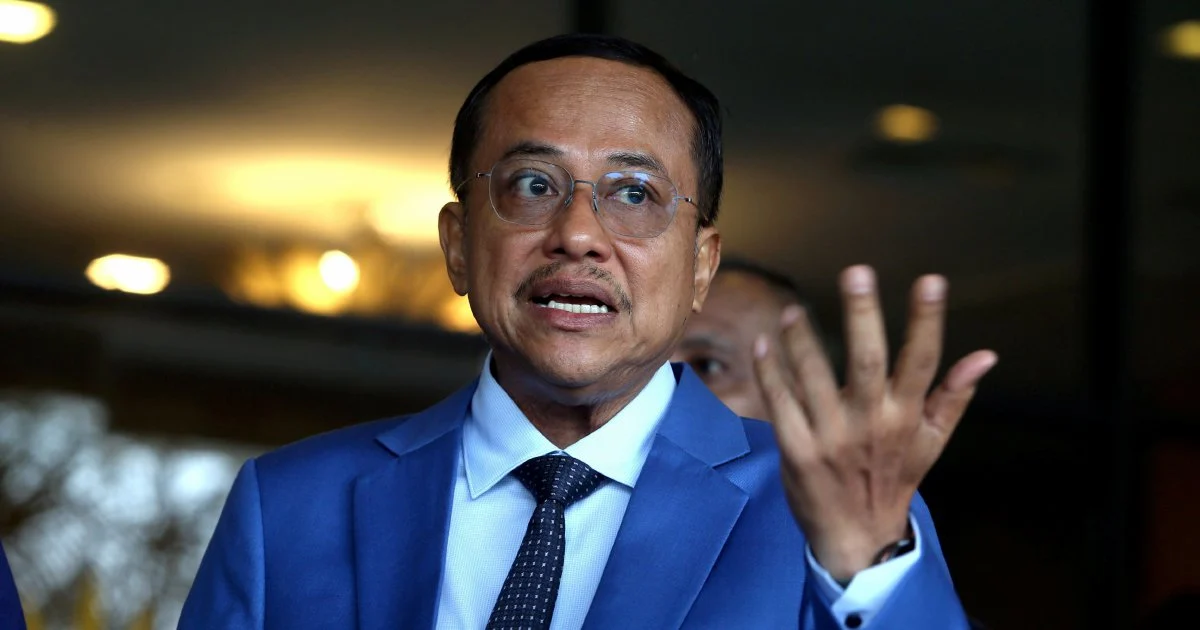
Datuk Tun Faisal Ismail Aziz, serving as Bersatu's information chief, has mounted a direct challenge to the leadership of Perikatan Nasional, accusing chairman Datuk Seri Dr Ahmad Samsuri Mokhtar of abandoning his duties at a critical juncture for the opposition coalition. The rebuke comes amid mounting tensions within PN, with Faisal asserting that Samsuri has effectively withdrawn from active stewardship of the grouping, leaving a leadership vacuum precisely when the alliance faces substantial internal pressures.
The core of Faisal's grievance centres on what he describes as Samsuri's abdication of his formal role as PN chairman. Rather than exercising the kind of decisive leadership expected of a coalition chief, Faisal contends that Samsuri has instead confined himself to advancing the interests of his own party, PAS, whilst neglecting the broader institutional needs of Perikatan Nasional. This distinction matters significantly in Malaysian politics, where coalition chairmen are expected to act as impartial arbiters and strategists serving all member parties, not merely their own political vehicles.
Bersatu's intervention reflects deeper fractures emerging within the PN alliance, which has served as a major opposition force since 2020. The coalition comprises several distinct political entities with differing ideological orientations and regional power bases, requiring careful management to maintain cohesion. When the chairman fails to perform this balancing function, individual parties may pursue their own agendas, potentially fragmenting collective decision-making and weakening PN's overall political position in parliament and beyond.
The timing of Bersatu's critique is significant, as it occurs during what observers characterise as a period of crisis for PN. The nature of this crisis remains contested between the parties involved, but Faisal's accusation suggests that institutional dysfunction rather than mere policy disagreement lies at the heart of the coalition's troubles. His characterisation of Samsuri's performance as irresponsible indicates that Bersatu believes the chairman bears personal responsibility for PN's difficulties rather than external factors or opposing political forces.
For Malaysian political observers, this confrontation illuminates the structural vulnerabilities of multi-party coalitions in the country's system. Unlike the major component parties within broader alliances, coalition chairs must navigate competing loyalties and expectations. They are simultaneously expected to champion their own party's interests whilst serving as neutral facilitators for the collective good. This dual mandate frequently creates tension, particularly during periods when individual parties feel their core interests are not being adequately protected or promoted.
Bersatu's decision to publicly criticise PN's chairman rather than pursuing quieter backroom negotiations suggests that internal channels for resolving disputes may have broken down. Public criticism of this sort typically represents a last resort in Malaysian political culture, where consensus-building and behind-the-scenes dialogue are traditionally preferred. The shift to public accusation thus indicates that informal dispute-resolution mechanisms have failed to address Bersatu's grievances with the current PN leadership arrangement.
The accusation that Samsuri has confused his role as PN chairman with his role as PAS chairman carries particular weight, as it suggests a fundamental misunderstanding or misapplication of institutional boundaries. PAS, as Perikatan Nasional's largest component by parliamentary representation and membership, naturally holds substantial influence within the coalition. However, when the party chairman allows PAS dominance to overshadow his stewardship of the broader alliance, other members reasonably interpret this as prioritisation of one party's interests over collective PN strategy.
This rupture could have material consequences for PN's political effectiveness in the coming months. Coalition cohesion affects not merely symbolic matters but concrete issues including parliamentary tactics, candidate selection for future elections, media strategy, and positioning relative to the Anwar Ibrahim government. If Bersatu and PAS cannot maintain minimum levels of coordination through PN's institutional structures, both parties risk diminishing returns on their political investments in the coalition framework.
Samsuri's position as PN chairman became more prominent following the coalition's formation and subsequent entrenchment as a major opposition force. His background in PAS, combined with his appointment to the PN chairmanship, was presumably intended to signal that the coalition could function effectively despite PAS's outsized influence. However, Faisal's critique suggests that this arrangement may have backfired, with critics perceiving that PAS control over the chairman's office has merely formalised the party's dominance rather than constraining it.
The broader implications for Southeast Asian opposition politics merit consideration as well. Coalition management remains a critical challenge for parties seeking to challenge incumbents in majoritarian systems. When coalitions fail to develop robust institutional mechanisms and neutral leadership, they typically fracture under pressure, allowing governing parties to consolidate power through divide-and-conquer strategies. Bersatu's public confrontation thus reflects not merely internal PN friction but broader questions about whether loose opposition alliances can survive the stresses of serious challenge campaigns.
Moving forward, PN faces a crucial choice about whether to address these structural leadership questions or allow simmering discontent to accumulate. Faisal's intervention may represent a preliminary skirmish before larger confrontations, or it could catalyse productive institutional reform. Malaysian political history suggests that coalitions often muddle through such crises without formal restructuring, attempting instead to manage tensions through ad hoc arrangements and personal relationships. Whether this approach serves PN's interests in the current political environment remains to be seen.