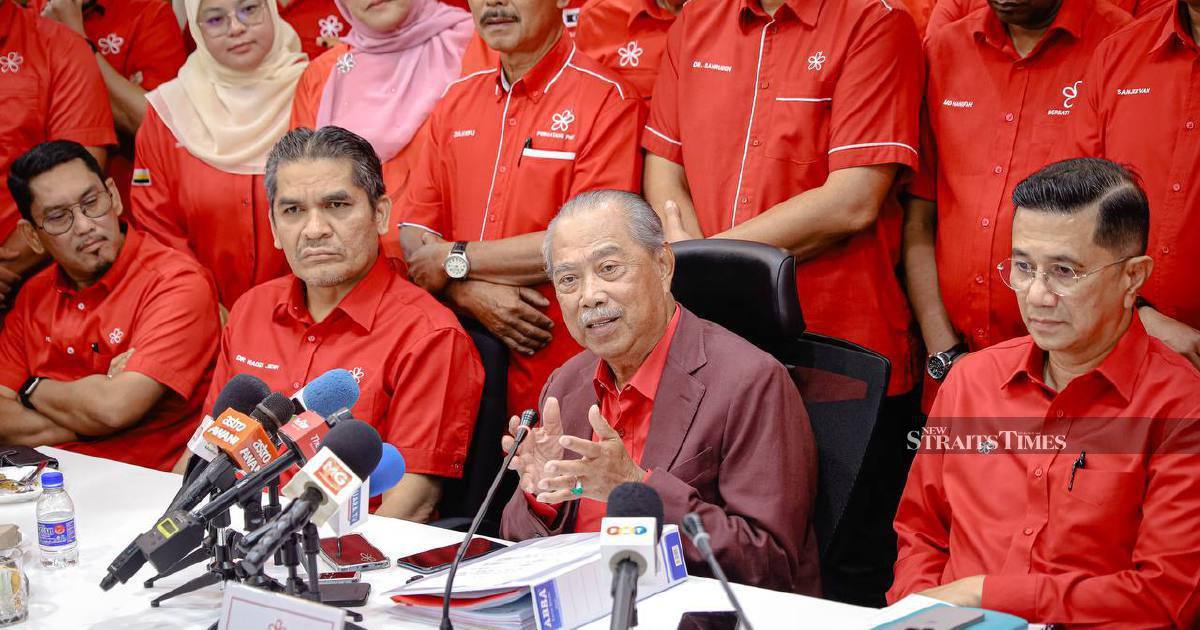
Bersatu appears to be bracing for a potential electoral confrontation with Pas in Johor, with party president Tan Sri Muhyiddin Yassin explicitly stating the movement stands ready to compete in constituencies where both parties may seek nomination. This declaration underscores the fragile nature of political alignment discussions currently unfolding in Malaysia's southern heartland as both organisations navigate the complex terrain of pre-election negotiations and coalition building.
The prospect of direct competition between Bersatu and Pas reflects the broader uncertainty enveloping Malaysian coalition politics. While both parties maintain formal alliances within their respective groupings, the reality of limited contested seats in any given state election means difficult choices lie ahead regarding candidate selection and nomination strategies. Johor, as a significant electoral battleground with considerable political and economic importance to the federation, represents precisely the kind of arena where such tensions are most likely to surface.
Muhyiddin's comments suggest Bersatu has adopted a pragmatic stance regarding potential seat disputes. Rather than express concern about direct competition, the party leader has essentially communicated that his organisation possesses the organisational capacity and electoral support to challenge Pas should circumstances force such a confrontation. This positioning simultaneously serves as both an implicit negotiating point—signalling Bersatu's competitive strength—and a contingency acknowledgement that unity talks may not yield satisfactory outcomes for all parties involved.
The Johor context carries particular weight in Malaysian politics. The state has historically served as a crucial power base for various political movements and remains demographically and economically significant. Elections there often provide early indicators of broader electoral trends affecting national politics. Any internal coalition friction manifesting in Johor contests could therefore ripple through perceptions of coalition viability at the federal level.
Seat allocation negotiations in Malaysian electoral politics have long proven contentious and time-consuming. The mathematics of coalition building—where multiple parties must divide available constituencies based on respective strength, historical performance, and political leverage—creates inherent friction. When regional variations in party strength are factored in, the complexity multiplies substantially. Johor's particular configuration of constituencies presents additional complications given the varying demographic compositions and electoral patterns across urban, suburban and rural areas.
Bersatu's willingness to explicitly acknowledge potential competition with Pas also reflects the party's evolution since its formation. Originally positioned as a Malay-Muslim party emphasising its Islamic credentials and Bumiputera advocacy, Bersatu has increasingly sought to establish itself as a distinct political force capable of winning seats on its own merits rather than merely as a junior coalition partner. This self-positioning strategy becomes more credible when leadership expresses confidence about contesting even against established competitors like Pas.
Pas itself remains a formidable force in Malaysian electoral politics, particularly in rural and semi-urban constituencies where Islamic messaging and community organising have proven effective. The party's organisational machinery, refined over decades, provides substantial resources for campaign mobilisation. Any direct competition between Bersatu and Pas would thus represent genuine electoral stakes rather than mere procedural formalities, making seat negotiation outcomes genuinely consequential for both organisations.
The broader coalition landscape adds another dimension to these Johor dynamics. The success or failure of seat negotiations involving Bersatu and Pas indirectly affects perceptions of coalition cohesion across Malaysia's political landscape. Early resolution of potential disputes signals organisational maturity and genuine partnership commitment; prolonged wrangling or electoral confrontations convey fragility and suggest that coalition alignments remain largely opportunistic rather than ideologically or strategically coherent.
For Malaysian voters observing these developments, Bersatu's statements carry multiple implications. They suggest that electoral choice may extend beyond simple coalition versus coalition contests in some constituencies. The possibility of intra-coalition competition means voters in certain Johor seats might face genuine alternatives representing different wings of the same broader political movement. This complexity enriches electoral choice while simultaneously potentially fragmenting anti-incumbent or pro-incumbent voting blocs, depending on how coalition negotiations ultimately resolve.
The timeline for these negotiations remains fluid, with discussions likely intensifying as electoral calendars firm up. Both Bersatu and Pas possess incentive to reach accommodation given the electoral costs of direct competition, yet neither appears willing to concede strategic positioning without substantial negotiating gains. This dynamic—where mutual interest in cooperation exists alongside fundamental unwillingness to subordinate party interests—characterises much of Malaysian coalition politics and underscores why seat allocation talks often extend to the final stages before nomination periods close.
Muhyiddin's readiness statement also carries tactical significance regarding his party's negotiating position. By signalling confidence in Bersatu's competitive capacity, he simultaneously indicated his organisation will not accept obviously disadvantageous seat allocations. This positioning may actually facilitate eventual compromise by establishing parameters within which both parties can claim satisfactory outcomes. How these negotiations ultimately conclude will significantly influence Johor's electoral landscape and carry implications extending well beyond the state into broader Malaysian political dynamics.