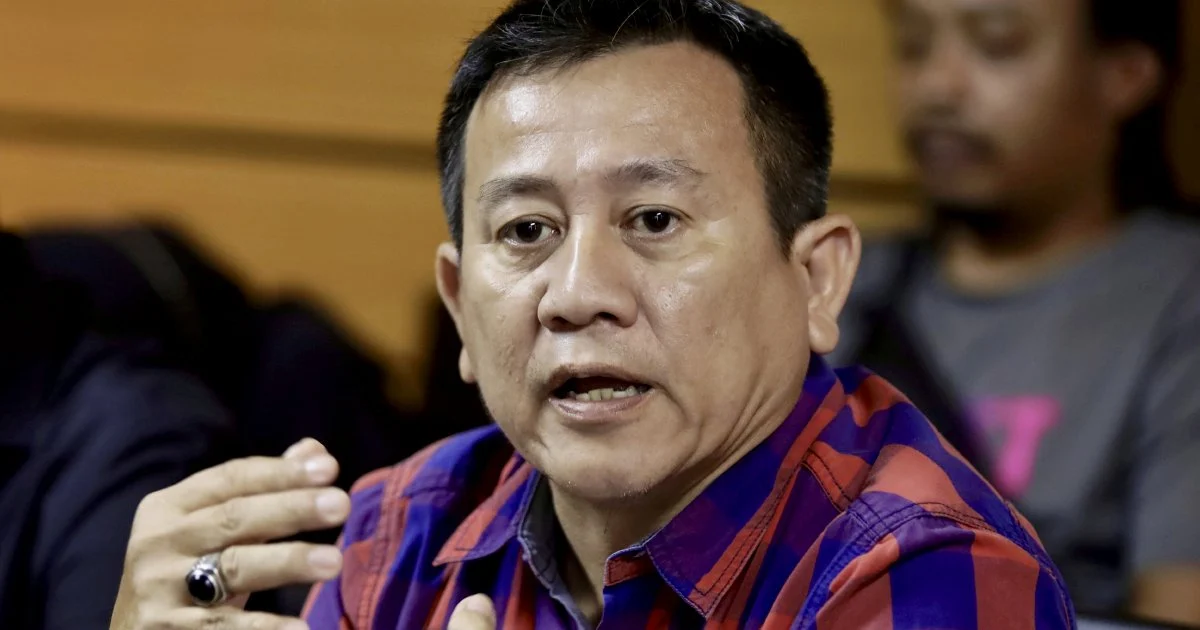
The call for a shake-up within Perikatan Nasional's political configuration has intensified, with Bersatu's information chief Datuk Tun Faisal Ismail Aziz openly advocating that PAS abandon the coalition arrangement. His intervention into the internal dynamics of the Islamist party signals deepening tensions within PN's leadership structures and hints at broader frustrations over the coalition's current trajectory and decision-making processes.
Tun Faisal's position represents a notable departure from the careful diplomatic language typically deployed when discussing intra-coalition tensions. Rather than accepting the status quo within PN—a bloc formed to challenge the federal government and maintain political relevance among its constituent parties—he has suggested that PAS would be better served by pursuing an alternative political course. This recommendation effectively questions whether the current PN structure remains viable for all parties involved or whether realignment would better serve individual party interests.
The suggestion that PAS operates independently carries significant implications. As Malaysia's largest Islamist party, PAS has substantial grassroots support, particularly in rural areas and across the East Coast states. Stepping away from PN would fundamentally alter the opposition's competitive positioning ahead of potential electoral contests. Such a move could reshape Malaysia's broader political landscape, potentially creating space for fresh coalitions or alliances that might reconfigure the traditional three-bloc system of government, opposition, and independent actors.
Alternatively, Tun Faisal's proposal that PAS establish a new coalition suggests he envisions possibilities for realignment that might be more aligned with Bersatu's strategic objectives. PN itself was formed relatively recently, bringing together different political entities with sometimes divergent interests. The notion of constructing a different political vehicle implies recognition that current arrangements may not adequately serve all participants' long-term aspirations or reflect evolving dynamics within Malaysia's political marketplace.
The timing and nature of such a public call warrant scrutiny. For a senior figure in one coalition component to openly urge another component's departure is unusual and typically reflects either severe internal dysfunction or a calculated attempt to reshape coalition composition in favor of particular actors. Bersatu's positioning as information chief lends official weight to these remarks, suggesting they reflect broader party sentiment rather than isolated individual opinion.
Within Malaysian politics, coalition arrangements have historically proven fragile. The Pakatan Harapan alliance that briefly governed from 2018 fractured dramatically, leading to the formation of rival coalitions. Perikatan Nasional itself emerged from this realignment, incorporating parties like Bersatu, PAS, and others seeking to build political alternatives. The fact that internal tensions are now surfacing publicly suggests these coalitions remain vulnerable to decomposition when strategic interests diverge.
For Southeast Asian observers tracking Malaysia's political development, such developments highlight the region's broader pattern of coalition instability and the ongoing competition for political dominance. Coalition-building across Southeast Asia has become increasingly challenging as parties calculate narrower self-interest while recognizing that too-public disputes risk damaging their collective electoral standing. The tension between maintaining necessary partnerships and pursuing individual party advancement drives much of the region's political maneuvering.
PAS specifically faces a decision calculus that balances its current positioning within PN against potential benefits of independence or alternative arrangements. As Malaysia's dominant Islamist party, PAS possesses distinct ideological positioning and constituent interests that may not align perfectly with coalition partners. Independence could allow clearer articulation of its Islamic agenda without accommodation to non-religious coalition members. Conversely, coalition membership provides greater electoral competitiveness and broader political influence than operating alone would likely achieve.
The feasibility of building an entirely new coalition around PAS leadership raises questions about which other parties might participate and under what terms. Malaysia's smaller political parties often face pressure to choose among larger coalitional blocs to maintain electoral viability. Creating an entirely new formation would require either attracting significant parties away from existing coalitions or aggregating numerous smaller entities into a coherent alternative.
For Malaysia's electorate and broader political observers, these developments underscore the continued fluidity and uncertainty characterizing national politics. Rather than settling into stable, predictable configurations, Malaysia's political landscape continues experiencing reconfiguration as parties reassess alliances and explore alternative arrangements. This instability, while creating opportunities for fresh political initiatives, also complicates long-term strategic planning and policy formulation across different sectors.
Bersatu's apparent move to reshape coalition composition may also reflect its own internal pressures and electoral calculations. As a relative newcomer to Malaysia's political firmament, Bersatu continues navigating its position within competitive environments dominated by longer-established parties. Actively promoting coalition restructuring could position Bersatu as a strategic actor capable of reshaping political configurations rather than merely participating in existing arrangements.
Moving forward, whether PAS seriously contemplates coalition departure remains uncertain. Public calls for departure are sometimes negotiating tactics aimed at extracting concessions or shifting internal coalition dynamics rather than reflections of genuine intent. The response from PAS leadership and other PN members will provide crucial indicators of whether this represents serious rupture or repositioning within acceptable boundaries.

