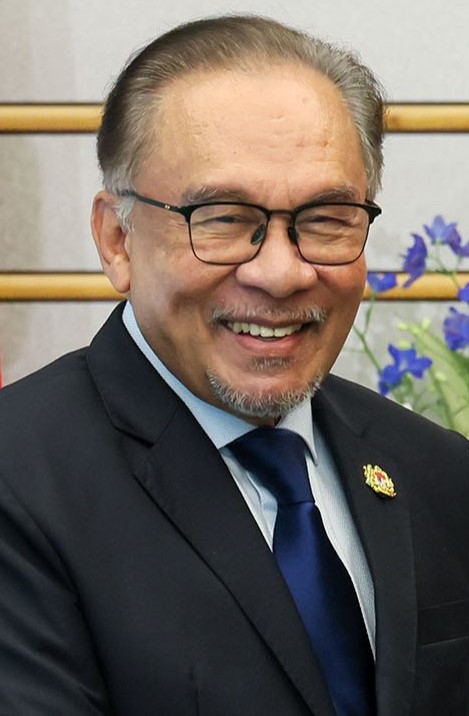
Tan Sri Muhyiddin Yassin moved to shore up Bersatu's position within Perikatan Nasional on Monday evening, making an emphatic declaration that his party has no intention of abandoning the coalition despite mounting internal pressures. Speaking at the party headquarters in Petaling Jaya following a Supreme Leadership Council meeting, the Bersatu president insisted that the party would maintain its membership status and continue flying the PN flag in the contested electoral landscape ahead.
The timing of Muhyiddin's statement carries particular significance given the deteriorating relationship between coalition partners. PAS had previously announced a formal termination of all political cooperation with Bersatu, a move that signals deepening fractures within what was once envisioned as a unified opposition-to-government alliance. The move by the Islamic party represents a substantial blow to the coalition's cohesion, yet Muhyiddin's defiant stance suggests Bersatu intends to weather the storm and maintain its organisational foothold within the broader PN structure.
The practical implications of Bersatu's commitment became clear through Muhyiddin's confirmation that the party would contest both the Johor state election on July 11 and the Negeri Sembilan poll scheduled for August 1 under the PN logo rather than pursuing independent candidacy. This decision underscores Bersatu's calculation that remaining tied to the coalition brand—even as it faces internal criticism—offers better electoral prospects than fracturing into separate campaigns. For Malaysian voters in both states, the continuation of PN as a visible political entity means they will encounter a recognisable coalition brand rather than watching it dissolve entirely in these key contests.
Muhyiddin placed considerable emphasis on procedural protections embedded within PN's constitutional framework, arguing that no single party possessed unilateral authority to expel another member. He stressed that the coalition operates on the basis of consensus and formal compliance with established protocols, suggesting that any attempt by PAS or other parties to remove Bersatu would violate these foundational principles. This legalistic approach reflects how Malaysian coalition politics often functions—through carefully delineated party agreements that theoretically protect member interests even amid severe political disagreements.
The Bersatu president's remarks, delivered alongside party vice-presidents Datuk Dr Radzi Jidin and Datuk Seri Ahmad Faizal Azumu as well as secretary-general Datuk Seri Mohamed Azmin Ali, presented a united party front to external observers. The presence of these senior figures signalled internal consensus, at least at the leadership level, regarding the decision to maintain PN membership. Such displays of unanimity become particularly important in Malaysian politics when party cohesion faces questioning from external critics or rival factions.
For Southeast Asian observers tracking Malaysian coalition dynamics, Bersatu's stance reflects the complex calculus facing mid-tier political parties in the country's evolving landscape. Having previously served as the primary vehicle through which Muhyiddin exercised executive authority during his premiership, Bersatu occupies a distinctive position neither as a dominant force nor as a marginal player. Remaining within PN, even as the coalition faces organisational strain, preserves the party's relevance and maintains pathways to future political influence should electoral circumstances shift.
The Johor and Negeri Sembilan contests take on heightened importance within this context. These state-level battles will serve as crucial tests of whether PN can function as a coherent electoral force despite the formal rupture with PAS. For Bersatu specifically, strong performance in these contests could validate Muhyiddin's decision to maintain coalition membership, while disappointing results might intensify internal pressure to reconsider the party's strategic direction. The electoral outcomes will resonate beyond these two states, influencing broader calculations about coalition viability heading toward the next general election cycle.
The broader Malaysian political environment has witnessed repeated episodes of coalition restructuring and realignment in recent years, creating a context where Bersatu's insistence on remaining within PN carries particular weight. Voters and analysts have grown accustomed to witnessing coalition partners either publicly uniting around shared platforms or fractiously splitting into competing camps. Muhyiddin's statement, framed as a reaffirmation of existing commitment, actually signals determination to resist this fragmentary trend, at least from his party's perspective.
The question of whether PN can sustain itself as a functioning coalition without PAS—historically one of its most electorally significant components—remains unresolved. PAS's formal withdrawal of cooperation creates an asymmetry that potentially weakens PN's competitive positioning, particularly in peninsular constituencies where the Islamic party maintains substantial grassroots networks. Yet Muhyiddin's comments suggest Bersatu calculates that remaining within the coalition framework, combined with whatever organisational capacity PN retains, provides better prospects than attempting to establish independent political footing.
As Malaysia approaches these state elections and contemplates the broader political trajectory beyond them, the durability of PN as a coalition will depend significantly on how effectively parties like Bersatu can maintain organisational discipline despite external pressures and internal disagreements. Muhyiddin's reaffirmation of commitment represents one stake in the ground, but ultimate success will be measured through electoral performance and the party's ability to translate coalition membership into tangible political gains for its supporters and organisational apparatus.