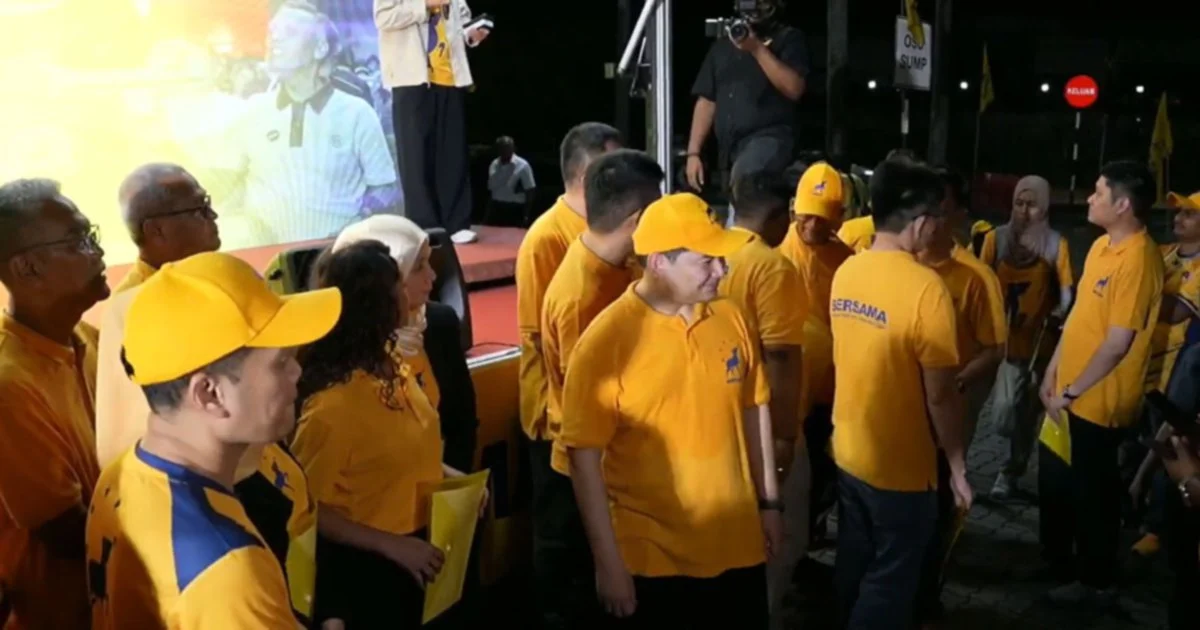
Parti Bersama Malaysia formally presented its candidate roster for the upcoming Johor state election on Friday, introducing a group of 15 individuals drawn from various professional sectors. The lineup reflects the party's apparent strategy to appeal to a broad cross-section of the electorate by fielding candidates with roots in business ownership, corporate management, and blue-collar employment sectors.
Among those named to represent the party's vision in Johor is an entrepreneur whose background in business enterprise signals the party's appeal to the commercial and self-employed segments of the population. The inclusion of candidates with active experience in running or managing business operations underscores an attempt to connect with voters concerned about economic development and job creation at the grassroots level. Such representation may resonate particularly in areas where small and medium enterprises form the backbone of local economies.
The slate also features a supermarket manager, positioning the party as capable of fielding candidates with hands-on experience in retail operations and consumer-facing business management. This selection speaks to Bersama's efforts to present itself as a party attuned to the everyday commercial realities that shape Malaysian communities. A candidate with supermarket management credentials brings practical knowledge of supply chains, workforce management, and customer service challenges that directly affect the livelihoods of thousands of workers across the country.
Equally significant is the nomination of a logistics worker, representing the party's outreach to the blue-collar workforce that often remains underrepresented in electoral politics. The logistics sector employs hundreds of thousands across Malaysia and remains critical to the nation's economic infrastructure. By fielding a candidate from this background, Bersama signals its willingness to incorporate voices from the working class—individuals who navigate daily challenges in transportation, warehousing, and supply chain management that impact the cost of living for ordinary Malaysians.
The composition of Bersama's candidate list arrives amid intensifying political activity in Johor, where electoral contests carry significance well beyond the state's borders. As the second-most populous state in Malaysia, Johor's political direction often influences national sentiment and coalition dynamics. The party's selection of candidates spanning entrepreneurial, managerial, and labour backgrounds suggests an attempt to position itself as a party of inclusion, seeking to bridge class divisions that frequently characterise Malaysian political discourse.
Bersama Malaysia, as a newer political entity in Malaysia's fragmented party landscape, must differentiate itself through strategic candidate selection and messaging. The choice to emphasise occupational diversity rather than elite credentials or dynastic connections may appeal to voters fatigued by traditional power structures. Whether such positioning translates into electoral success depends substantially on the party's ability to articulate coherent policy positions that address the specific concerns of these diverse constituencies.
The Johor state election serves as a crucial testing ground for parties seeking to expand their footprint or establish credibility. For Bersama, fielding candidates with genuine roots in business and labour communities rather than relying primarily on political insiders represents a different approach compared to some established opposition and government-aligned parties. This strategy could either energise voters seeking fresh faces and non-traditional politicians, or potentially disadvantage the party against competitors with deeper organisational infrastructure and proven campaign machinery.
The timing of this candidate announcement reflects broader patterns in Malaysian politics, where state elections increasingly function as rehearsals for national contests. Parties test messaging, evaluate ground support, and refine organisational capabilities through state-level campaigns. Johor's electoral framework thus offers Bersama an opportunity to demonstrate whether its inclusive candidate philosophy can translate into meaningful electoral gains.
For Malaysian voters and observers tracking the evolution of the country's political landscape, the emergence of parties like Bersama and their candidate selection strategies signal an ongoing restructuring of electoral competition. The inclusion of candidates from business and labour backgrounds responds to longstanding demands for political representation that extends beyond traditional elites and party machinery operatives. Whether this approach succeeds in reshaping Johor's political terrain will have ramifications for how subsequent parties build their campaign strategies and whom they prioritise in future electoral contests.

