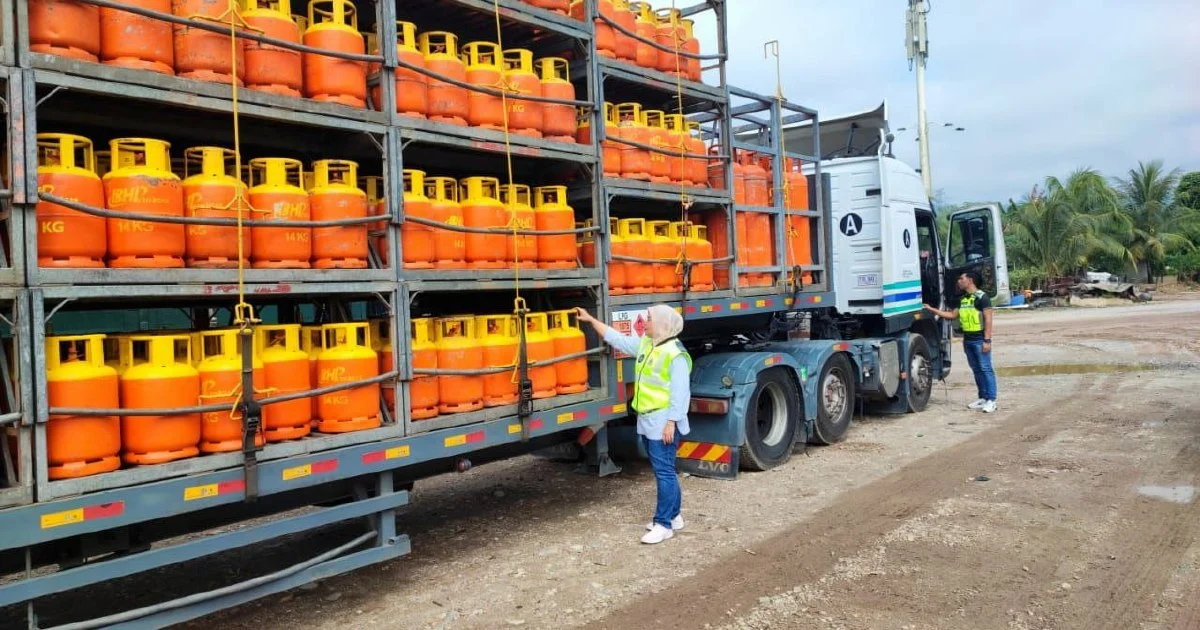
Enforcement officers conducting operations in Bentong have uncovered a substantial haul of liquefied petroleum gas cylinders valued at RM405,000, discovered within a fenced storage facility. The contraband was located stacked on a trailer within the compound, indicating an organised operation to stockpile and potentially redistribute the fuel cylinders beyond regulatory oversight.
The discovery highlights the ongoing challenge facing Malaysian authorities in monitoring and controlling the distribution of LPG, a critical domestic fuel source used across residential, commercial, and industrial sectors throughout the country. Such unauthorised storage facilities bypass mandatory safety standards, insurance requirements, and government licensing protocols that exist to protect public welfare and ensure supply chain integrity.
LPG remains one of Malaysia's most widely consumed energy sources for household cooking, heating water, and powering small businesses. The fuel's essential role in daily life makes its distribution network a significant area of regulatory concern. Authorities across states regularly contend with smuggling networks, black-market operators, and unlicensed traders seeking to profit from fuel price differentials and consumer demand. The Bentong operation appears consistent with broader patterns of illegal distribution networks operating in Peninsular Malaysia's interior regions.
The fenced facility's deliberate concealment suggests the operators understood the illegality of their activities. Such infrastructure investments indicate not merely opportunistic small-scale resale but rather systematic accumulation intended for wholesale or bulk distribution to retailers and consumers who may be unaware of the supply's questionable status. The scale of the seizure—representing hundreds of individual cylinders—points toward a substantial criminal enterprise rather than isolated wrongdoing.
Public safety concerns underscore the importance of such enforcement actions. LPG cylinders stored in unauthorised locations often lack proper ventilation, safety inspections, or fire prevention measures. Accidents at illegal storage facilities have previously caused casualties and property damage in Malaysia. Regulatory requirements mandating proper storage conditions, regular inspections, and trained personnel exist specifically to mitigate these catastrophic risks.
The Bentong district, located in Pahang and straddling trade routes connecting Peninsular Malaysia's central regions, has historically experienced smuggling and black-market activity related to fuel, explosives, and other controlled commodities. The area's geography and infrastructure make it a natural transit point for illicit goods moving between states. Law enforcement agencies have intensified operations there in recent years to disrupt trafficking networks.
This seizure reflects broader Malaysian enforcement priorities regarding energy security and supply chain integrity. Uncontrolled distribution systems can distort legitimate market pricing, disadvantage licensed retailers, and undermine government revenue collection. More critically, they create dangerous public safety environments and prevent authorities from monitoring fuel distribution comprehensively—a security concern in an age when energy infrastructure oversight serves legitimate national interests.
The investigation following this discovery will likely examine the cylinders' origins, the intended distribution network, and the operators' identities and connections. Such information helps authorities identify and dismantle broader criminal organisations rather than merely seizing individual shipments. Successful prosecution of those responsible serves as deterrent messaging to potential participants in illegal LPG trading.
Malaysia's regulatory framework governing LPG storage, transport, and distribution aims to balance consumer affordability with safety and security imperatives. Licensed operators must maintain specific facility standards, carry appropriate insurance, and comply with training requirements for personnel handling the fuel. These requirements increase operational costs but ostensibly protect public welfare. Authorities argue that enforcement against unlicensed operators protects both consumers and legitimate businesses competing fairly within established regulations.
The seizure also illustrates ongoing capacity-building among Malaysian enforcement agencies. Detecting illegal LPG storage requires coordinated intelligence, surveillance capabilities, and field operations expertise. The successful identification and recovery of this substantial cache demonstrates operational competence and suggests sophisticated investigation preceding the actual raid.
Looking forward, this discovery underscores the continued vulnerability of Malaysia's LPG distribution network to criminal exploitation. Authorities will likely increase patrols and intelligence gathering in areas with demonstrated illegal activity. However, enforcement officials acknowledge that addressing root causes—including price disparities between legitimate and black-market supplies, weak rural oversight, and insufficient regulatory monitoring capacity—requires comprehensive policy approaches beyond reactive seizures.
For Malaysian consumers, such operations theoretically ensure that household LPG cylinders derive from legitimate sources meeting safety standards. However, the substantial quantity recovered suggests illegal supplies remain available in significant quantities, indicating that enforcement capacity has not fully eliminated black-market competition to regulated suppliers.

