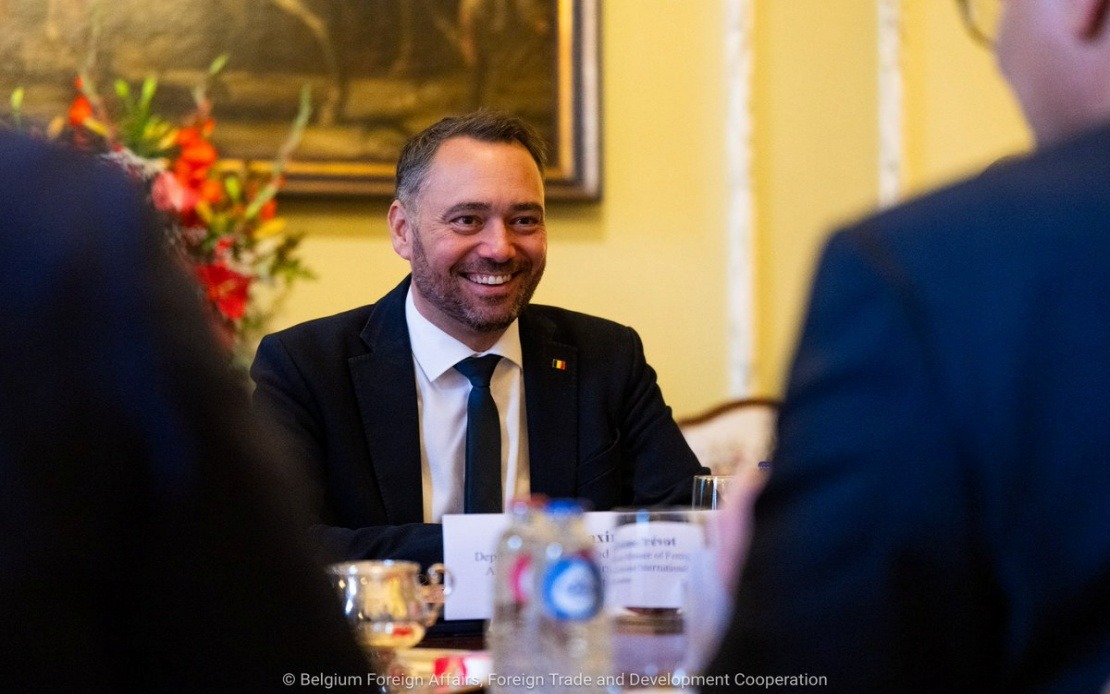
Belgium's Deputy Prime Minister and Foreign Minister Maxime Prévot will touch down in Malaysia for a two-day working visit beginning Thursday, signalling renewed diplomatic engagement between the two nations on matters spanning clean energy transition, critical minerals and the growing halal sector. The visit, confirmed by Malaysia's Foreign Ministry on Wednesday, represents Prévot's inaugural trip to the country since taking office in February 2025 and comes at a time when both governments are increasingly aligned on European Union trade partnerships and regional stability.
The centrepiece of Prévot's itinerary involves substantive discussions with Malaysian Deputy Prime Minister Datuk Seri Fadillah Yusof, who holds the concurrent portfolio of Energy Transition and Water Transformation Minister. Scheduled for July 2, this bilateral meeting will assess the current trajectory of Malaysia-Belgium relations whilst identifying promising domains for expanded cooperation. Both ministers are expected to zero in on renewable energy development, an area where Belgium's technological expertise and Malaysia's abundant natural resources present complementary opportunities for joint ventures and knowledge exchange.
Beyond renewable energy, the bilateral agenda encompasses rare earth elements—a strategic commodity given Malaysia's historical role as a global supplier and the accelerating global demand for these materials in green technology and electronics manufacturing. The inclusion of rare earth elements signifies growing recognition in Brussels that Southeast Asian supply chains merit deeper European investment and partnership. For Malaysia, such engagement could unlock European funding and technical partnerships for sustainable extraction and processing of these critical materials, particularly as environmental standards tighten worldwide.
The halal industry dimension reflects Belgium's emerging recognition of this massive global market, currently valued at hundreds of billions of dollars annually. Malaysia, as a leading certifier and exporter of halal-certified products, stands to benefit from European collaboration in standardisation, logistics and market access. Belgian firms operating in food, pharmaceuticals and cosmetics increasingly seek halal certification to access Muslim-majority markets, creating mutual commercial incentives for the two countries to deepen institutional and regulatory cooperation.
Prévot's visit also encompasses discussion of broader Malaysia-European Union relations, signalling that bilateral matters sit within the larger context of EU strategic interests in the Indo-Pacific. This framing is significant for Malaysia, as it positions the country as an important interlocutor in shaping European policies affecting Southeast Asia, from trade agreements to critical infrastructure investment and regional security concerns. Conversations on regional and international developments of mutual interest will likely touch upon geopolitical tensions, supply chain resilience and the rules-based international order—topics where Malaysian and European perspectives often converge despite occasional differences.
A notable element of the visit involves Prévot delivering a ministerial address at the 39th Asia-Pacific Roundtable, organised by the Institute of Strategic and International Studies (ISIS) Malaysia. This platform provides the Belgian minister with an opportunity to articulate his government's vision for European engagement in Asia-Pacific affairs to senior policymakers, academics and business leaders from across the region. The speech will likely emphasise Europe's commitment to Indo-Pacific stability, economic cooperation and the green transition—messaging that resonates with Malaysia's own policy priorities.
The itinerary also includes an audience with the Sultan of Perak, Sultan Nazrin Muizzuddin Shah, reflecting Malaysia's diplomatic protocol and the importance placed on building rapport at multiple levels of government and monarchy. Such royal engagement typically strengthens the personal dimensions of state-to-state relations and signals respect for Malaysia's constitutional framework and cultural traditions.
The underlying economic picture reveals a relationship already gaining traction. Malaysia-Belgium bilateral trade totalled RM9.74 billion in 2025, with Malaysian exports commanding RM6.85 billion of this figure whilst imports accounted for RM2.89 billion. This trade imbalance reflects Malaysia's position as a significant supplier of commodities and manufactured goods to the European market, a dynamic likely to intensify should renewable energy and rare earth element cooperation materialise. The data underscores that this is not a nascent relationship but one with considerable existing commercial substance.
Investment metrics further illustrate the deepening economic engagement. As of 2025, Belgian companies had secured approval for 67 projects in Malaysia, collectively representing RM5.1 billion in committed capital and the prospect of generating 4,605 jobs across various sectors. These figures suggest Belgian firms view Malaysia as an attractive investment destination, confidence that renewed ministerial attention and sectoral cooperation could amplify. For Malaysia's government, securing additional European capital and technology transfer capabilities aligns with broader economic diversification strategies and efforts to position the country as a hub for green manufacturing and advanced industries.
Prévot's visit arrives amid broader European strategic repositioning towards Asia-Pacific. The European Union has progressively elevated its Indo-Pacific engagement over recent years, viewing the region as crucial to global economic growth and security. Belgium, as a founding EU member state and the seat of major EU institutions, plays a disproportionate role in shaping this strategic orientation. A Belgian deputy prime minister's decision to prioritise Malaysia reflects appreciation for the country's economic significance, political stability and role as a moderate voice within ASEAN—attributes that enhance Malaysia's leverage in negotiations with European partners.
The timing of this visit also merits consideration given Malaysia's energy transition ambitions and the global context of renewable energy competition. As countries worldwide scramble to build manufacturing capacity for solar panels, batteries and other clean technology components, Malaysia's industrial capabilities and strategic location position it as an attractive partner for European companies seeking to diversify supply chains away from traditional Asian centres. Belgian investment in Malaysian renewable energy infrastructure or manufacturing could serve European climate commitments whilst generating employment and technology transfer benefits for Malaysia.
Looking forward, the outcomes of these discussions could shape bilateral cooperation frameworks for years to come. Should substantive agreements emerge on renewable energy partnerships, rare earth element development or halal industry standards, they would represent tangible fruits of diplomatic engagement and potentially unlock additional European interest in Malaysia across multiple sectors. For observers tracking Malaysia's external relations, Prévot's visit exemplifies the country's capacity to engage simultaneously with established Western powers whilst maintaining robust ties across the broader Asian region—a balancing act central to Malaysia's foreign policy doctrine.

