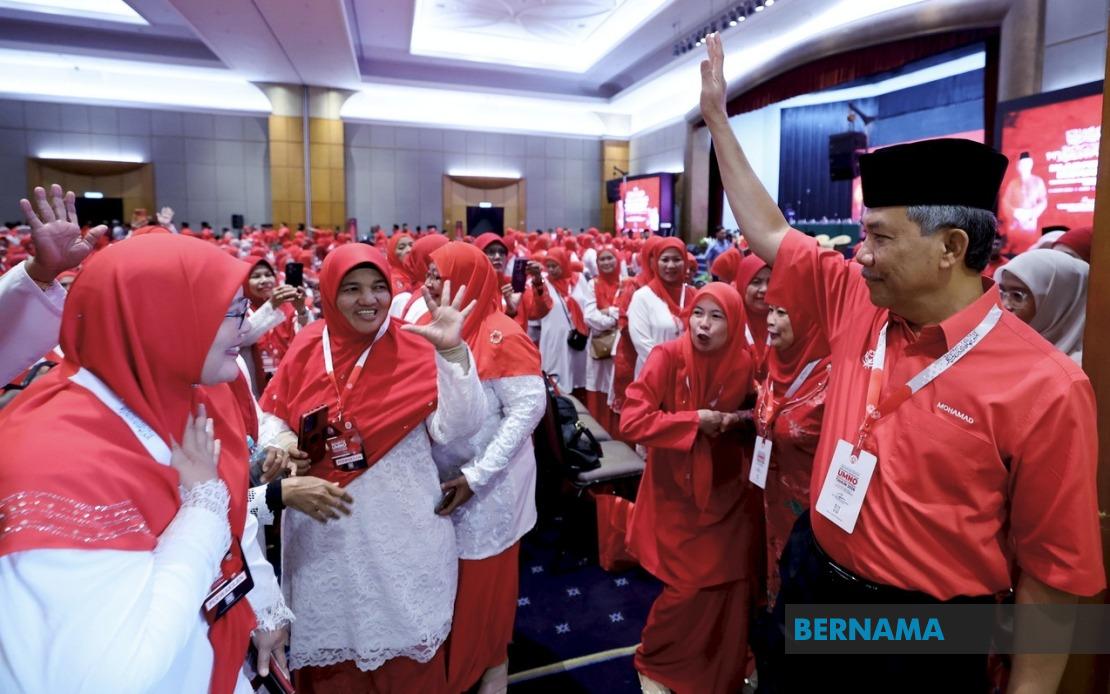
Barisan Nasional is preparing to discard decades of predictable seat-sharing arrangements ahead of the Negeri Sembilan state election scheduled for August 1, signalling a strategic overhaul that could reshape the political landscape in the peninsular state. The decision, revealed by BN deputy chairman Datuk Seri Mohamad Hasan, represents a fundamental departure from the coalition's long-established practice of locking individual parties into fixed constituencies regardless of changing circumstances.
The rationale behind this shift centres on a stark reality facing Malaysian political operators: the electoral terrain in Negeri Sembilan has shifted substantially. Voter composition across most state constituencies has evolved considerably, rendering historical patterns of support less reliable as predictive tools. By clinging to the old arrangement, Mohamad argued, BN would essentially be surrendering opportunities to optimise its competitive positioning while simultaneously denying voters meaningful electoral choice. The current system, which traditionally assigns specific constituencies to particular coalition partners on a rotational or permanent basis, effectively locks in parties regardless of their actual viability in those areas.
The philosophical underpinning of this reform extends beyond mere tactical adjustment. Mohamad framed the proposed changes as fundamentally about democratic principle—empowering voters by ensuring that each constituency contest features candidates from parties genuinely positioned to compete. Under the old approach, where specific seats belonged perpetually to designated parties, voters in declining strongholds faced limited alternatives, and emerging competitive advantages in other areas went unexploited. The new thinking suggests that flexibility in seat allocation could unlock latent voter demand across constituencies that may have shifted ideologically or demographically without the coalition's strategic response.
The practical implementation remains complex, however. Every component party within the BN coalition has vested interests in particular constituencies, accumulated political infrastructure, and entrenched support networks. Disrupting these arrangements carries significant internal risk, particularly in a period when coalition unity is fragile. Mohamad acknowledged this tension by emphasising that any final determination regarding constituency allocation and candidate nomination would require approval from the BN Supreme Council at the national level, effectively shielding component party leaders from the appearance of being sidelined while preserving the flexibility needed for optimisation.
The timeline for this reorganisation is decidedly compressed. Division heads across Negeri Sembilan have been instructed to submit candidate lists following established procedures, with each submission including at least three potential contenders for every contested seat. This redundancy in candidate proposals provides the nomination machinery with genuine choice, enabling selectors to match candidates to constituencies based on contemporary voter analysis rather than historical convention. The goal, Mohamad stated, is to announce the complete slate of BN candidates on July 15, when the coalition formally launches its election machinery—leaving a mere fortnight before the nomination period opens on July 18.
The previous election results will serve as the foundational data source for this recalibration exercise. Rather than assuming historical voting patterns persist unchanged, BN strategists will conduct granular demographic analysis to identify which constituencies have become more competitive, which may have shifted in opposition sympathies, and which present unexpected opportunities. This data-driven methodology reflects broader professionalisation of Malaysian electoral planning, moving beyond intuition and incumbent advantage toward quantifiable assessment of voter behaviour shifts.
Yet this shift also exposes a vulnerability that BN has repeatedly faced: internal sabotage. Mohamad specifically flagged the risk that component party members upset by altered seat arrangements might, whether consciously or through passive resistance, undermine the campaign effort in constituencies reassigned away from their traditional holdings. Previous elections have demonstrated that such intra-coalition friction can translate directly into lost seats, as disgruntled party members withdraw campaign resources or tacitly encourage their supporters to abstain. Preventing this scenario demands not merely structural rearrangement but genuine consensus-building across the coalition.
The question of Mohamad's own political future added another dimension to the announcement. As the long-serving incumbent of the Rantau state seat since 2004, he would ordinarily expect automatic renomination. By declining to confirm his own candidacy in advance of the BN Supreme Council's decision, Mohamad implicitly demonstrated commitment to the new meritocratic approach, suggesting he would abide by strategic allocation decisions even if they affected his personal political position. This performative self-restraint may have been calculated to lend credibility to the broader reform agenda and discourage other party elites from resisting seat reassignments.
For Malaysian political observers, the Negeri Sembilan recalibration holds significance beyond the state itself. If successful, the model could be replicated in other contests where demographic change and shifting voter preferences have rendered traditional allocation systems obsolete. The approach tacitly acknowledges a reality that Malaysian political operators have sometimes struggled to confront: that voter loyalty cannot be assumed regardless of candidate quality or local dynamics. By creating space for competitive allocation of constituencies based on contemporary capacity, BN implicitly accepts that its political dominance cannot rest solely on inherited structural advantages.
The election machinery launch on July 15 will reveal whether this ambition translates into concrete change. The composition of the announced candidate slate—whether it reflects genuine flexibility or merely preserves traditional distributions under reformist rhetoric—will indicate whether BN leadership is genuinely prepared to disrupt entrenched interests. For component parties accustomed to permanent territorial fiefdoms, the transition could prove uncomfortable, but the strategic logic underlying the shift remains compelling in a state where electoral dynamics have demonstrably altered.

