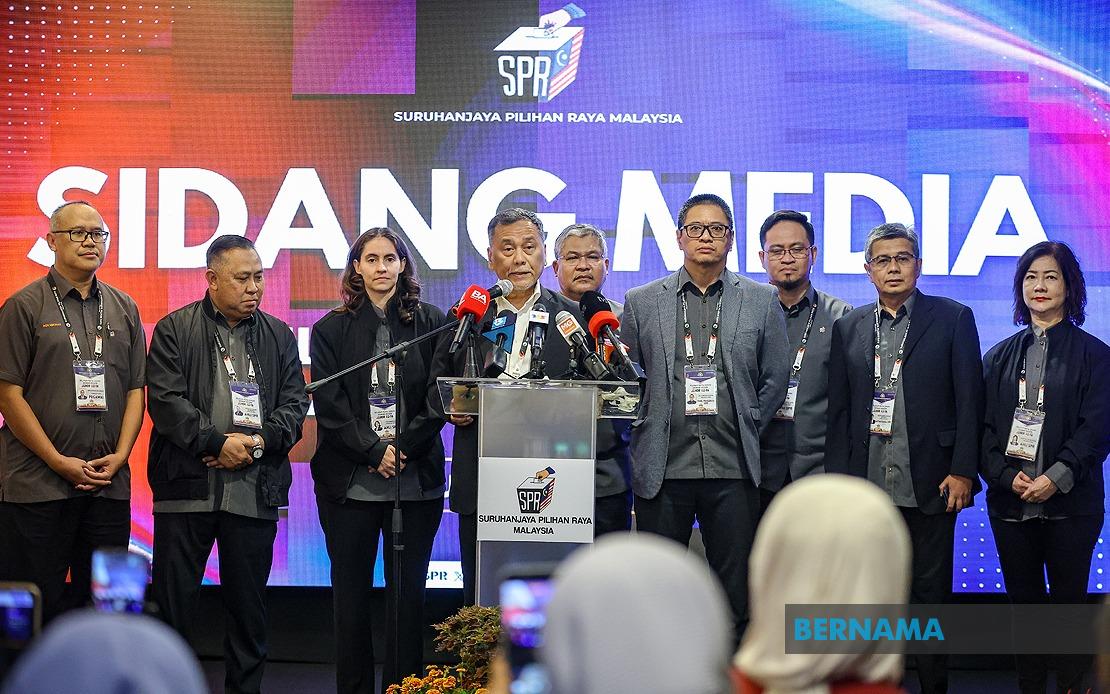
Barisan Nasional has cemented its dominance in Johor politics, securing 48 of the 56 state assembly seats contested to form government with a commanding two-thirds supermajority. The electoral verdict represents a substantial consolidation of BN's position in Malaysia's southern stronghold, with the coalition gaining eight additional seats compared to its 2022 tally of 40. The results released by the Election Commission just after 1 am saw Puteri Wangsa as the final seat declared, ultimately going to Pakatan Harapan with the remaining eight seats distributed among the opposition coalition.
Within the BN alliance, Umno dominated the coalition's campaign and performance, capturing 36 of the 48 winning seats. The movement's substantial victory reflects its continued organizational strength and grassroots support in rural and semi-urban constituencies throughout the state. MCA, the Chinese-based component party, improved its representation significantly by winning all eight seats it contested, demonstrating renewed electoral appeal among Malaysian Chinese voters in Johor. MIC, representing the Indian community, achieved a perfect record by winning all four seats it fielded, sweeping victories in Kemelah, Kahang, Perling and Bukit Batu through candidates K. Raven Kumar, V. Rugendran, P. Pannir Selvam and R. Kumaran respectively.
For Pakatan Harapan, the opposition coalition's performance deteriorated compared to previous expectations, with DAP bearing the brunt of losses. The Democratic Action Party won only six of the 17 seats it contested, surrendering control of four previously held constituencies—Johor Jaya, Tangkak, Jementah and Perling—all of which fell to MCA and MIC candidates. PKR secured the Puteri Wangsa seat through former Health Minister Dr Maszlee Malik, who prevailed against four contenders including BN's Teow Chia Ling, Bersama's Nicholas Paul Vincent, MUDA's Rashifa Aljunied and independent candidate Wang Wee Seong. Amanah, the Islamist component of PH, won only Simpang Jeram, indicating limited traction for the party in a state where traditional Umno support remains deeply entrenched.
Perikatan Nasional's electoral collapse marks a dramatic reversal from the three seats it captured in 2022. The coalition managed to retain none of those constituencies, with Dr Sahruddin Jamal losing his Bukit Kepong seat despite his credentials as former Johor Menteri Besar and state Bersatu chairman. The loss of Endau and Maharani further underscores PN's inability to consolidate early gains or expand beyond its initial footholds. The coalition's poor showing suggests that voters have returned to viewing BN as the natural governing force in Johor, reversing momentum from previous years when PN appeared to pose a genuine electoral threat.
Other challenger parties faced complete electoral extinction across the state. Parti Bersama Malaysia, which mounted an ambitious campaign with 15 candidates, lost all deposits and secured zero seats, indicating that its attempt to establish itself as a centrist alternative failed to resonate with Johor voters. MUDA, the younger-focused political movement that achieved breakthrough success in Kuala Lumpur, could not convert its four candidacies into any parliamentary representation. Parti Sosialis Malaysia and Parti Orang Asli Malaysia each fielded single candidates without success, while six independent candidates also failed to secure election, reinforcing the dominance of established party machinery in Malaysian electoral contests.
Johor BN Chairman Datuk Onn Hafiz Ghazi framed the victory as a decisive popular mandate for his coalition to continue addressing the concerns of ordinary Johoreans and advancing the interests of Bangsa Johor, the state's collective identity. His rhetoric emphasised continuity, gratitude and humility, positioning BN as a custodian of public trust rather than a triumphalist force. The two-thirds supermajority provides the state government with sufficient legislative power to pass bills without requiring opposition support, granting Onn Hafiz substantial room for implementing policy initiatives without negotiation or compromise.
Onn Hafiz himself retained the Machap seat by a commanding margin, defeating PH candidate Nur Hafiz Roslan with 20,382 votes and a majority of 15,375, confirming his continued personal popularity within his constituency. Former Health Minister Datuk Seri Dr Adham Baba reclaimed the Pasir Raja seat he previously held for two consecutive terms, suggesting successful rehabilitation of his political standing following his time in federal office. All nine state executive councillors who sought re-nomination retained their positions, indicating effective executive performance and voter satisfaction with the incumbent administration's functioning.
DAP's substantial loss of electoral ground reveals significant shifts in voter preferences within Johor's diverse constituencies. The party's failure to defend seats it had held, particularly among non-Chinese communities in areas like Tangkak, Jementah and Perling, suggests weakened cross-communal appeal or reduced mobilisation capacity. For Malaysian political observers, the results underscore the resilience of established institutional parties and the challenges facing newer or smaller political movements in penetrating entrenched voter loyalties, particularly in states where one coalition has governed for extended periods.
Two sitting Members of Parliament encountered electoral defeat despite contesting at the state assembly level, with Onn Abu Bakar losing Senggarang and Suhaizan Kayat defeated in Larkin, both falling to BN candidates. This outcome indicates that federal legislative success does not automatically translate to state assembly constituencies, and that local dynamics and grassroots sentiment may diverge from national political trends. Datuk Samsolbari Jamali created history by successfully defending Semarang for a sixth consecutive term, establishing himself as one of Johor's most durable political figures and reflecting remarkable consistency in voter preference across multiple electoral cycles.
The election involved 2.7 million registered voters participating in a contest that fielded 172 total candidates representing diverse political formations. BN and PH each fielded 56 candidates across all constituencies, PN presented 33 candidates, Bersama 15, MUDA four, with independent candidates and smaller parties contributing the remainder. PKR's election director Datuk Seri Amirudin Shari pledged that the opposition would channel electoral feedback into strengthened oversight of government performance and advocacy for resolving persistent community concerns, framing opposition politics as constructive engagement rather than blanket obstruction.
For regional implications, Johor's decisive verdict reinforces BN's continued electoral viability in Malaysia's heartland constituencies, particularly where it maintains strong organisational presence and community integration. The coalition's improved performance relative to 2022 suggests the Pakatan Harapan coalition that governs federally faces headwinds when campaigning in state contests removed from Kuala Lumpur's political epicentre. Johor's outcome provides significant momentum for BN ahead of future electoral contests and demonstrates that the coalition retains capacity to mobilise supporters and expand its representation when political conditions align.

