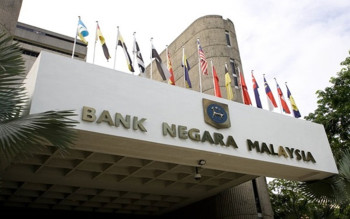
The central bank's repeated attempts to alert Tabung Haji management to serious financial irregularities went unheeded for years, contributing to a crisis that eventually required a royal inquiry. During a parliamentary briefing in Kuala Lumpur on August 11, Dr Zulkifli Hasan, the Minister in the Prime Minister's Department (Religious Affairs), disclosed that Bank Negara Malaysia had sent five separate warning letters to the Tabung Haji chairman and the Religious Affairs Minister detailing the widening gap between the pilgrimage fund's assets and liabilities. According to Zulkifli, these communications stressed the urgency of corrective action, warning that the institution's precarious financial condition posed a potential systemic risk to Malaysia's broader financial stability and that continued inaction would constitute a breach of applicable regulations.
The gravity of BNM's concern underscores how severely the institution's finances had deteriorated before any substantive intervention occurred. Zulkifli acknowledged that despite these official warnings from the country's financial watchdog, Tabung Haji's leadership chose not to act decisively or transparently. This pattern of neglect reflected deeper governance failures within the fund, which had accumulated over several years as management prioritised other objectives over financial rectification. The minister's candid admission in Parliament that the warnings were "ignored by TH's leadership" highlights the extent to which institutional accountability had broken down, allowing financial problems to compound unchecked during a critical period when early intervention could have prevented escalation.
The regulatory warnings from BNM were not the only red flags raised by authorities. Following the initial cautions from the central bank, the Auditor-General added its own rebuke through the 2017 Financial Statements Report, issuing an Emphasis of Matter regarding changes to the fund's impairment policy. What made this development particularly troubling was that Tabung Haji had adjusted its accounting methodology twice within the same year, both changes designed to artificially inflate reported profits for 2017. This pattern suggests a deliberate attempt to obscure the true financial condition rather than honest accounting errors or reasonable recalibrations. The dual policy shifts within twelve months would have raised immediate red flags for any competent auditor or board member, yet no apparent action was taken to investigate or reverse these adjustments.
It was only after accumulating criticism from both the central bank and the Auditor-General that Tabung Haji's newly constituted board took meaningful steps toward financial remediation. In 2018, the fund appointed PricewaterhouseCoopers, an internationally recognised accounting firm, to conduct a comprehensive reassessment of its financial position and performance using rigorous, internationally accepted standards. This external review proved revelatory. PwC's investigation confirmed that financial manipulation had indeed occurred within the organisation, and the audit revealed a shocking disparity in asset valuations: of the RM4.6 billion in total assets that Tabung Haji claimed on its books, only RM556 million had been valued by independent professional valuers. The remaining RM4 billion-plus in assets either lacked professional validation or had been valued using questionable methodologies, indicating massive overstatement of the fund's financial position.
The findings uncovered by PwC represented a watershed moment for Tabung Haji, forcing full transparency about the extent of the institution's problems. The Malaysian government subsequently established a Royal Commission of Inquiry to investigate the systemic failures that had allowed such extensive financial mismanagement to persist undetected. The RCI's scope covered the critical 2014-2020 period, during which most of the damage had accumulated. The inquiry heard evidence from numerous witnesses and reviewed extensive documentation to understand how governance controls had failed so completely and why warnings from authorities had gone unheeded. The commission's work produced a comprehensive 211-page report, publicly released on July 29, which detailed specific weaknesses in management, operations, and internal controls across multiple departments and functions.
The RCI's findings validated the serious concerns that Bank Negara and the Auditor-General had raised independently. Beyond simply documenting what went wrong, the commission formulated twenty-five specific recommendations designed to prevent recurrence of similar failures in the future. These recommendations addressed governance structures, financial controls, asset valuation procedures, board oversight mechanisms, and management accountability. By July 30, just one day after the report's public release, Tabung Haji had already begun implementing remedial measures, with the fund reporting that it had actioned seventy-five per cent of the commission's recommendations. This rapid implementation suggests genuine commitment to reform, though observers will monitor whether such changes represent substantive transformation or merely cosmetic adjustment to address public criticism.
The timeline of this institutional crisis carries important lessons for Malaysian financial regulation and oversight. The government had announced plans to establish the RCI in 2021, and formal appointments of commission members followed in January 2022, meaning that more than a year elapsed between the decision to investigate and the actual commencement of formal inquiry work. The report was then presented to the Yang di-Pertuan Agong on August 30, 2022, and finally released publicly nearly a year later. This extended timeline, while necessary for thorough investigation, meant that Tabung Haji's problems persisted during the entire inquiry period without immediate remedial action, potentially exacerbating losses for members and the fund. The case raises questions about whether faster intervention mechanisms should exist for situations where regulatory warnings have been ignored and systemic risks to financial stability have been identified.
For Malaysian citizens who contribute to Tabung Haji as part of their pilgrimage preparations, the revelations about financial mismanagement naturally generated profound concern about the safety of their funds. The discovery that assets had been wildly overvalued raised immediate questions about whether Tabung Haji could meet its obligations to members who had accumulated savings over decades. Southeast Asian investors and financial regulators monitoring the case recognised it as a cautionary tale about the importance of independent oversight, external auditing, and transparent financial reporting. The experience demonstrated how institutional inertia and inadequate board scrutiny could allow serious problems to metastasise within even major financial institutions. The subsequent reforms implemented by Tabung Haji, should they prove genuine and durable, may establish useful models for strengthening governance across Malaysia's financial sector and beyond.

