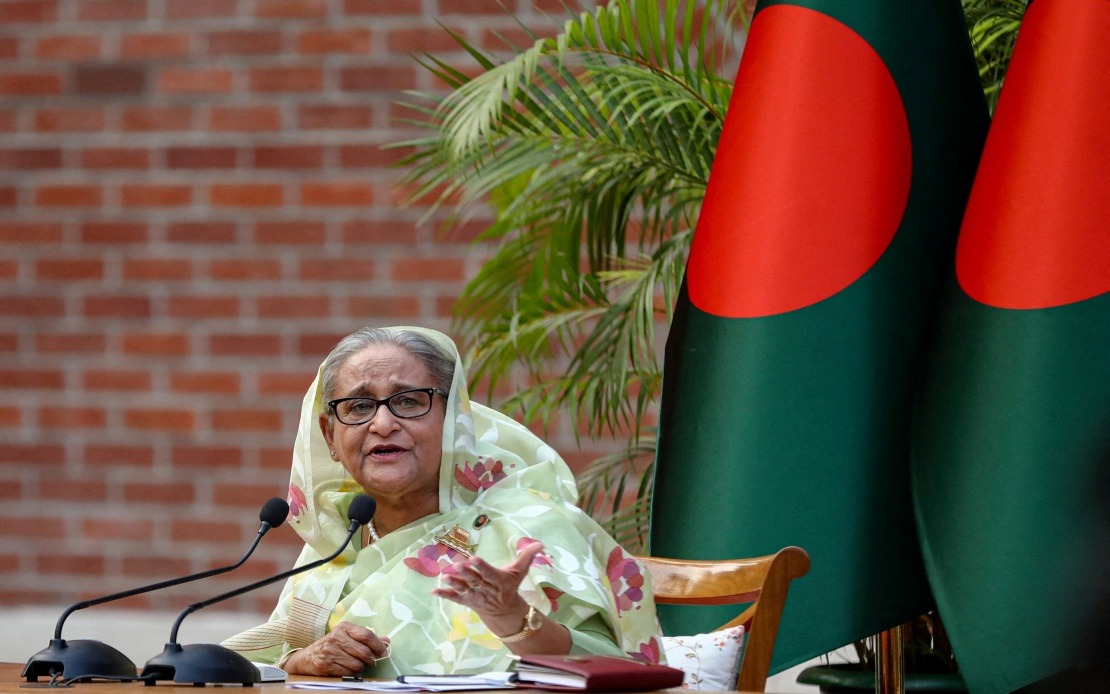
Bangladesh's ousted Prime Minister Sheikh Hasina has declared her willingness to return to her homeland and face court proceedings, even as she confronts a death sentence imposed by the country's war crimes tribunal. The 78-year-old leader, currently living in self-imposed exile in India, made the stark assertion in a written interview, acknowledging the existential risks she faces but rejecting characterisations of her conviction as anything but politically driven. Her statement represents a dramatic challenge to Bangladesh's current authorities and raises questions about the trajectory of a nation still grappling with the aftermath of tumultuous political upheaval.
Hasina fled Bangladesh in August 2024 following her government's violent response to student-led demonstrations that had spiralled into a broader anti-government uprising. The protests originated from court-mandated policy changes affecting civil service recruitment, but evolved into a comprehensive rejection of her administration's governance and authoritarian practices. During the unrest, security forces and government supporters engaged in widespread clashes with protesters, resulting in a death toll that the United Nations assessed at approximately 1,400 individuals. The overwhelming majority of these casualties resulted from gunfire deployed by state security apparatus, though Hasina has consistently denied authorising such lethal force and instead attributed the instability to political manipulation by her opponents.
The war crimes tribunal's November 2025 verdict against Hasina represented a significant legal escalation, formalising charges of crimes against humanity connected directly to the security response during the demonstrations. Notably, this conviction occurred through in absentia proceedings, a development that has drawn international scrutiny and concern from human rights organisations. Human Rights Watch, while acknowledging the necessity of accountability for abuses perpetrated under Hasina's administration, has raised pointed questions about the legitimacy and procedural integrity of a trial conducted without the defendant's physical presence or the opportunity for direct defence. Such concerns resonate across Southeast Asia, where questions of judicial fairness and political neutrality frequently intersect in post-conflict transitions.
India, where Hasina has resided since her departure from Bangladesh, has received formal extradition requests from Dhaka but has not yet complied. Indian government officials have indicated they are examining the request through the lens of established legal and judicial frameworks, suggesting a measured approach that avoids the appearance of either capitulation to political pressure or sheltering of a controversial figure. This diplomatic equilibrium reflects India's broader strategic interests in Bangladesh and South Asian stability, positioning New Delhi in a delicate position between respecting legal process and maintaining relations with Bangladesh's current government led by Prime Minister Tarique Rahman.
The political landscape in Bangladesh has shifted dramatically since Hasina's departure. Muhammad Yunus, the Nobel Peace Prize-winning economist and founder of the Grameen Bank, took office as chief adviser to an interim government following the upheaval. A general election held in February 2026 resulted in victory for the Bangladesh Nationalist Party, bringing Tarique Rahman to the premiership. The new administration has moved swiftly to consolidate political control, including an unprecedented ban on all activities of Hasina's Awami League party since May 2025. These developments underscore the depth of the political rupture and the current government's determination to reshape Bangladesh's political order fundamentally.
Hasina's assertion that she will return and defend herself in court carries significant implications for Bangladesh's future political trajectory. Such a move would inevitably reignite the tensions that precipitated her flight and could destabilise the fragile equilibrium the interim and elected governments have attempted to establish. Conversely, her continued absence in exile perpetuates a narrative of victor's justice and unresolved political conflict that could undermine Bangladesh's international credibility and long-term democratic development. The tension between accountability and reconciliation remains unresolved in Bangladesh's contemporary politics.
The former prime minister has attempted to reframe the narrative surrounding the 2024 crackdown by calling for independent forensic investigation into the deaths that occurred. Her proposal for international experts to examine evidence and determine causality suggests an effort to reclaim moral authority by appearing to welcome objective scrutiny. However, such proposals face the significant obstacle of being issued from exile, where their practical implementation remains uncertain and politically fraught. The suggestion also appears designed to cast doubt on the tribunal's findings while maintaining an appearance of principled commitment to truth-seeking.
Hasina's political biography remains significant for understanding contemporary Bangladesh and regional dynamics. As the daughter of Sheikh Mujibur Rahman, Bangladesh's founding father, she carries historical legitimacy that continues to resonate among certain constituencies. Her cumulative service as prime minister across five separate terms from 1996 to 2024 makes her one of Bangladesh's most consequential contemporary political figures. During her tenure, Bangladesh experienced periods of economic growth and infrastructure development, though also marked by mounting concerns about democratic backsliding, press freedom, and extrajudicial activities. Her government oversaw both development achievements and serious human rights concerns that contributed to the eventual uprising against her administration.
The international dimensions of Bangladesh's crisis warrant consideration for Southeast Asian observers. Japan, which has invested significantly in Bangladesh's development including infrastructure projects such as rapid transit systems, witnessed casualties among its nationals during the 2016 Holey Artisan Bakery attack that occurred under Hasina's watch. This terrorist incident, which killed 20 hostages including nine Italians and seven Japanese citizens, illustrated the security challenges Bangladesh faced and the international consequences of instability. These external relationships and investments underscore that Bangladesh's internal political struggles carry ramifications beyond its borders, affecting countries throughout the region and beyond that maintain diplomatic, economic, and security ties.
Hasina's recent public statements emphasise themes of national healing and the necessity for stable democracy, carefully calibrating her messaging for international audiences while maintaining defiance toward domestic authorities. She has articulated that Bangladesh's stability matters not merely for the nation itself but for South Asia, the Bay of Bengal region, and development partners invested in the country's trajectory. This framing attempts to position her as thinking beyond narrow political survival and toward broader regional stability, though critics would argue it sits uncomfortably with her role in the events that precipitated the current crisis. Her call for reconciliation that does not mean impunity suggests awareness that any political resolution must address accountability questions.
The fundamental question facing Bangladesh remains unresolved: whether the country can achieve a transition that simultaneously satisfies demands for accountability, respects democratic principles, and enables genuine national reconciliation. Hasina's return, should it occur, would represent either a dramatic reversal of the current government's fortunes or a profound test of the new administration's confidence in its legal case and political legitimacy. The absence of a clear pathway to her return leaves Bangladesh in a state of suspended political reckoning, where the symbols of the previous era remain unresolved even as the country attempts to move forward under new leadership.

