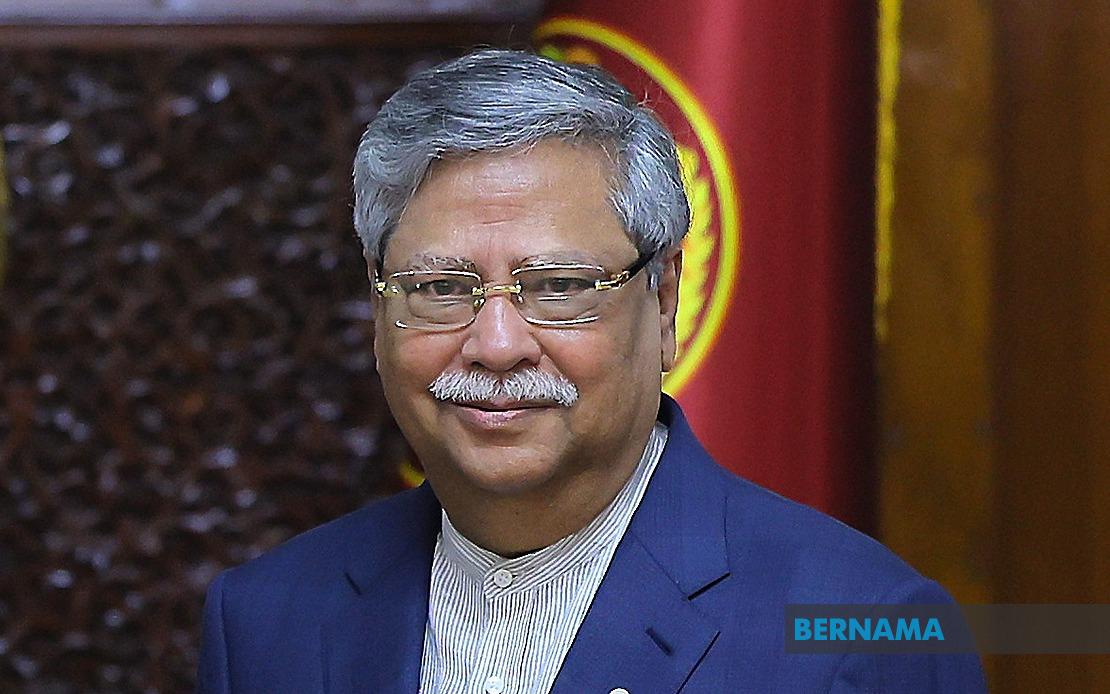
Bangladesh faces a significant political transition as the country prepares to elect a new president during parliament's third session scheduled to convene by mid-September. The announcement comes after President Mohammed Shahabuddin Chuppu submitted his resignation letter, citing serious illness as the reason for stepping down from his position. Law Minister Md Asaduzzaman disclosed the timeline to journalists in Dhaka on Saturday, confirming that constitutional procedures dictate the election must occur within 90 days of the sitting president's departure from office.
The succession process is being conducted in strict adherence to Bangladesh's constitutional framework, which explicitly outlines the procedures for filling a vacant presidency. Speaker Hafiz Uddin Ahmad has assumed the functions and powers of the president in a temporary capacity, fulfilling his constitutional duties following Shahabuddin's departure. The Parliament Secretariat officially confirmed this arrangement on Friday, emphasizing that all actions being taken remain within the constitutional bounds set forth by Bangladesh's governing document. This interim arrangement ensures continuity in the executive branch while the permanent successor is determined through the prescribed electoral process.
The timing of the election hinges on parliament's session schedule. The second session of parliament concluded on July 15, and according to constitutional requirements, the third session must be convened within two months of that date. This deadline effectively mandates that parliament must reconvene no later than September 14, providing a clear window for conducting the presidential election. The specific date in September when the election will take place has not yet been formally announced, though parliamentary officials are expected to coordinate the exact timing with necessary procedures and preparations.
Under Bangladesh's constitutional framework, the electorate for presidential elections comprises members of parliament exclusively, a system that concentrates the power to select the head of state within the legislative body. This institutional arrangement contrasts sharply with systems where the presidency is determined by popular vote or electoral college mechanisms. The reliance on parliamentary voting means that the composition and political balance within parliament directly determines who can assume the presidency, making legislative strength a decisive factor in the succession process.
The political landscape strongly suggests that the Bangladesh Nationalist Party, which holds the majority in the current parliament under the leadership of Prime Minister Tarique Rahman, will exert decisive influence over the presidential selection. Political observers and analysts widely anticipate that the BNP's chosen nominee will secure election to the presidency, given the party's commanding parliamentary position. This expectation reflects the practical reality of how presidential elections function within the Bangladeshi system, where majority control translates directly into the ability to determine executive outcomes.
For Malaysia and other Southeast Asian nations observing developments in Bangladesh, this succession carries implications for regional stability and diplomatic relations. Bangladesh's political transitions historically attract regional attention, and the manner in which this presidential election unfolds will be scrutinized as an indicator of institutional health and constitutional adherence. The orderly fashion in which Bangladesh is managing the transition, through strict constitutional procedures and defined timelines, demonstrates institutional resilience during leadership changes, a factor that often concerns regional observers.
The resignation of Shahabuddin reflects broader health-related pressures that can affect government leadership in the region. While serious illness necessitated his departure, the structured constitutional process for succession showcases Bangladesh's established mechanisms for managing such contingencies. The nation's ability to conduct this transition smoothly without constitutional crisis or political vacuum underscores the maturity of its institutional frameworks, despite occasional controversies that characterize Bangladeshi politics.
The September election will represent the first major political appointment under Prime Minister Tarique Rahman's administration since taking office. The choice of president, while constitutionally a ceremonial position with limited executive powers, carries symbolic and political significance within Bangladesh's parliamentary system. The BNP's selection will reflect the party's preferences and political priorities for this period, potentially signaling its strategic direction and internal leadership dynamics.
Regional analysts will monitor how the BNP navigates this selection process, particularly regarding its relationship with other political parties, civil society, and international observers. The transparency and procedural correctness with which Bangladesh conducts the election will contribute to international perceptions of the nation's democratic credentials and constitutional governance. With Southeast Asia's complex political landscape, where democratic transitions often prove contentious, Bangladesh's adherence to constitutional timelines and procedures offers a model of orderly succession management that deserves attention and analysis from regional observers.

