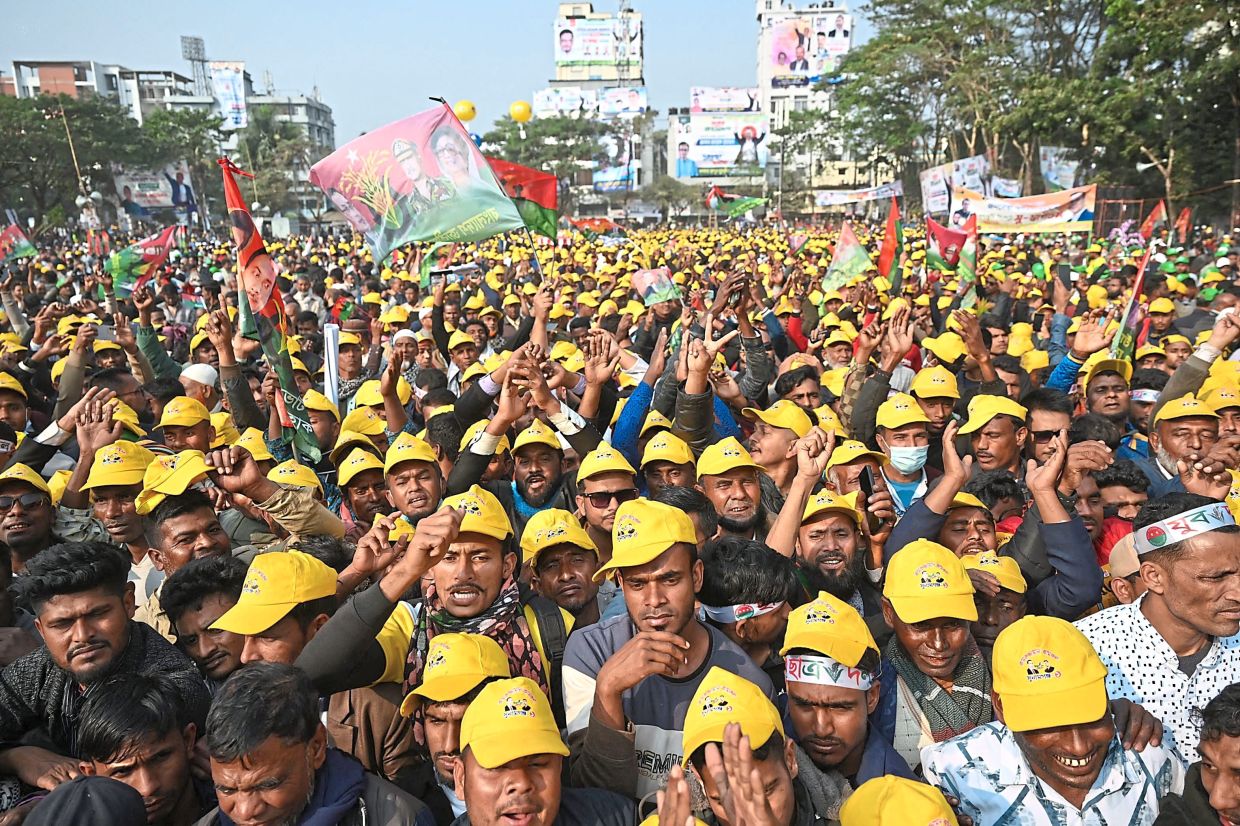
Bangladesh's lawmakers are expected to formally elect Mirza Fakhrul Islam Alamgir as the nation's 23rd president on Thursday (Aug 20), capping a significant transition in the country's political leadership following last year's revolution. The 78-year-old secretary general of the ruling Bangladesh Nationalist Party (BNP) and local government minister is widely anticipated to secure the predominantly symbolic position in an afternoon parliamentary vote for a five-year term.
Alamgir's elevation represents a political vindication for a figure who spent much of the past decade operating in the opposition shadows during Sheikh Hasina's tumultuous rule. In comments to journalists this week, he acknowledged the unexpected nature of his rise to the presidency, framing his selection as a validation of both his party's confidence and his unwavering commitment to public service. "I never thought that I would become the president -- it is the infinite grace of the party and almighty Allah," he remarked, adding that his intent remains unchanged: to maintain close contact with ordinary citizens and pursue their wellbeing even from within the ceremonial office.
The BNP's ascendancy follows a decisive electoral mandate in February when Prime Minister Tarique Rahman's party swept parliamentary elections called in the aftermath of the 2024 revolution that toppled Hasina's government. These first-ever ballots held without Hasina's dominance have fundamentally reshaped Bangladesh's political hierarchy, allowing the BNP to consolidate power at both executive and now presidential levels. For Malaysian observers, the BNP's return to governance carries broader implications for South Asian political stability and the trajectories of regional democracies recovering from authoritarian overreach.
The presidency that Alamgir is inheriting became vacant in July when Mohammed Shahabuddin, a 76-year-old ally of the deposed Hasina, submitted his resignation. Shahabuddin had served since 2023 but faced mounting pressure to relinquish the post as the new political order solidified following the revolution. His departure, ostensibly motivated by health concerns, effectively ended his presidency four years before the natural conclusion of his term in 2028. The swift transition highlighted the precarious position of figures too closely associated with the previous administration.
Hasina herself remains beyond Bangladesh's reach, having fled to India where she has resisted returning to face trial. In November, a Dhaka court convicted her in absentia of crimes against humanity and handed down a death sentence, a dramatic conclusion to what rights organizations characterized as years of authoritarian governance marked by extrajudicial killings, systematic suppression of legitimate opposition, manipulation of judicial processes, and electoral irregularities. The proceedings underscored the depth of grievances accumulated during her tenure and the determination of Bangladesh's interim authorities to establish accountability.
Alamgir's path to the presidency has been forged through decades of political activism dating back to his university years. Born on January 26, 1948, he emerged as a prominent student leader during the 1969 uprising against Pakistani military rule, a movement that presaged Bangladesh's ultimate independence two years later. After completing his economics studies at Dhaka University, he combined academic work with political engagement, eventually transitioning into ministerial positions encompassing agriculture, aviation, and tourism portfolios during various government tenures.
His greatest resilience was demonstrated during Hasina's rule, when Alamgir functioned as a key opposition voice while other BNP figures faced incarceration or exile. Party patriarch Khaleda Zia endured imprisonment, and her son Rahman was forced into external exile during this period, yet Alamgir maintained the party's organizational coherence and political viability. State media reports credited him specifically with "keeping the BNP organised and maintaining the party's political presence during difficult times," a testament to his ability to navigate extremely constrained political space.
The cost of that resistance was considerable. Alamgir himself experienced repeated detention under Hasina's government, facing numerous criminal charges that he consistently characterized as politically motivated weapons deployed to silence dissent. These brushes with the legal system positioned him as an emblem of the BNP's struggle against what opposition forces characterized as autocratic governance, thereby enhancing his credibility within party ranks and among supporters who had suffered similar persecution.
Personally, Alamgir is married to Rahat Ara Begum, a retired financial official, and they have two daughters together. His family background reflects his integration within Bangladesh's educated professional classes, providing him with the social standing and intellectual credentials valued by the BNP's traditional constituency.
In Thursday's vote, Alamgir faces nominal opposition from Oli Ahmed, a candidate nominated by the 11-party opposition coalition anchored by the Jamaat-e-Islami party. Parliamentary voting is scheduled to commence around 2pm local time (0800 GMT), though the outcome appears predetermined given the BNP's commanding legislative majority secured in February's elections. The election itself will constitute a ceremonial ratification of a choice already determined by parliamentary arithmetic and factional dynamics within the ruling coalition.
The transition from Shahabuddin to Alamgir reflects the broader recalibration of Bangladesh's institutional framework following the 2024 revolution. While the presidency carries primarily ceremonial responsibilities, the shift nonetheless symbolizes the systematic replacement of Hasina-era figures with individuals acceptable to the new political order. Alamgir's selection additionally consolidates BNP control over major state institutions, completing the party's dominance of both elected and appointed positions of national prominence in the immediate aftermath of the revolutionary transformation.
For Southeast Asian policymakers monitoring Bangladesh's political evolution, Alamgir's elevation underscores the depth of the rupture with the previous era. The new president-elect will serve as a symbolic representative of a nation endeavoring to rebuild democratic institutions and public confidence following years of deteriorating governance. His stated commitment to remaining engaged with ordinary citizens, should he follow through, could contribute to Bangladesh's broader project of restoring legitimacy to state institutions that had become discredited under Hasina's increasingly isolated regime.

