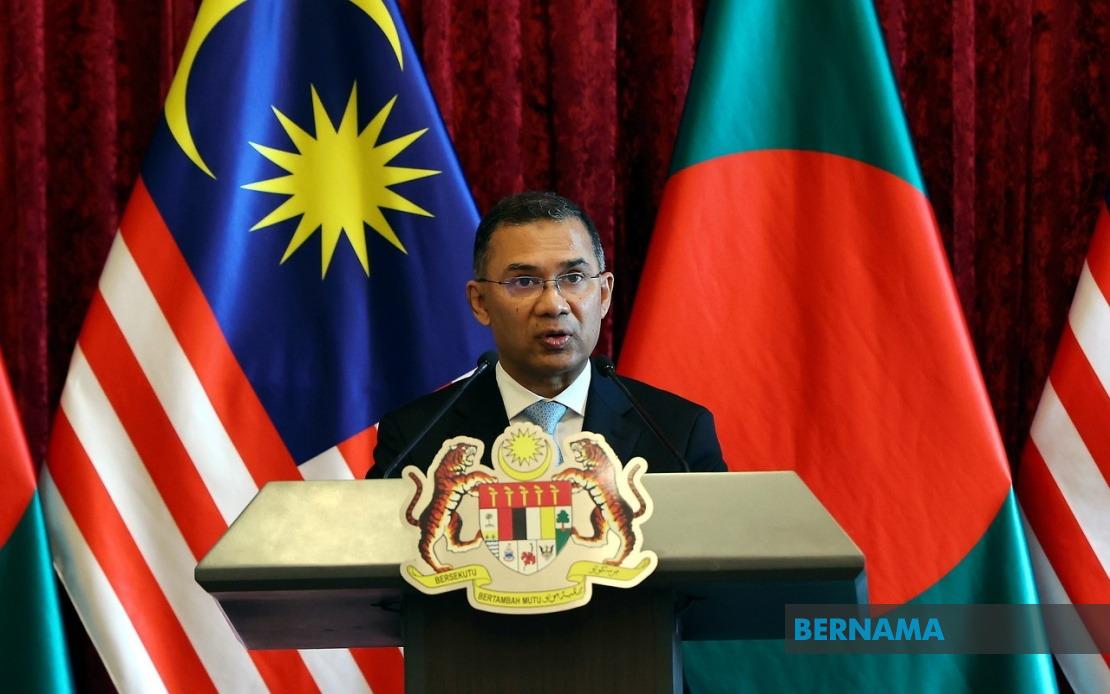
Bangladesh is charting a strategic course toward greater regional integration in Southeast Asia, with Prime Minister Tarique Rahman announcing his country's intention to pursue closer engagement with ASEAN and potentially join the influential Regional Comprehensive Economic Partnership. The statement came during high-level talks in Putrajaya on June 22, where Rahman met with Malaysian Prime Minister Datuk Seri Anwar Ibrahim to formalise new bilateral agreements and discuss deeper cooperation across multiple sectors.
Rahman's aspiration to secure ASEAN Sectoral Dialogue Partner status represents a significant step in Bangladesh's regional positioning. Such designation would grant the South Asian nation formal recognition within ASEAN's institutional framework, enabling structured participation in specific sectoral initiatives without full membership commitments. For Bangladesh, this intermediate status offers an attractive pathway to influence regional policy discussions while maintaining autonomy in decision-making.
The interest in RCEP membership carries particular strategic weight given the trade bloc's expansive footprint across the Indo-Pacific region. RCEP, encompassing ten ASEAN members plus China, Japan, South Korea, Australia, and New Zealand, represents one of the world's largest trading arrangements by GDP and population. Bangladesh's entry would position the country within a framework designed to reduce tariffs and streamline trade procedures across a market of approximately two billion consumers, potentially unlocking significant economic opportunities for its textile, apparel, and manufacturing sectors.
Bilateral relations between Malaysia and Bangladesh have demonstrated robust growth in recent years, with trade reaching RM12.18 billion in 2025, equivalent to approximately US$2.84 billion. This places Bangladesh as Malaysia's 28th largest trading partner globally and the second-most significant trading relationship within South Asia, trailing only India. The bilateral trade architecture reveals complementary economic structures, with Malaysia serving as a principal supplier of petroleum products and refined fuels to Bangladesh whilst importing substantial quantities of textiles, apparel, and footwear.
Malaysia's export performance to Bangladesh underscores the nation's importance as a supplier of energy resources to South Asian markets. Malaysian exports totalled RM10.08 billion, approximately US$2.35 billion, with petroleum products commanding the largest share. This export-oriented relationship reflects Bangladesh's growing energy demands amid its rapid industrial expansion and infrastructure development initiatives. Conversely, Bangladesh's apparel and textile exports to Malaysia, amounting to RM2.10 billion or approximately US$500 million in imports, highlight the complementary nature of both economies within global value chains.
The signing of a Memorandum of Understanding on Cultural Cooperation during the Putrajaya meeting signals broadening bilateral engagement beyond traditional commerce. Both nations recognised shared cultural heritage and the potential for people-to-people exchanges to reinforce official relations. Simultaneously, two Exchanges of Notes formalised cooperation frameworks in Counter-Terrorism Research and Investment Promotion and Facilitation, addressing transnational security challenges whilst facilitating commercial investment flows between economies.
Counter-terrorism collaboration assumes particular relevance given regional security dynamics in South Asia and Southeast Asia. Bangladesh has contended with militant extremism within its borders, whilst Southeast Asian nations remain vigilant against transnational terrorist networks. The formalisation of research cooperation provides institutional mechanisms for intelligence sharing, capacity building, and coordinated responses to evolving security threats. Enhanced investment promotion frameworks, meanwhile, seek to encourage Malaysian enterprises to explore opportunities within Bangladesh's manufacturing and export-oriented sectors.
Rahman's personal invitation to Prime Minister Anwar to visit Dhaka represents customary diplomatic engagement designed to elevate bilateral relations and facilitate direct dialogue on strategic matters. Such high-level visits typically result in substantive agreements addressing infrastructure development, education exchanges, and trade facilitation measures. The invitation underscores Bangladesh's desire to position itself as an attractive destination for Malaysian investment and partnership.
Bangladesh's strategic overtures toward ASEAN and RCEP must be understood within the broader context of South Asian regional dynamics and global economic competition. As a densely populated nation of approximately 170 million inhabitants with growing manufacturing capabilities, Bangladesh seeks integration into regional frameworks that can facilitate market access and technological transfer. ASEAN engagement offers proximity to more developed economies and established trade networks, whilst RCEP membership would provide preferential access to major Asian markets including China and Japan.
The timing of these initiatives reflects Bangladesh's post-transition political positioning under Rahman's government, which assumed office following significant civil unrest. Demonstrating economic dynamism and constructive international engagement serves to legitimise the new administration and signal stability to foreign investors. Regional integration announcements function simultaneously as confidence-building measures with the international community and platforms for showcasing policy coherence.
For Malaysia specifically, Bangladesh's deepening engagement with ASEAN carries implications for supply chain integration and investment diversification. Malaysian companies operating in manufacturing and services sectors may identify opportunities to expand into the Bangladesh market or establish complementary production facilities. Enhanced bilateral frameworks reduce transaction costs and regulatory uncertainty, facilitating cross-border business activities.
The broader ASEAN context adds complexity to Bangladesh's integration aspirations. Whilst ASEAN emphasises non-interference and consensus-based decision-making, expanding the organisation or even its dialogue partnership mechanisms requires unanimous member approval. Bangladesh's candidacy for sectoral dialogue status will likely advance through incremental engagement and demonstrated commitment to ASEAN values and norms. Success requires patient diplomacy and demonstrated mutual benefit across multiple ASEAN member states.
Bangladesh's RCEP ambitions similarly face procedural requirements and strategic considerations among existing members. The trade partnership already encompasses South Asian representation through India's membership, yet Bangladesh's entry could strengthen intra-regional supply chains and provide additional options for market access. Ultimately, Bangladesh's regional integration strategy reflects recognition that South Asian economic growth is increasingly intertwined with Southeast Asian developments, and that formalised institutional participation enhances both market access and geopolitical influence.

