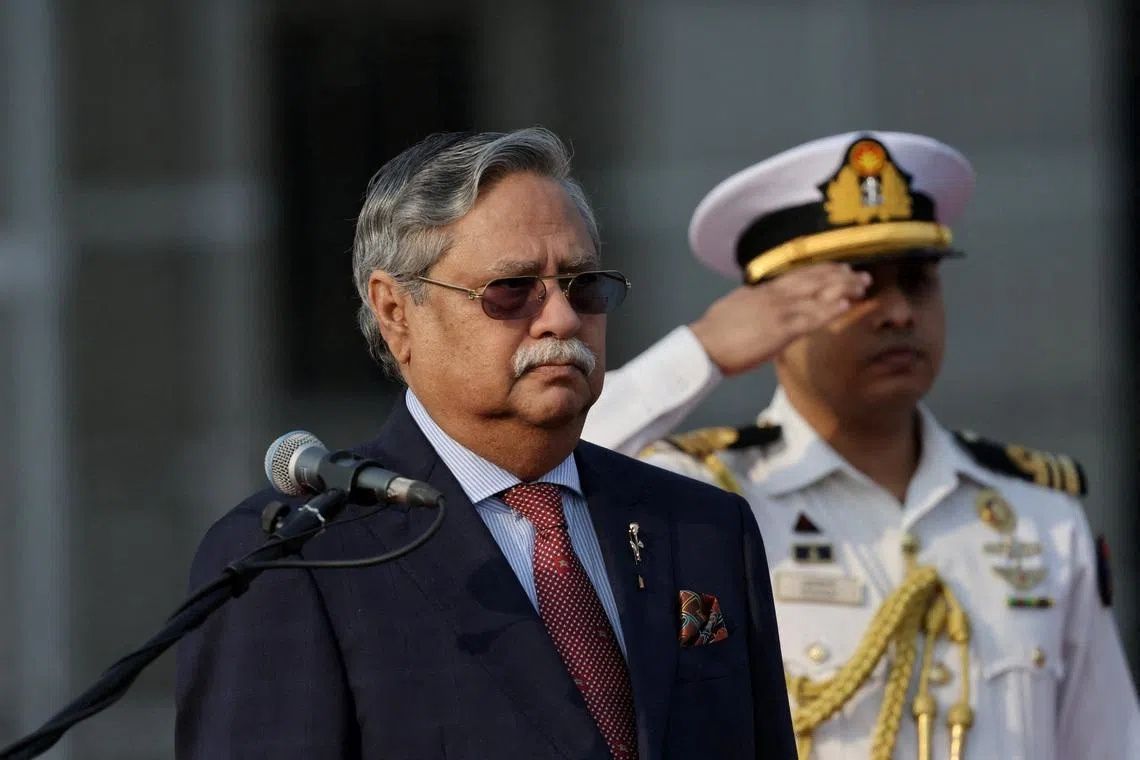
Bangladesh lost its president on Friday when Mohammed Shahabuddin, 76, announced his resignation citing serious medical grounds. The departure of the ceremonial figurehead creates fresh uncertainty in the South Asian nation's turbulent political landscape and represents a significant blow to ousted Prime Minister Sheikh Hasina, who has been in exile in India since a violent student-led uprising forced her from power in 2024. Shahabuddin had served in the presidential role since April 2023, maintaining his formal position throughout the extraordinary upheaval that has reshaped Bangladesh's political elite and governance structures.
Shahabuddin disclosed in a statement that he has been diagnosed with autonomic neuropathy, a progressive neurological disorder affecting the functioning of involuntary bodily systems. The condition has caused him to experience occasional episodes of sudden unconsciousness, complications that the former jurist and constitutional specialist deemed incompatible with the responsibilities of high office. Although the presidency in Bangladesh is constitutionally a largely ceremonial appointment, the position carries symbolic weight as the nation's ceremonial head of state and ceremonial commander-in-chief of the armed forces. His medical disclosure underscores the physical demands that even largely ceremonial roles can place on aging politicians in active service.
The timing of Shahabuddin's withdrawal carries profound political implications for Hasina, who has been preparing for a return to domestic politics. Reports indicate that she intends to make a comeback within approximately five months, a timeline that now faces the complication of losing a sympathetic figurehead at the state level. Hasina's association with Shahabuddin, forged over years of political alliance, provided her with crucial institutional representation during her exile period. His resignation effectively eliminates one of the last remaining Awami League-aligned officials occupying a position of national prominence, further isolating her faction as she contemplates re-entry into Bangladesh's fractious political arena.
The institutional collapse surrounding Hasina's former political machine has been remarkably swift and comprehensive. Her Awami League party remains officially banned under the transitional administration that assumed power following the 2024 upheaval, a legislative prohibition that prevents the party from operating as a unified political entity or fielding candidates under its traditional banner. Concurrently, dozens of Awami League figures have been prosecuted, imprisoned, or forced underground, effectively dismantling the organizational infrastructure that sustained her government for years. This systematic dismantling represents one of the most thorough political purges Bangladesh has witnessed in recent decades, fundamentally altering the balance of institutional power.
Under constitutional provisions, the Speaker of the Jatiya Sangsad, Bangladesh's unicameral national parliament, will assume the ceremonial duties of the presidency pending the election of a successor. This transitional arrangement preserves governmental continuity while establishing a process for selecting a new presidential figure. The parliamentary leadership will manage state functions and ceremonial responsibilities during the interregnum period. The identity of the next president will likely reflect the ideological orientation of the current transitional administration and its priorities regarding institutional leadership in post-Hasina Bangladesh.
The executive authority within Bangladesh's parliamentary system remains vested with the Prime Minister and cabinet, meaning the presidential vacancy, while symbolically significant, does not create a governance crisis in practical terms. The nation's executive machinery will continue operating through established institutional channels. However, the symbolism of losing Hasina's last high-ranking sympathiser in government carries weight beyond mere procedural concerns. The presidency, though largely ceremonial, represents national continuity and institutional legitimacy, elements that matter considerably in post-conflict political transitions.
Shahabuddin's background as a legal scholar and constitutional expert had made him a figure of relative institutional credibility, distinguished from the more overtly partisan political actors who typically ascend to the ceremonial positions. His neutrality in many respects, combined with his connections to Hasina's era, had positioned him as a bridge figure capable of maintaining some institutional legitimacy during a volatile transition. His departure removes that moderating voice from the upper echelons of state authority, leaving institutions more fully dominated by actors associated with the transitional framework that replaced Hasina's government.
For Malaysia and other Southeast Asian observers, the situation in Bangladesh illustrates the vulnerabilities inherent in South Asian political systems when institutional checks collapse during periods of upheaval. The rapid dismantling of Hasina's political structure raises questions about democratic resilience and institutional protections against comprehensive purges of opposing factions. Malaysia's own experiences with political transitions and concerns about preserving constitutional safeguards across party changes render Bangladesh's trajectory particularly instructive for policymakers in the region.
Hashina's anticipated return adds another layer of complexity to Bangladesh's political future. Should she successfully re-enter the political arena, she will encounter a substantially transformed institutional environment with minimal sympathetic figures in state positions. The presidency that once aligned with her interests now stands vacant, awaiting a successor likely to be chosen through processes reflecting the transitional administration's preferences. This structural disadvantage may constrain her ability to exercise political leverage at the state level and could complicate her rehabilitation attempts within the formal political system. The confluence of institutional isolation and legal jeopardy creates formidable obstacles for her prospective political resurgence in the months ahead.

