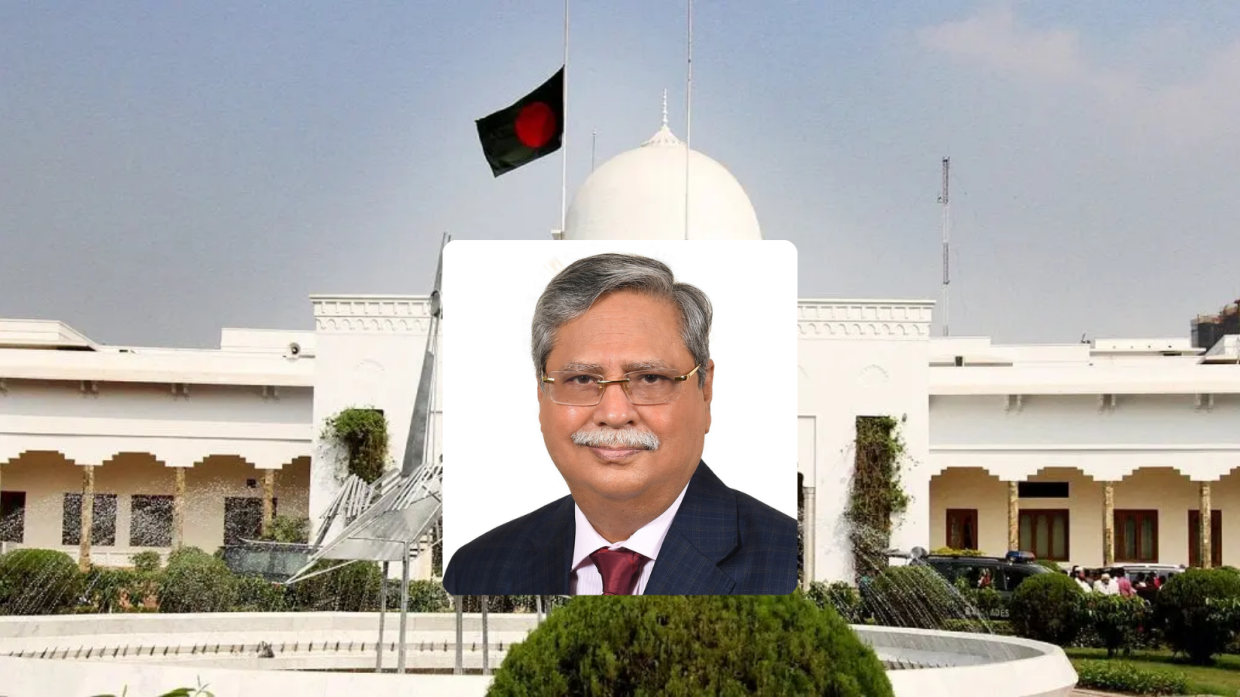
Bangladesh's President Mohammed Shahabuddin appears set to tender his resignation in the coming days, according to informed sources tracking developments in Dhaka's increasingly turbulent political landscape. The anticipated departure would represent a watershed moment in the country's transitional phase following the mass uprising that reshaped the nation's leadership in July 2024. Shahabuddin, who has occupied the presidency since April 2023, currently stands as the sole remaining high-ranking constitutional figure from the pre-uprising era, making his exit symbolically significant for the new administration.
The momentum toward Shahabuddin's departure has intensified over recent weeks, with multiple indicators suggesting the interim government led by Prime Minister Tarique Rahman views his continued presence as an impediment to consolidating power. Government officials have signalled displeasure over reports that the president had been attempting to rekindle diplomatic and political relationships, activities perceived as potentially destabilising to the current order. One high-level source characterised his removal as an inevitable development, stating that retaining a pre-uprising figure in the nation's highest constitutional office no longer serves the government's strategic interests.
A pivotal trigger for accelerating his exit appears to centre on a telephone conversation Shahabuddin conducted with exiled former Prime Minister Sheikh Hasina during a medical visit to London in mid-May. Hasina, who has resided in India since fleeing Bangladesh following the July 2024 uprising, faces a death sentence within the country and has seen her Awami League party activities prohibited. Intelligence agencies subsequently became aware of the presidential communication, after which government representatives conveyed an implicit message to Shahabuddin suggesting he step aside. However, senior Bangladesh Nationalist Party figures insist the phone call represents merely one dimension of a considerably more intricate political situation.
The complexity deepens considerably given Hasina's recent announcement of plans to return to Bangladesh around December alongside senior Awami League figures, ostensibly to surrender and face legal proceedings. This development has significantly heightened tensions within the interim government, which increasingly perceives organised Awami League activity—whether overt or clandestine—as a serious threat to its authority. Reports indicate that authorities have been actively monitoring attempts by Awami League operatives within Bangladesh to rebuild party infrastructure, representing precisely the kind of organisational activity the government views with deep concern.
Government hardliners have intensified their campaign against political opposition. On July 17, Prime Minister Tarique Rahman explicitly directed relevant authorities during a Cabinet meeting to strengthen efforts against the Awami League, Bangladesh Chhatra League, Jubo League, and associated organisations. These directives underscore the administration's determination to prevent any resurgence of the previous political order. Within this context, Shahabuddin's continued occupancy of the presidency—particularly given his historical associations with the pre-uprising period—has become strategically problematic for the ruling coalition.
Shahabuddin's own statements have inadvertently hastened his exit prospects. In December 2025, while the interim government under Muhammad Yunus was still in power, he publicly expressed intentions to resign midway through his presidential term following scheduled parliamentary elections, citing feelings of humiliation at his treatment by the Yunus administration. More recently, in a February newspaper interview, he adopted a diplomatically ambiguous posture, declaring his willingness to remain if the government desired his continuation but equally prepared to resign voluntarily should officials prefer his departure. This studied ambivalence appears to have failed to satisfy government demands for clarity and loyalty.
The constitutional mechanics of a presidential resignation would transfer executive authority to Parliament's speaker, who would serve as acting president pending the election of a successor. No final determination has been reached regarding the precise timing of Shahabuddin's departure or the identity of his replacement, though government insiders suggest the announcement could arrive within days. One source close to the presidential residence, known locally as Bangabhaban, indicated that a formal decision might materialise within forty-eight hours, with the president scheduled to host non-resident ambassadors from four nations on July 29.
From a Malaysian and broader Southeast Asian perspective, developments in Bangladesh carry considerable significance for regional stability. Bangladesh's political volatility affects refugee flows, security arrangements, and diplomatic relationships throughout the region. Malaysia has substantial trading relationships with Bangladesh and hosts significant populations of Bangladeshi migrants, making internal political developments directly relevant to Malaysian interests. The interim government's increasingly firm consolidation of power raises questions about the trajectory of democratic institutions and governance standards, issues that resonate across Southeast Asia as the region navigates persistent tensions between developmental imperatives and political pluralism.
The Shahabuddin situation exemplifies the broader challenge confronting post-uprising Bangladesh: determining how to transition from revolutionary ferment toward institutional stability while preventing the restoration of previously dominant political forces. The government's apparent determination to remove the sole remaining representative of the old order suggests a preference for symbolic rupture with the past, even at the cost of constitutional consistency. Whether this approach ultimately strengthens or destabilises the political system remains an open question, one that observers across Southeast Asia will monitor closely given potential implications for their own governance challenges and regional equilibrium.

