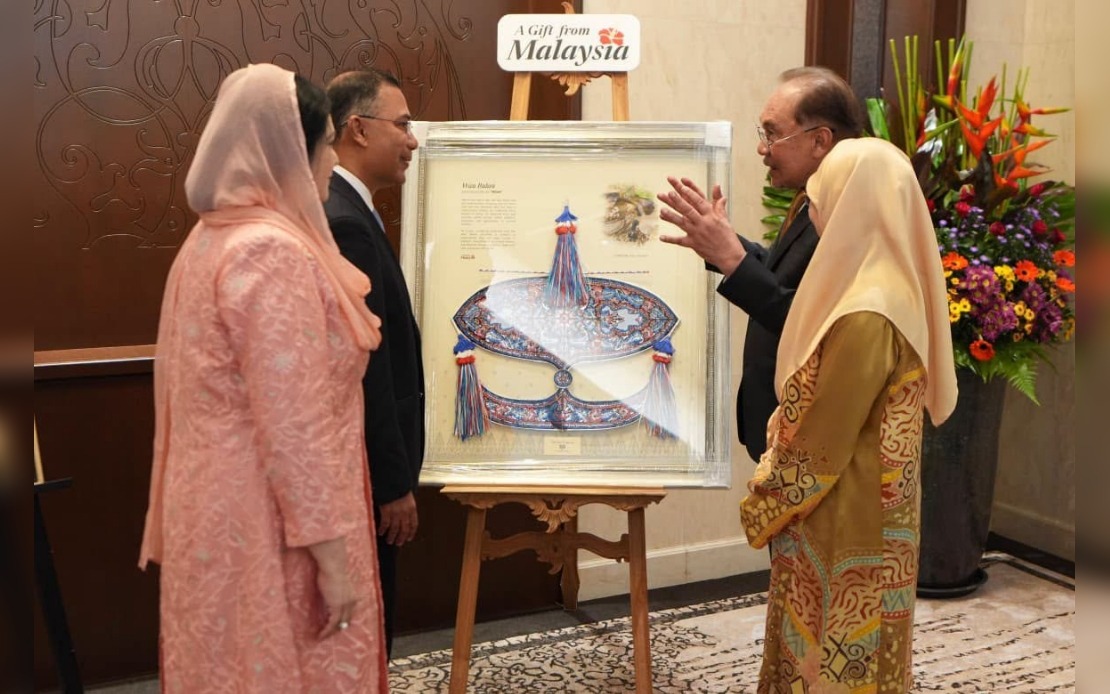
Bangladesh Prime Minister Tarique Rahman departed Malaysia on Monday following his inaugural state visit as the country's premier, having secured renewed commitment from his Malaysian counterpart Datuk Seri Anwar Ibrahim to deepen cooperation across a spectrum of shared interests. The visit underscored the importance both nations attach to their relationship, which extends well beyond conventional diplomatic protocols into people-to-people exchanges that touch virtually every aspect of civil society.
Rahman expressed profound appreciation for the reception accorded to him and his delegation during the visit, singling out the hospitality extended by Prime Minister Anwar Ibrahim and his wife, Datuk Seri Dr Wan Azizah Wan Ismail. The warmth of Malaysia's welcome, according to Rahman, reflected the genuine affinity that exists between the two governments and their populations, sentiments he conveyed through the Bangladesh Ministry of Foreign Affairs via social media channels.
The substantive discussions held between the two premiers centred on reinvigorating Bangladesh-Malaysia relations across multiple dimensions. Rahman indicated that the conversations had successfully reaffirmed the foundational bonds linking the two nations, moving well beyond mere transactional agreements to encompass shared aspirations for mutual prosperity and broader regional advancement. These dialogues appear designed to position Bangladesh and Malaysia as collaborative partners in addressing contemporary challenges within Southeast Asia and the Indian Ocean region.
Rahman's historical perspective on the bilateral relationship carries particular significance for understanding contemporary ties. He invoked the legacy of his father, Shaheed President Ziaur Rahman, and his mother, Begum Khaleda Zia, both of whom held the highest offices in Bangladesh during earlier decades. This genealogical reference underscores how deeply entrenched Bangladesh-Malaysia relations have become, spanning generations of leadership and policy continuity. The premier's invocation of family history signals institutional memory and suggests these ties have weathered various geopolitical transitions.
Bangladesh's emphasis on valuing bilateral and multilateral dimensions of the relationship with Malaysia reflects contemporary regional dynamics. As a nation with significant diaspora communities throughout Southeast Asia, Bangladesh benefits substantially from the stability and economic opportunities that Malaysian engagement provides. Conversely, Malaysia has historically viewed Bangladesh as a strategic partner in the broader Islamic world and as an important voice within multilateral organisations where both nations hold membership.
The significance of people-to-people connectivity in Rahman's public statements merits attention. Rather than focusing exclusively on governmental or commercial relations, the Bangladesh premier highlighted the organic bonds between ordinary citizens of both nations. This emphasis acknowledges the reality that hundreds of thousands of Bangladeshi expatriates work and reside in Malaysia, contributing to Malaysian economic productivity whilst maintaining deep cultural and familial ties to their homeland. These human connections form an enduring foundation upon which formal diplomatic relations are built.
Rahman's personal gesture of gratitude extended to His Majesty Sultan Ibrahim, King of Malaysia, for the time and warmth invested in bilateral meetings. This protocol acknowledgment reflects the ceremonial dimensions of state visits, yet also indicates respect for Malaysia's constitutional monarchy and recognition of the sovereign's role in diplomatic relations. Such courtesies remain important in regional diplomacy, particularly within nations where monarchical institutions command significant cultural and political importance.
The timing of Rahman's first state visit as Bangladesh's premier carries symbolic weight for both capitals. Inaugural visits by newly-elevated leaders typically serve to establish personal relationships between key decision-makers whilst demonstrating continuity with existing partnerships. For Bangladesh, this visit affirmed that despite recent political transitions, the nation remains committed to its established relationships and regional integration. For Malaysia, receiving such a high-profile delegation signals recognition of Bangladesh's importance within the broader Southeast Asian constellation.
The multifaceted nature of the partnership referenced repeatedly by Rahman encompasses trade and investment, security and defence cooperation, cultural and educational exchanges, and coordination on regional and international policy matters. Bangladesh-Malaysia bilateral trade has expanded substantially over recent decades, whilst significant Malaysian investments in Bangladesh's infrastructure and manufacturing sectors represent tangible manifestations of economic interdependence. Educational partnerships, including scholarships for Bangladeshi students at Malaysian universities, facilitate knowledge transfer and professional network development.
Regional strategic considerations underpin these bilateral engagements with particular force. Both nations operate within the context of complex geopolitical competition involving major powers, maritime security challenges in the Indian Ocean and Bay of Bengal, and transnational issues spanning environmental concerns to counterterrorism cooperation. Bangladesh's position astride crucial maritime chokepoints and its role as a potential hub for regional trade routes make it valuable to Malaysian strategic interests. Conversely, Malaysia's established economic strength and regional diplomatic influence provide Bangladesh access to valuable partnerships and networks.
Looking forward, the commitment articulated during this visit suggests both nations will continue exploring expanded cooperation across emerging domains. Digital economy integration, renewable energy collaboration, and enhanced people-to-people exchanges through tourism and cultural programmes represent potential growth areas. The established foundation of mutual respect and genuine historical partnership provides solid ground for such expansion, particularly as both nations navigate the complexities of regional economic competition and geopolitical realignment in the coming years.

