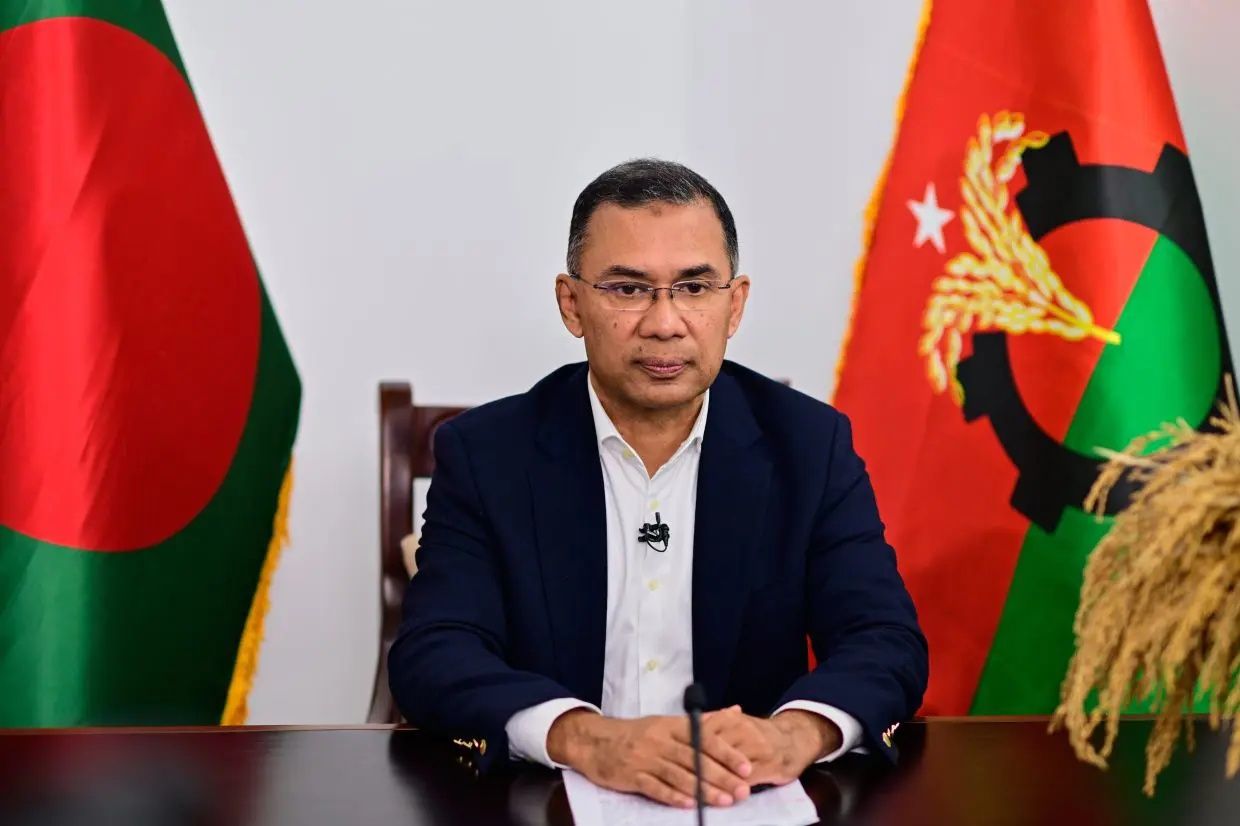
Bangladesh Prime Minister Tarique Rahman is embarking on his first international diplomatic mission since taking office, with stops in Malaysia followed by China, according to an announcement from Dhaka's foreign ministry on Saturday. The timing and sequence of the tour carries considerable symbolic weight in South Asian geopolitics, as the newly elected leader deliberately sidesteps India—despite its geographic proximity and historical significance—to begin building his administration's foreign relations profile. This calculated move underscores the fractured state of Bangladesh-India ties following the political upheaval that swept through the nation last year and the subsequent installation of Rahman's government in February.
The Prime Minister will arrive in Malaysia on Sunday, transitioning to Beijing the following day for talks centred on economic cooperation and major infrastructure initiatives. Malaysian officials have prepared to receive Rahman at a moment when bilateral relations hold particular importance for Bangladesh, given Malaysia's substantial absorption of migrant labour from the South Asian nation. The approximately 800,000 Bangladeshi workers employed in Malaysia constitute more than a third of the country's entire foreign workforce, making the relationship fundamentally tied to employment, remittances, and labour market stability for hundreds of thousands of Bangladeshi families.
China features prominently on the diplomatic agenda, with Beijing positioned as a potential partner in advancing critical development projects that have languished for years. Among the key discussions will likely be Chinese support for the long-delayed Teesta river project, an ambitious undertaking designed to restore and manage one of Bangladesh's most vital waterways through comprehensive dredging operations, embankment reinforcement, and expanded irrigation infrastructure. The project's advancement holds significance for Bangladesh's agricultural productivity and water security, areas where external investment and expertise remain essential for national development.
The foreign ministry has characterised these visits as part of a broader strategic initiative to fortify Bangladesh's economic partnerships across Asia. This framing reflects Rahman's administration attempting to position itself as pragmatic and forward-looking in its approach to international relations, prioritising economic advancement over historical grievances or geographic proximity. For Malaysia, hosting the Bangladesh premier signals recognition of the shared economic interests between the two nations, particularly in employment arrangements and potential cooperation in maritime trade and regional connectivity initiatives.
The backdrop to this diplomatic tour involves considerable turbulence in Bangladesh's relationship with India. The 2024 uprising that toppled the government of former Prime Minister Sheikh Hasina, who maintained close ties with New Delhi, fundamentally altered the calculus of bilateral relations. Hasina, who fled the country during the revolution, remains in hiding in India, and Bangladesh has repeatedly made formal demands for her extradition—requests that New Delhi has not entertained. This unresolved issue continues to poison diplomatic relations and signals to audiences across South Asia that Rahman's administration intends to chart a course independent of the previous government's India-centric orientation.
Border tensions have further strained the relationship between Dhaka and New Delhi. India has been systematically pushing individuals it classifies as undocumented migrants across the frontier into Bangladesh, creating humanitarian concerns and aggravating local populations in border regions. These actions, coupled with the extradition standoff, have created an environment where Bangladesh's political establishment feels compelled to diversify its international partnerships and reduce its dependence on Indian goodwill. For Rahman's relatively nascent administration seeking to establish legitimacy and demonstrate competence, cultivating alternative relationships with major Asian powers offers both practical benefits and symbolic advantages.
The timing of Rahman's tour also reflects the complex triangular dynamic between India, China, and regional influence in South Asia. India has traditionally viewed Chinese expansion into South Asian affairs with considerable apprehension, given the two nations' competition for regional primacy. Bangladesh, caught between these competing powers, has historically maintained a delicate balance while leaning more heavily toward India during Sheikh Hasina's tenure. Rahman's pivot toward China signals a recalibration that could reshape the geopolitical landscape of South Asia, particularly if it encourages other smaller nations in the region to reassess their own strategic alignments.
For Malaysian readers and policymakers, the visit carries implications for ASEAN's engagement with South Asia more broadly. Bangladesh remains a significant player in regional affairs despite its economic challenges, and a leadership that prioritises partnerships with Southeast Asian nations opens possibilities for enhanced cooperation on maritime security, trade facilitation, and people-to-people exchanges. The substantial Bangladeshi diaspora in Malaysia makes this relationship particularly multifaceted, involving not only government-to-government interaction but also civil society and business community engagement.
The choice to bypass India for a first foreign tour represents a marked departure from diplomatic convention and reflects the profound political transformations Bangladesh has experienced. Rahman's administration, inheriting a nation that has undergone significant internal upheaval, appears determined to project an image of independence and agency in its international relations. By investing early diplomatic capital in relationships with Malaysia and China, the new government sends signals about its priorities: economic development, infrastructure advancement, and diversified partnerships that reduce reliance on any single neighbour. Whether this approach will yield tangible economic benefits or simply constitute a symbolic gesture remains to be seen, but the tour itself marks a significant inflection point in Bangladesh's post-2024 foreign policy trajectory.

