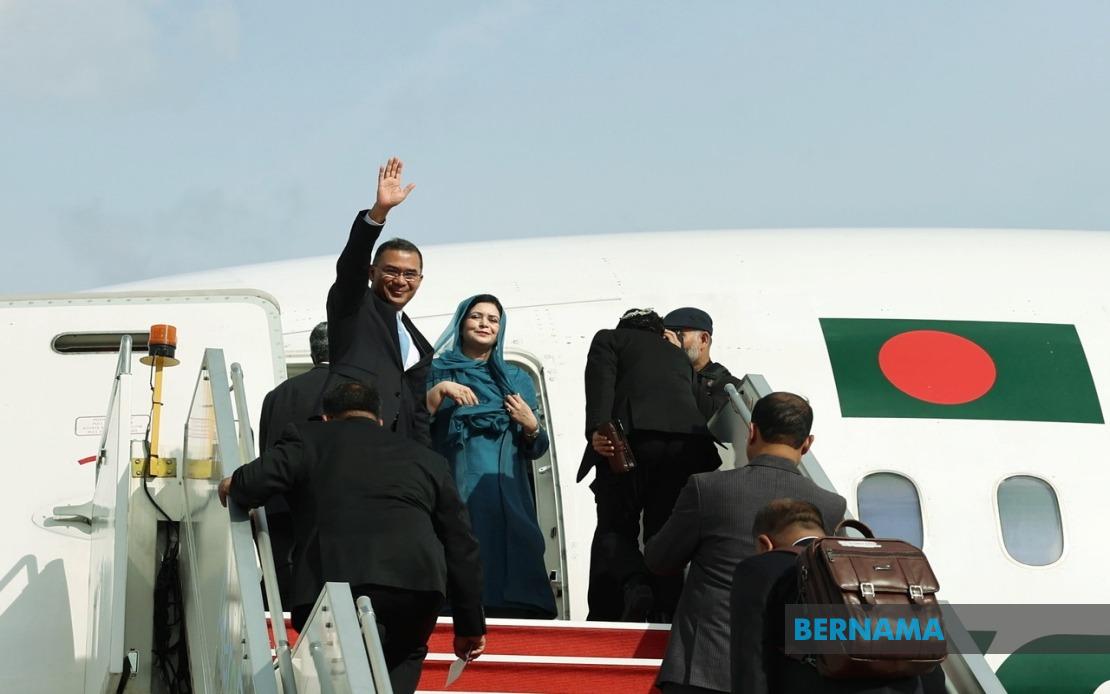
Bangladesh Prime Minister Tarique Rahman departed Malaysia on June 22 for China, concluding a two-day official visit that underscores the growing diplomatic ties between the two South Asian and Southeast Asian nations. A special aircraft carrying Tarique, his spouse Dr Zubaida Rahman, and their delegation lifted off from the Bunga Raya Complex at Kuala Lumpur International Airport at 5 pm, with Minister in the Prime Minister's Department (Religious Affairs) Dr Zulkifli Hasan overseeing a ceremonial send-off featuring a 28-person guard of honour from the First Battalion of the Royal Ranger Regiment.
The visit carries significance as Tarique's first bilateral official journey abroad since assuming office in February 2026, signalling Bangladesh's intent to strengthen its international engagement during a pivotal period. The timing reflects strategic calculations on both sides to cement relations at a moment when regional alignments are shifting across South and Southeast Asia. For Malaysia, hosting Bangladesh's leader provides an opportunity to deepen ties with a major South Asian economy and leverage its position as a bridge between regions.
During a bilateral meeting at the Perdana Putra Complex, Prime Minister Datuk Seri Anwar Ibrahim and Tarique engaged in substantive discussions encompassing regional and global matters of shared concern. The conversation ranged across trade and investment frameworks, human resource development, semiconductor industries, energy security, agricultural cooperation, and educational exchanges. These discussions reflect both nations' recognition that economic interdependence forms the foundation for stable diplomatic relationships and mutual prosperity in an increasingly competitive global landscape.
The most tangible outcomes of the visit emerged through formal agreements signed by both delegations. A Memorandum of Understanding on Cultural Cooperation establishes mechanisms for people-to-people engagement and cultural promotion, fostering mutual understanding beyond governmental channels. Two Exchanges of Notes addressing Counter-Terrorism Research and Investment Promotion and Facilitation demonstrate shared security concerns and a commitment to attracting capital flows that benefit both economies. These agreements represent the institutionalisation of bilateral cooperation across multiple sectors.
Economic cooperation emerged as a central pillar of the discussions. Both leaders committed to negotiating a fast-track free trade agreement, a significant commitment given the complexities typically involved in bilateral trade negotiations. Additionally, they identified energy and the halal industry as priority sectors for enhanced cooperation. For Malaysia, Bangladesh represents a growing market for its petroleum products, which constitute the primary export category. Meanwhile, Bangladesh's textile, apparel, and footwear sectors provide complementary goods to Malaysia's economy. The trade relationship, valued at RM12.18 billion in 2025, positions Bangladesh as Malaysia's second-largest trading partner in South Asia after India and its 28th-largest globally.
Bangladesh's aspiration to strengthen its role within regional architectures formed another negotiation theme. Tarique emphasised Bangladesh's desire to become an ASEAN Sectoral Dialogue Partner, a status that would formalise its participation in regional institutions and decision-making processes. He also articulated Bangladesh's interest in joining the Regional Comprehensive Economic Partnership, the world's largest free trade agreement by gross domestic product. Malaysia's support for these objectives could prove instrumental, given the country's influential position within ASEAN and its bridging role between Southeast and South Asia.
On the global stage, both leaders identified converging interests that transcend bilateral concerns. They reaffirmed support for the Palestinian cause and expressed shared alarm at the humanitarian dimensions of the Gaza conflict. Both nations emphasised the imperative of achieving durable peace in the Gulf region and with Iran, recognising that instability in West Asia reverberates throughout global energy markets and international relations. These positions reflect similar foreign policy orientations rooted in solidarity with Muslim-majority nations while maintaining pragmatic engagement with major powers.
The Rohingya refugee crisis received particular attention, with both governments committing to strengthening cooperation through ASEAN mechanisms to forge lasting solutions. Bangladesh, which hosts approximately 900,000 Rohingya refugees in Cox's Bazar, bears the humanitarian burden of this protracted displacement. Malaysia, which accommodates significant Rohingya populations and grapples with associated integration challenges, understands the urgency of addressing root causes. Their pledge to engage Myanmar authorities collectively through regional frameworks signals recognition that bilateral or humanitarian approaches alone cannot resolve the situation, requiring sustained diplomatic pressure and ASEAN-wide consensus.
The bilateral trade composition reveals complementary economic structures with growth potential. Malaysia's dominance in petroleum product exports—driven by its hydrocarbon reserves and refining capacity—aligns with Bangladesh's energy demands as its economy industrialises. Bangladesh's textile and apparel exports, historically competitive in global markets, find ready partnerships with Malaysian trading networks and investors seeking diversified supply chains. The RM2.10 billion in annual imports from Bangladesh demonstrates substantial integration, though the trade balance favours Malaysia significantly, suggesting opportunities for Bangladesh to expand higher-value exports.
Tarique's onward journey to China signals Bangladesh's commitment to maintaining strategic flexibility in international relations. The timing of consecutive visits to Malaysia and China illustrates how South Asian nations navigate the complex geopolitical environment shaped by major power competition. For Malaysian observers, Bangladesh's efforts to cultivate relationships across Asia underscore the broader regional shift toward multi-alignment, where middle powers maintain diverse partnerships rather than adhering to exclusive blocs. This approach permits Bangladesh to secure economic benefits, development assistance, and security cooperation from multiple quarters.
The visit's success in formalising agreements and articulating shared interests provides a foundation for deeper engagement in coming years. The commitment to pursue a fast-track free trade agreement, if realised, would deepen economic interdependence and create constituencies within both nations favouring stable relations. Cultural cooperation initiatives may gradually shift public perceptions and foster grassroots connections between Malaysian and Bangladeshi societies. Counter-terrorism research partnerships address genuine shared security challenges in an era of transnational militant threats.
For Malaysia, deepening ties with Bangladesh carries strategic dividends. It reinforces Malaysia's role as a consequential power in Southeast Asia and an emerging bridge to South Asia, enhancing its relevance in regional architecture. Bangladesh's interest in sectoral dialogue partnership status and RCEP membership creates opportunities for Malaysia to guide these processes. The relationship also provides leverage in addressing shared humanitarian crises, such as the Rohingya situation, where coordinated action yields greater influence than isolated efforts.
Looking ahead, the trajectory of Malaysia-Bangladesh relations will likely depend on implementation of these commitments and the broader regional environment. Successful negotiation of the free trade agreement would constitute a watershed moment, significantly expanding bilateral commerce and investment flows. Tangible progress on Rohingya repatriation and rehabilitation, even if modest, would validate the cooperation framework. Cultural and educational exchanges, if adequately resourced, could create long-term constituencies supporting friendly relations. The foundation laid during Tarique's visit, combined with both nations' demonstrated willingness to cooperate across multiple domains, suggests that Malaysia-Bangladesh partnership will remain a significant feature of Asian regional politics.

