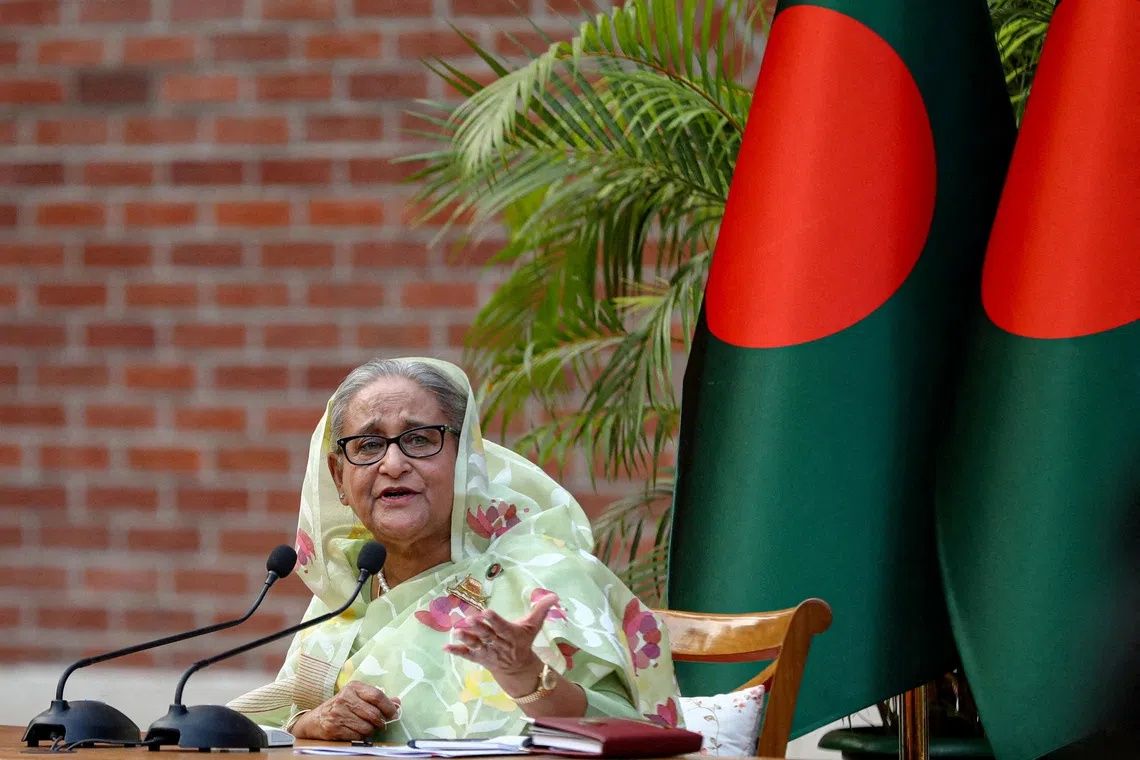
Bangladesh has lodged a formal diplomatic protest with India over plans for exiled former prime minister Sheikh Hasina to deliver a virtual address from New Delhi, signalling growing tensions over the handling of the fugitive leader and threatening to derail recent efforts to rebuild relations between the neighbouring countries. The speech, scheduled for August 5 at an event commemorating the second anniversary of the student-led uprising that ousted Hasina's government, has become an unexpected flashpoint in bilateral diplomacy just as Dhaka and New Delhi have been working to strengthen ties following the change of government in Bangladesh.
Shama Obaed Islam, Bangladesh's State Minister for Foreign Affairs, issued the warning to journalists on Monday evening, insisting that India provide explicit clarity on whether it supports or opposes the appearance by the 78-year-old former premier. Her statements reflect deepening frustration within Bangladesh's new administration over what it views as ambiguous signalling from New Delhi regarding the status and activities of political exiles on Indian soil. The timing of the diplomatic push appears deliberate, arriving before the scheduled event and signalling Dhaka's determination to prevent the speech from proceeding without explicit Indian government consent.
The underlying dispute touches on fundamental questions of sovereignty and international relations in South Asia. Bangladesh contends that permitting a fugitive accused of serious crimes to conduct political activities from Indian territory violates the spirit of bilateral cooperation and previous understandings between the two countries. Islam specifically referenced earlier Indian assurances that New Delhi would not tolerate fugitive individuals engaging in political statements from its soil—a commitment that Bangladesh now suggests may be wavering or subject to interpretation depending on the specific circumstances.
Hashina fled Bangladesh in August 2024 following weeks of violent protests that resulted in the collapse of her government. Since taking refuge in India, she has faced multiple legal challenges in her home country, including charges related to extradition proceedings that Dhaka has pursued vigorously. Bangladesh's new government, led by Tarique Rahman following February's elections, has made securing her return a priority, viewing it as essential to domestic justice and national closure regarding the events that precipitated her downfall.
The case against Hasina has escalated significantly in recent months. In 2025, she received a death sentence for crimes against humanity in connection with a 2024 crackdown on protesters that the United Nations estimates claimed up to 1,400 lives. These charges represent some of the most serious legal jeopardy facing the former leader, fundamentally transforming the extradition request from a political dispute into a matter of grave criminal accountability. Hasina has dismissed the verdict as legally baseless and without legitimacy, adopting a posture of defiance that suggests she remains unwilling to accept Bangladesh's judicial processes.
Speaking to international media, Hasina has nevertheless indicated surprising confidence about her future, claiming intentions to return to Bangladesh as soon as December despite the death sentence and ongoing extradition efforts. This apparent disconnect between her legal circumstances and her public statements underscores the complex political calculus surrounding her exile and raises questions about whether she possesses assurances from any quarter—whether Indian, international, or domestic—that might justify such optimism.
The Foreign Correspondents' Club of South Asia, which is organising the August 5 event, has confirmed that Hasina will participate alongside her son Sajeeb Wazed Joy and other speakers commemorating the uprising against her government. The club has not yet responded to concerns raised by Bangladesh, leaving ambiguity about whether organisers view the event as purely journalistic and civil society-driven, or whether they anticipate any Indian government involvement or tacit approval. This uncertainty has become a central point of Bangladesh's diplomatic concern.
For India, the situation presents considerable diplomatic delicacy. New Delhi maintains complicated historical and strategic relationships with multiple actors in Bangladeshi politics, and accommodating or blocking Hasina's speech carries potential costs either direction. India's preference for maintaining distance from the event—neither explicitly authorising nor prohibiting it—appears to have backfired, prompting Bangladesh to demand unambiguous positioning. The absence of any Indian foreign ministry response to Dhaka's concerns suggests New Delhi may still be calibrating its approach.
The incident occurs at a potentially vulnerable moment in India-Bangladesh relations. Following Hasina's removal and the installation of Tarique Rahman's government, both countries signalled receptiveness to rebuilding diplomatic ties through enhanced engagement and cooperation. Progress on border issues, trade, and regional security matters had begun accumulating. Bangladesh's protest risks interrupting this fragile momentum, particularly if India is perceived as favouring exiled opposition figures over the sitting government in Dhaka.
Bangladesh has indicated willingness to pursue the matter through formal diplomatic channels if necessary, a transparent signal that the country regards the issue seriously enough to warrant escalation beyond informal representations. This threat carries implicit weight, suggesting that failure to resolve the matter satisfactorily could affect broader bilateral cooperation across multiple domains. The statement represents calculated pressure designed to elicit Indian action before the scheduled event rather than afterward.
The broader context reflects how post-conflict political transitions in South Asia frequently become entangled with questions of exile, justice, and international relations. Hasina's situation exemplifies the challenges that emerge when former leaders flee their countries amid mass protests and subsequently attempt to maintain political visibility from abroad. Whether India permits, facilitates, or actively blocks her participation will carry symbolic importance extending far beyond the specific August 5 event, signalling to observers in Bangladesh and across South Asia how New Delhi balances competing relationships and diplomatic considerations.

