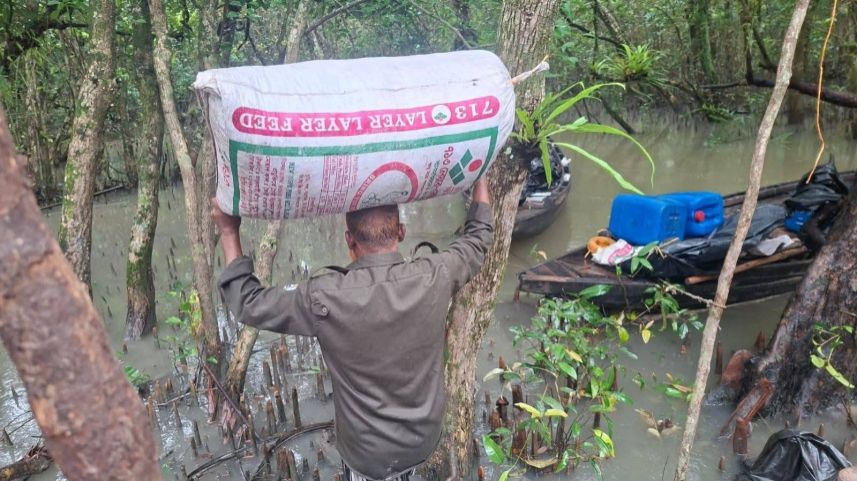
Forest Department authorities in Bangladesh conducted a comprehensive 12-hour operation across the Sundarbans on July 30, resulting in the destruction of three illicit shrimp processing facilities suspected of employing toxic chemicals in their operations. The raid, orchestrated by the Chandpai Range under the Sundarbans East Forest Division, targeted settlements within the Charaputia area, with teams working from early morning until late evening to neutralise the threat posed by what officials characterised as poison-based processing networks.
The Divisional Forest Officer Rezaul Karim Chowdhury oversaw the operation that focused on three strategic locations situated at the confluence points of Kaga Khal, Indurkani Khal and Chhoto Hormal Khal waterways. Upon arrival, enforcement teams discovered that the first two sites had already been vacated, suggesting operators had prior warning of the crackdown. However, the third location yielded substantial evidence of active processing operations, compelling officials to take immediate action to prevent contaminated products from entering the commercial supply chain.
The seizure painted a stark picture of the scale and sophistication of these illegal enterprises. Officials recovered two sacks of finished dried shrimp, approximately five maunds of fresh shrimp staged for drying, two litres of unidentified chemical suspected to be poison, two operational boats, two fishing nets of the tona variety, three sacks of rice intended as worker provisions, and various pieces of processing equipment. The overpowering chemical odour emanating from the fresh shrimp compelled authorities to destroy the entire cache on site rather than risk its distribution to surrounding markets, a precautionary measure that underscores the severity of contamination concerns.
The operation extended beyond the primary targets when forest officials encountered a separate vessel transporting 95 crab traps during the same enforcement window. Those aboard the vessel abandoned the boat and fled into the forest, leaving the equipment to be seized. Officials have initiated formal case proceedings related to both incidents, signalling a commitment to pursue legal accountability for those involved in these activities. Divisional Forest Officer Chowdhury pledged continued enforcement operations to combat what has become an entrenched problem within the protected area.
Environmental advocates view this raid as confirmation of a systemic crisis rather than an isolated incident. Noor Alam, who coordinates Sundarban Rokkhay Amra, an environmental protection group, characterised the poisoning campaign as a silent but devastating assault on one of South Asia's most ecologically critical landscapes. The chemical compounds utilised in these processing operations infiltrate the waterways, decimating aquatic populations and fragmenting the delicate food webs upon which the Sundarbans' renowned biodiversity depends. Without substantially intensified enforcement and regulatory mechanisms, Alam warns, these clandestine operations will persist and expand.
The appearance of poisoned dried shrimp in local markets represents a direct threat to public health in surrounding communities. Mehadi Hasan Khan, a student from Kachua upazila, noted the sudden proliferation of dried shrimp products at retail outlets including Badal Bazar and other neighbourhood markets—a phenomenon that barely existed in the region previously. Consumers face an impossible predicament, as visual inspection provides no mechanism to distinguish between legitimately processed shrimp and products tainted with toxic chemicals. This information asymmetry leaves buyers vulnerable to unknowingly purchasing contaminated seafood that could pose serious health risks.
The Sundarbans, designated as a UNESCO World Heritage Site for its ecological significance and biological richness, confronts a mounting constellation of threats that extend far beyond the immediate concern of chemical contamination. The mangrove forest ecosystem already struggles under pressure from illegal timber extraction that degrades habitat structure and reduces biodiversity. Organised poaching targeting endangered wildlife, including Bengal tigers and saltwater crocodiles, compounds the damage. Unregulated fishing practices deplete fish stocks and disrupt reproductive cycles of commercially and ecologically important species. Climate change poses an overarching threat through rising sea levels, altered precipitation patterns, and increased salinity intrusion that stress the forest's delicate equilibrium. Habitat degradation from accumulated human impacts has steadily reduced the area's resilience.
The emergence of chemical-based shrimp processing adds a novel and insidious dimension to these existing pressures. Unlike timber poaching or wildlife hunting, which remain relatively localised and discrete, the poison-processing network disperses toxic compounds across the waterway system, contaminating water resources that sustain the entire ecosystem. These chemicals accumulate in sediments and concentrate through food chains, affecting organisms across trophic levels. The strategy's invisibility—producing no obvious scarred landscape or slain animals—may partly explain why it has expanded with relative impunity until now.
For Malaysia and other Southeast Asian nations sharing tropical wetland ecosystems with Bangladesh, the Sundarbans situation carries cautionary implications. Similar marginal coastal regions across Southeast Asia may already harbour comparable clandestine activities that have yet to attract enforcement scrutiny. The profitability of rapid chemical-based shrimp processing, compared to conventional methods, creates powerful economic incentives for illegal operators regardless of environmental or health consequences. Regional biodiversity hotspots from Peninsular Malaysia's peat swamps to Thailand's mangrove forests and Indonesia's vast wetlands face comparable vulnerability to such exploitation.

