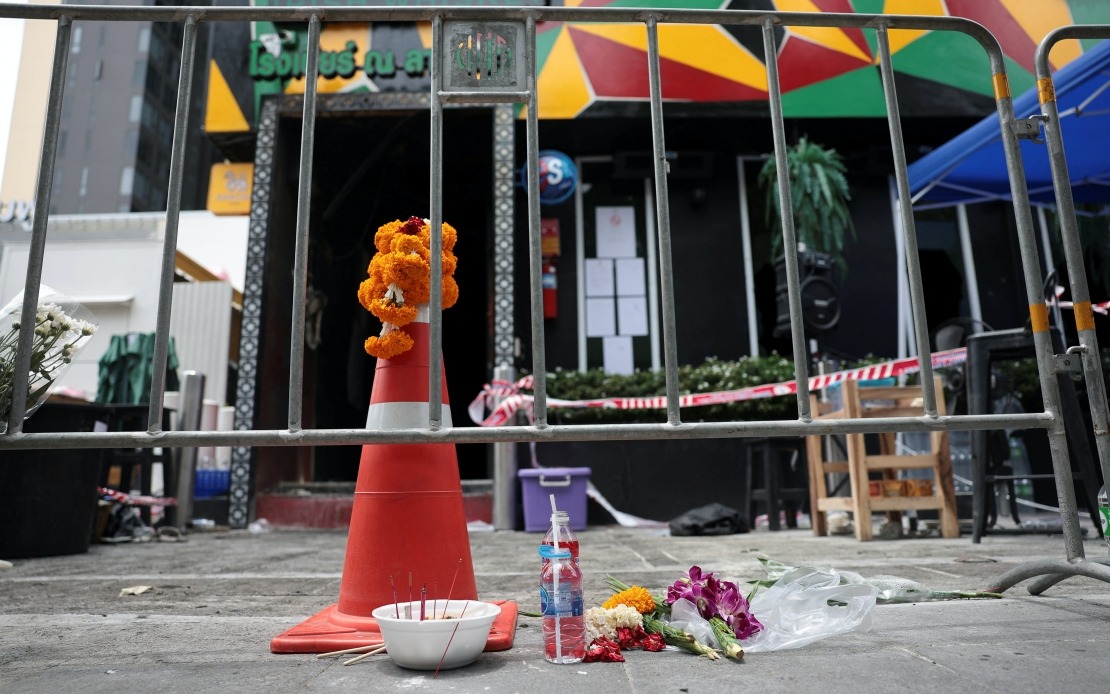
A fatal fire at an entertainment venue in Bangkok's Lat Phrao district claimed 33 lives through a mechanism that has alarmed safety experts across Southeast Asia: the inhalation of lethal gases rather than direct flame injuries. Thai police revealed on Thursday that forensic analysis showed victims died from asphyxiation caused by exposure to carbon monoxide and cyanide, a finding that underscores how rapidly such hazards can become fatal in confined spaces.
Metropolitan Police Bureau Commissioner Police Lieutenant General Sayam Boonsom disclosed that none of the victims perished directly from the flames themselves. Instead, the toxic substances detected in their bodies prevented tissues from absorbing oxygen, causing death within minutes of exposure. This distinction carries significant implications for understanding how such disasters unfold and why conventional fire safety measures may prove insufficient in entertainment venues where such chemical hazards can develop.
The incident occurred shortly after midnight on Monday at the entertainment outlet, leaving over 70 people injured in addition to the fatalities. As of Thursday, emergency services were still providing intensive care to 14 patients while 44 others had recovered sufficiently to be discharged from medical facilities. The scale of the casualties reflects both the sudden nature of the fire's spread and the challenges faced by rescue personnel in extracting people from an environment rapidly becoming toxic.
Investigators have now shifted focus toward identifying the precise origins of the blaze and the circumstances that allowed such dangerous conditions to develop. Police are examining potential electrical malfunctions as a trigger, but are equally concerned with deliberate or negligent safety violations that may have compounded the disaster. The inquiry is concentrating on unauthorised modifications to the building's structure, as well as evidence that emergency exits were blocked or inaccessible when patrons attempted to flee.
The scope of the investigation reflects the complexity inherent in determining liability for such incidents. Police Lieutenant General Sayam indicated that authorities are preparing to pursue multiple charges including causing death and injury through negligence, executing unauthorised structural alterations, and recklessly causing a fire. Additional potential offences relate to violations of regulations governing entertainment establishments and whether the venue operated outside the bounds of its official licence.
Forensic teams have completed their examination of the scene, providing investigators with detailed physical evidence about the fire's progression and the conditions present when it spread. Over 106 witnesses have been questioned so far, suggesting a methodical approach to reconstructing the sequence of events and identifying any warnings or signs that were overlooked. No charges have been filed yet, though police have signalled their intention to pursue several parties once the investigation concludes.
The discovery that cyanide and carbon monoxide were present raises questions about whether these substances were released during the combustion of materials within the venue or resulted from incomplete burning of specific furnishings. Entertainment venues across Thailand and Southeast Asia typically contain numerous synthetic materials in furnishings, decorations, and fittings—all of which can generate cyanide when exposed to intense heat. The presence of both gases suggests a fire that developed in an enclosed environment with limited ventilation, allowing toxins to accumulate to lethal concentrations.
For Malaysian readers and operators of similar establishments in the region, this incident carries urgent safety lessons. The findings demonstrate that smoke inhalation protection systems, blocked exit routes, and inferior building materials create compounding hazards in entertainment venues. A fire that might generate survivable smoke conditions in a properly ventilated space with clear evacuation routes becomes a mass casualty event in a confined area with structural deficiencies.
The inquiry's focus on building modifications and blocked exits suggests that the venue may have undergone alterations that reduced its safety margins without corresponding upgrades to fire protection systems. This pattern—where facility improvements for aesthetic or commercial purposes inadvertently compromise safety—recurs in multiple Asian jurisdictions where enforcement of building codes remains inconsistent. Owners and operators typically prioritise customer capacity and ambiance over compliance with safety regulations, a calculus that becomes catastrophic when fire emerges.
Thailand's entertainment sector, like that throughout Southeast Asia, operates in a regulatory environment where inspections can be sporadic and enforcement variable. The Bangkok incident will likely prompt renewed scrutiny of similar venues across the kingdom, particularly those operating late into the night when official oversight is minimal. Police are currently examining whether the premises operated beyond its licensed scope, suggesting that the establishment may have operated with fewer safety measures than would be required for its actual function.
For neighbouring countries including Malaysia, which has experienced its own nightclub and entertainment venue fires in recent years, the findings underscore the necessity for rigorous, unannounced inspections of enclosed public gathering spaces. The fact that over 70 people were injured despite emergency services' rapid response indicates that escape routes were genuinely compromised—a preventable condition had proper oversight been maintained.
The investigation continues as authorities work to establish a complete timeline of the fire's origin and spread. The determination that toxic gas rather than thermal injury caused the deaths shifts attention toward prevention strategies focused on material selection, ventilation standards, and maintenance protocols rather than purely emergency response capability. For establishments throughout the region, this distinction carries financial and operational implications that may finally prompt serious consideration of preventive measures.

