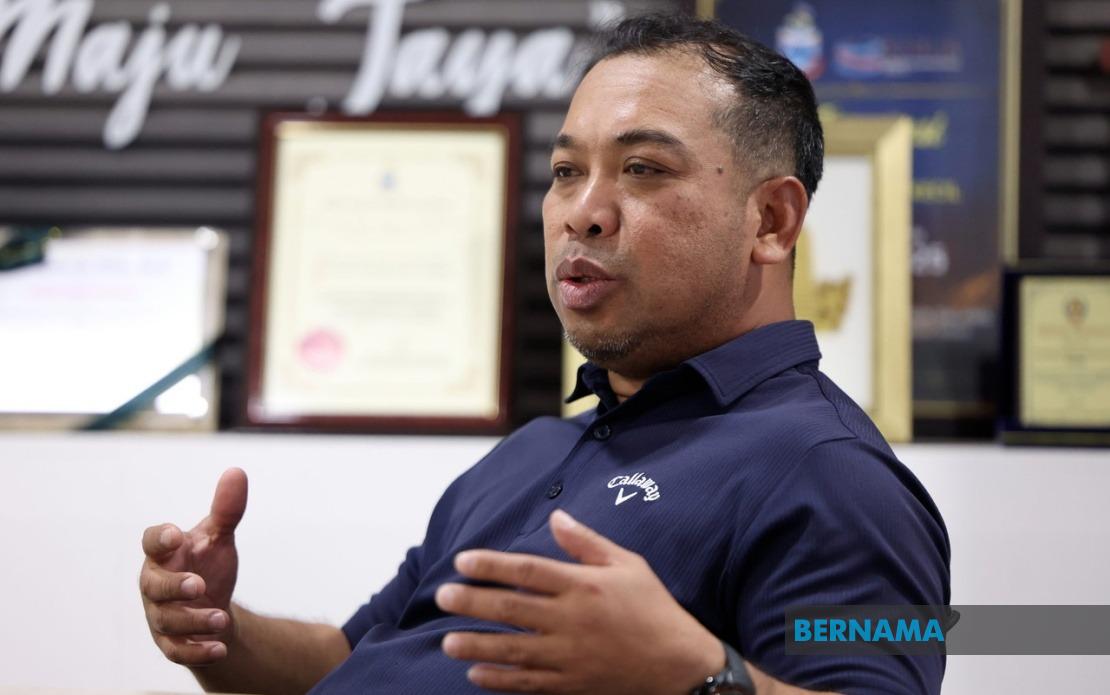
Datuk Mohamad Mohamarin, the Member of Parliament for Banggi, has mounted a sustained appeal to the federal government to prioritise a major road infrastructure initiative for Pulau Banggi, one of Sabah's most remote constituencies. Speaking during the Supplementary Supply Bill 2026 debate at the Sabah State Legislative Assembly, the GRS politician outlined a three-phase development strategy centred on constructing approximately 37 kilometres of paved or concrete roadway linking Kampung Meliu to Kampung Dogoton, with a projected expenditure exceeding RM300 million.
The proposal carries particular significance given that Mohamad had formally submitted the initiative to Prime Minister Datuk Seri Anwar Ibrahim during the latter's visit to Pulau Banggi on May 9. This direct approach to the highest political level underscores the urgency with which the Banggi constituency views its infrastructure challenges. The timing of the parliamentary address suggests a deliberate effort to maintain momentum on the proposal and secure budgetary allocation, a critical step in translating political commitments into tangible development outcomes.
The current road infrastructure situation on Pulau Banggi presents a compelling case for intervention. Despite comprising 81 kilometres of main road networks, only 14 kilometres feature proper paved surfaces, creating what amounts to a two-tier connectivity problem. More troublingly, even this limited paved infrastructure has deteriorated significantly, becoming riddled with potholes and contributing to a troubling history of fatal traffic accidents. This deterioration poses both immediate safety concerns and longer-term development constraints for the island's 15,000 residents and its economy.
Mohamad specifically pressed the Sabah Works Ministry to clarify whether urgent rehabilitation of the existing 14-kilometre paved section has been incorporated into the current fiscal year's budget allocation or implementation timeline. This targeted questioning reveals frustration with the gap between policy pronouncements and concrete action, a sentiment increasingly voiced by representatives of peripheral constituencies across Malaysia. The condition of existing infrastructure demands immediate attention even as new roads remain under consideration.
The Banggi constituency extends beyond Pulau Banggi itself, encompassing several smaller islands including Pulau Balambangan, Tanjung Manawali, Pulau Sibogo, and Pulau Tigabu. These satellite islands currently lack adequate road infrastructure entirely, representing a significant portion of the constituency's geographical footprint yet receiving minimal development attention. This broader territorial context demonstrates that the road project, while substantial at RM300 million, represents only one component of comprehensive infrastructure modernisation required across the Banggi parliamentary seat.
The MP's intervention reflects a broader pattern of development announcements made during high-profile visits by Chief Minister Datuk Seri Hajiji Noor and Prime Minister Anwar Ibrahim. While such visits generate media coverage and public expectations, Mohamad's parliamentary statement suggests that announcement cycles have not translated into proportionate budget commitments or implementation velocity. This disconnect between political visits and budgetary reality has become a frustration point for many Malaysian constituencies.
Beyond road connectivity, Mohamad has advocated for renewable energy development as a complementary strategy for Pulau Banggi's advancement. His proposal centres on establishing a wind energy facility with capacity ranging between 15 and 50 megawatts, positioning clean energy generation as both an electricity supply solution and an economic stimulus mechanism. The emphasis on renewable energy reflects contemporary development thinking and Sabah's geographical advantages for wind power generation, particularly on exposed island locations.
Electricity supply constraints have historically hampered economic activity on remote Malaysian islands, limiting commercial expansion and quality-of-life improvements. A wind energy project of the proposed scale could fundamentally alter the supply dynamics, enabling agricultural processing, small-scale manufacturing, and tourism infrastructure development currently impractical under existing power constraints. The integration of road infrastructure with energy security creates a more holistic development framework than road construction alone.
The economic implications for Pulau Banggi extend across multiple sectors. Improved road connectivity directly facilitates agricultural product transport to mainland markets, enables reliable medical and educational services, and reduces logistics costs for essential supplies. The island's fishing industry could benefit from reduced transportation bottlenecks, while tourism development becomes viable with adequate road access and reliable electricity. These cascading economic benefits justify the substantial capital investment from a returns-on-investment perspective.
Pulau Banggi represents a microcosm of Malaysia's broader regional development challenges, where geographical remoteness compounds infrastructure deficits and limits economic opportunity. The constituency's persistent infrastructure gaps despite decades of political representation suggest systemic issues in budget allocation and project implementation mechanisms. The scale of underinvestment is particularly notable given that Pulau Banggi's 81-kilometre main road network rivals that of many suburban areas, yet remains overwhelmingly unpaved.
The three-phase implementation approach outlined by Mohamad indicates recognition that RM300 million, while substantial, requires strategic sequencing to maximise impact and manage fiscal implications. Phased delivery allows for early-stage benefits while subsequent phases maintain momentum and cumulative economic improvements. This structured approach differs from all-or-nothing proposals, potentially increasing political feasibility and construction efficiency.
Moving forward, the effectiveness of Mohamad's parliamentary intervention depends on whether the Sabah Works Ministry and federal government budget authorities translate the proposal into concrete appropriations. The May 9 submission to Prime Minister Anwar represents the critical foundation for such translation, yet parliamentary reinforcement remains necessary to maintain priority status amid competing claims across Malaysia's diverse constituencies. The Banggi case ultimately reflects the ongoing negotiation between peripheral constituencies and the central government over equitable resource distribution.

