Bahrain is maintaining financial discipline despite mounting regional pressures, having left untapped a substantial currency support facility even as its economy absorbs the shocks of Middle Eastern instability. Development Minister Noor bint Ali Alkhulaif disclosed that the $5.3 billion swap arrangement agreed with the United Arab Emirates in April has not been activated, signalling the island nation's confidence in managing near-term liquidity challenges without resorting to emergency measures.
The Persian Gulf kingdom has faced exceptional headwinds this year as military tensions between the United States and Iran have rippled across the region's economy. S&P Global, the credit rating agency, projects that Bahrain's gross domestic product will contract by 3 per cent in 2024, whilst simultaneously grappling with a fiscal deficit reaching nearly 8.5 per cent of GDP. These twin pressures would normally trigger emergency borrowing, yet Alkhulaif's comments suggest officials believe the worst of the immediate impact may have passed. Foreign exchange reserves have declined to their lowest point since the COVID-19 pandemic, hovering around $3 billion, but this level has apparently not breached the threshold requiring the central bank to activate the UAE liquidity backstop.
Alkhulaif, who serves both as Sustainable Development Minister and Chief Executive of the Bahrain Economic Development Board, conveyed a mixture of pragmatism and optimism during her remarks to media this week. She acknowledged that the geopolitical disruptions represented an unwelcome departure from the kingdom's original economic plans for the year. Nevertheless, she stressed that recovery mechanisms are already functioning across critical sectors. This narrative of resilience carries particular weight for Malaysian observers, as it reflects how smaller Gulf economies navigate existential external shocks through institutional preparation and regional cooperation—a lesson with relevance to Southeast Asia's own vulnerability to broader power politics.
Evidence of stabilisation is emerging in unexpected ways. Multinational manufacturing and logistics enterprises have begun rerouting operations away from the strategically vulnerable Strait of Hormuz, with Bahrain positioned to capture a portion of this redirected activity. Tourist inflows from neighbouring Gulf states, which comprised roughly 90 per cent of the kingdom's 15 million visitors last year, have largely rebounded to pre-conflict levels. These dynamics suggest that whilst the shock was severe, structural damage to Bahrain's economy and strategic position may prove more limited than initial crisis assessments suggested.
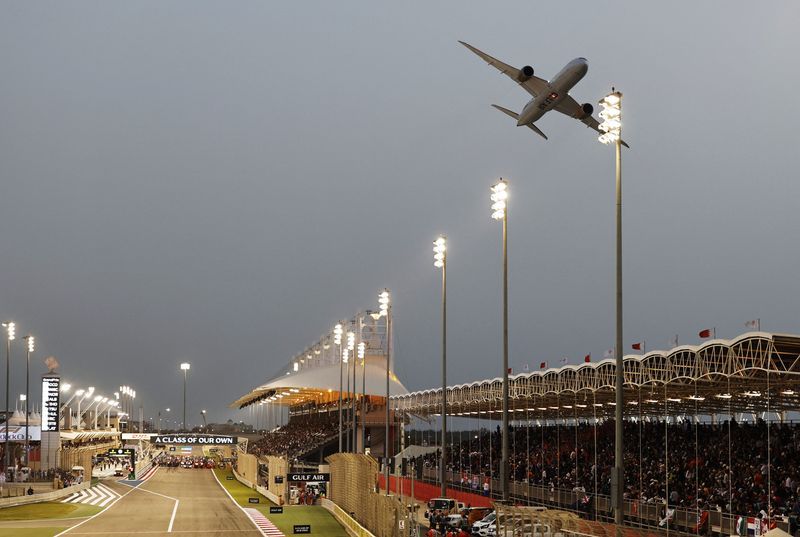
Beyond financial management, Bahrain is pursuing a high-profile symbolic victory through negotiations to restore its Formula One Grand Prix to the international racing calendar. The race was cancelled in March alongside Saudi Arabia's event following the outbreak of hostilities, leaving vacant slots in a season already compressed by geopolitical disruption. Although final confirmation remains pending, Formula One sources indicate that the optimal timing for Bahrain would be the weekend of 3-4 October, nestled between the Azerbaijan Grand Prix in Baku and Singapore's prestigious event on 11 October.
This window would require delicate coordination, as it hinges on de-escalation of US-Iran hostilities to a level permitting international sporting events to proceed without security complications. The scheduling precision demanded by Formula One's global logistics means that decisions must crystallise within weeks rather than months, forcing all stakeholders to bet on a reduction in regional tensions. For Bahrain, the stakes extend beyond prestige. The Grand Prix typically draws 105,000 spectators across the weekend, with higher-spending international attendees comprising 10 to 15 per cent of ticket holders, translating into meaningful foreign exchange earnings and employment for service industries still recovering from pandemic and conflict disruption.
Alkhulaif's oblique reference to ongoing discussions—saying there was "no confirmation still on that, (but) potentially"—reflects the reality that decision-making authority rests partly with Formula One management and partly with the Bahraini government's assessment of security conditions. The sporting organisation will require sufficient preparation time to brief teams on logistical changes, reconfigure broadcasting arrangements, and adjust support schedules, making a binary decision urgent. From Bahrain's perspective, even conditional progress signals that international business and sporting leaders do not view the region as permanently destabilised.
The longer-term prospect is even more ambitious. Bahrain has begun positioning itself to reclaim the opening race of the 2026-27 Formula One season, capitalising on the fact that Ramadan will occur earlier in 2026, allowing the calendar to accommodate an early-year Bahrain Grand Prix followed by traditional pre-season testing rounds. This aspiration reveals confidence among officials that the current cycle of tension is episodic rather than structural. The assumption embedded in such planning—that the regional security environment will stabilise sufficiently within 18 months to permit the full return of international motorsport to the Gulf—carries geopolitical implications worth monitoring.
For Malaysia and other regional economies, Bahrain's approach offers instructive elements. First, currency swaps between allied nations function as confidence signals and insurance rather than emergency expenditure, with their non-utilisation paradoxically demonstrating their effectiveness. Second, smaller economies can preserve strategic optionality even amid external shocks by maintaining relationships with larger neighbours capable of providing liquidity support. Third, sporting and cultural events serve purposes beyond entertainment, functioning as markers of international normalcy and national resilience that influence investor psychology and tourism flows.
The unresolved question is whether Bahrain's apparent stabilisation reflects genuine underlying economic recovery or reflects official optimism outpacing ground-level reality. The decision to preserve the currency swap suggests confidence, yet the depletion of foreign reserves to decade-lows hints at underlying fragility. If regional tensions escalate further—as the recent renewed Iranian attacks suggest remains plausible—the untapped swap may prove to have been a calculated risk rather than a sign of assured stability. The Formula One negotiations will therefore serve as a practical test of whether Bahrain's official narrative of recovery aligns with the views of major international organisations capable of operating in the region. Until that confirmation arrives, both the currency discipline and the sporting ambitions remain contingent on a geopolitical gamble.

