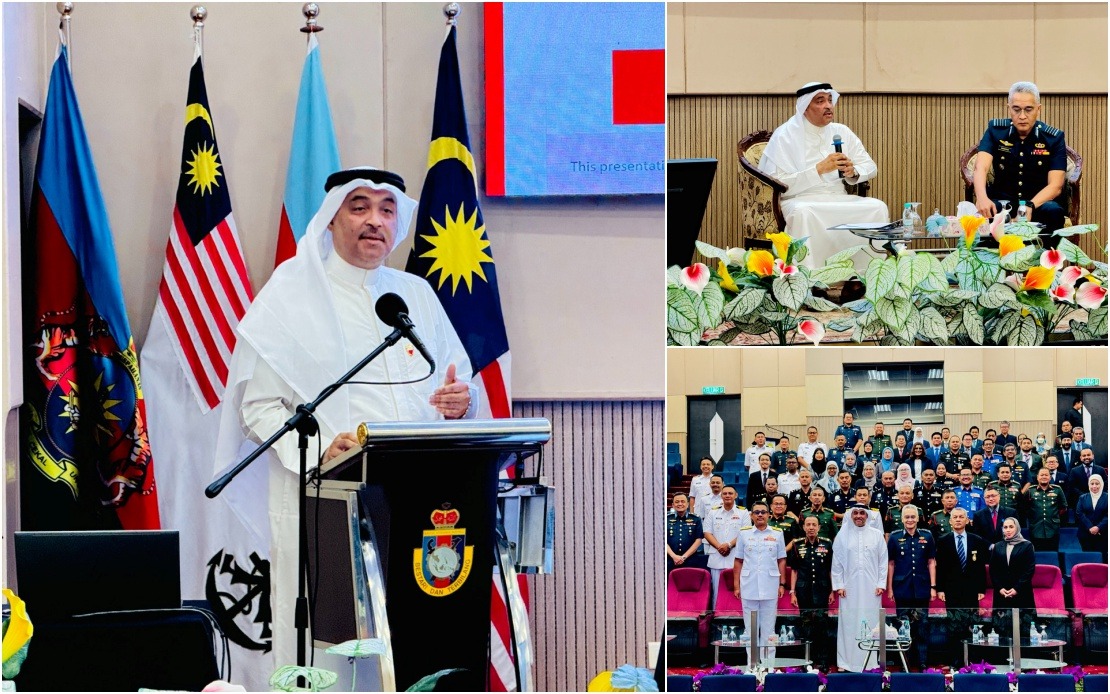
Bahrain and Malaysia are moving to intensify their strategic partnership, driven by shared interests and leadership commitment to broaden collaboration across multiple domains. Speaking during a high-level security forum in Putrajaya, Dr Waleed Khalifa Al Manea, Bahrain's Ambassador to Malaysia, articulated how both countries are leveraging their growing relationship to address mutual challenges and unlock opportunities for their populations. The partnership reflects broader Middle Eastern engagement strategies within Southeast Asia, where nations like Malaysia are becoming increasingly important diplomatic and strategic partners for Gulf states navigating a complex geopolitical landscape.
The bilateral relationship gains much of its momentum from sustained high-level engagement between the countries' leadership. King Hamad bin Isa Al Khalifa of Bahrain and Sultan Ibrahim of Malaysia have established a personal rapport that translates into substantive policy coordination. Beyond the monarchies, Prime Minister Datuk Seri Anwar Ibrahim and Bahrain's Crown Prince and Prime Minister His Royal Highness Prince Salman bin Hamad Al Khalifa have championed concrete initiatives to expand cooperation. This multi-layered engagement structure ensures that diplomatic warmth translates into actionable commitments rather than mere rhetoric, establishing a foundation upon which sectoral partnerships can flourish.
Among the tangible expressions of this deepening relationship is Malaysia's hosting of the 2026 Formula 1 Gulf Air Bahrain Grand Prix. While motorsport may seem peripheral to bilateral diplomacy, such major events serve multiple purposes in modern state relations. They enhance cultural exchange, boost tourism and economic activity for both nations, and provide recurring platforms for high-level encounters. For Bahrain, a small island kingdom with limited geographic profile in Southeast Asia, the Grand Prix represents substantial soft power projection. For Malaysia, hosting a Gulf-sponsored sporting spectacular underscores its role as a premier regional destination and signals openness to partnerships beyond traditional alignments.
Al Manea's presence at the National Resilience College to deliver a lecture on Middle Eastern security dynamics underscores the strategic importance Malaysia places on understanding regional developments. The forum, attended by senior Malaysian military officers, police leadership, maritime officials, parliamentarians, and defence academics, illustrates how seriously the Malaysian establishment takes Gulf affairs. This audience composition reveals that Malaysia views developments in the Middle East and the Arabian Gulf not as distant concerns but as matters with direct implications for Malaysian security interests, supply chains, and regional stability.
The ambassador provided detailed analysis of Bahrain's comprehensive security doctrine, emphasizing the integration of sovereign defence, civilian protection, factual documentation, and diplomatic coordination. This approach reflects lessons learned from tensions that have roiled the Gulf region in recent years. Bahrain has faced particular challenges given its geographic proximity to Iran and its position as a critical hub for international commerce and military presence. The kingdom's articulation of a balanced security framework—combining hard power preparedness with diplomatic engagement—offers instructive lessons for Southeast Asian nations grappling with similar balancing acts between great powers.
Tensions between Bahrain and Iran, particularly Iran's attacks against Gulf Cooperation Council member states, have escalated stakes for regional security. These incidents have targeted not merely military assets but civilian infrastructure and critical maritime navigation routes that global commerce depends upon. For Malaysia, these dynamics carry immediate relevance. As a major trading nation with substantial maritime interests, any disruption to freedom of navigation in the Gulf directly threatens Malaysian economic prosperity. The targeting of shipping lanes and commercial infrastructure represents a threat to global supply chains in which Malaysian ports, industries, and traders are deeply integrated.
The reverberations of Middle Eastern tensions extend well beyond the region's borders, impacting ASEAN as a collective entity. Malaysia, as an ASEAN member with substantial regional leadership roles, bears responsibility for articulating how Gulf developments affect Southeast Asia's interests. Piracy, terrorism, disrupted shipping, and humanitarian crises stemming from Gulf tensions all create downstream pressures on ASEAN nations. Malaysia's engagement with Bahrain on these matters reflects a proactive approach to shaping how Gulf disputes unfold and whether they metastasize into broader conflicts affecting Asian commerce and security.
Bahrain's April presidency of the United Nations Security Council provided a platform to advance international mechanisms protecting maritime navigation and critical infrastructure in the Gulf. During this tenure, the kingdom actively promoted coordinated international responses to threats against shipping and vital facilities. Malaysia's co-sponsorship of UN Security Council Resolution 2817 demonstrates Malaysian alignment with Bahrain's vision for international maritime governance and protection of civilian assets. This resolution, which reaffirmed state sovereignty and called for cessation of attacks, reflects consensus building around rules-based approaches to regional conflicts—a framework Malaysia has long championed.
Malaysia's backing of the resolution carries significance beyond symbolic support. By lending its voice to international efforts safeguarding maritime freedom, Malaysia strengthens its credentials as a responsible maritime power while simultaneously advancing its material interests in unimpeded Gulf shipping. The resolution's emphasis on civilian protection aligns with Malaysia's Islamic values and humanitarian orientation, demonstrating how strategic interests and principled positions can align rather than conflict. Malaysia's diplomatic positioning thus serves multiple audiences simultaneously: international partners, domestic constituents, and fellow ASEAN members.
The lecture at the National Resilience College exemplifies how Malaysia is institutionalizing knowledge about Middle Eastern security dynamics within its defence establishment. By bringing senior Bahraini officials to address the country's senior military and security leadership, Malaysia ensures that policymakers and commanders possess sophisticated understanding of Gulf realities. This knowledge transfer flows bidirectionally; Malaysian perspectives on regional governance, maritime security, and multilateral cooperation also inform Bahraini strategic thinking. Such exchanges represent the intellectual infrastructure underpinning the bilateral partnership's strategic depth.
Looking forward, the Bahrain-Malaysia partnership appears positioned for further expansion. Economic cooperation, defence technology sharing, educational exchanges, and humanitarian initiatives all constitute potential growth areas. For Malaysia, deepening ties with Gulf states like Bahrain diversifies its international partnerships and reduces reliance on any single strategic relationship. For Bahrain, Malaysia represents a gateway to Southeast Asia's growing economic and diplomatic significance. As both regions face evolving security challenges—from maritime threats to terrorism to humanitarian crises—collaborative frameworks become increasingly valuable. The stated commitment to expand cooperation across multiple fields suggests both nations recognize that modern strategic partnerships succeed through breadth and depth rather than narrow sectoral focus, positioning bilateral relations to weather shifting international circumstances.

