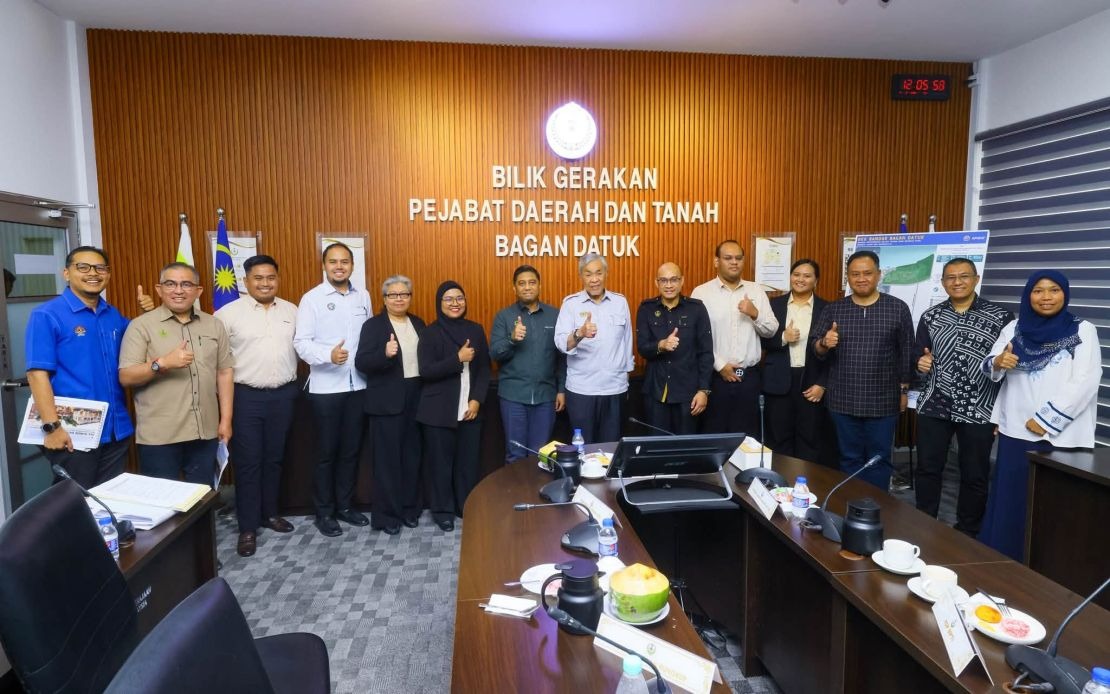
Deputy Prime Minister Datuk Seri Dr Ahmad Zahid Hamidi has articulated an ambitious vision for Bagan Datuk, his parliamentary constituency in Perak, envisioning its transformation into a livable and economically competitive administrative centre. Speaking in Ipoh on Wednesday, Zahid emphasised that the district possesses considerable untapped potential that could be harnessed through systematic planning and coordinated development efforts. His remarks came following a comprehensive briefing on the Bagan Datuk special area plan, a strategic document that will guide future growth in the region.
The Deputy Prime Minister's vision extends beyond conventional urban development, encompassing a holistic approach to creating what he termed an "administrative town in a park." This conceptual framework suggests an integrated model that balances infrastructure expansion with environmental preservation, combining governmental and commercial facilities within a carefully landscaped setting. Such an approach reflects contemporary urban planning principles increasingly adopted across Southeast Asia, where cities seek to accommodate growth while maintaining quality of life and natural amenities.
Zahid's emphasis on infrastructure and facilities development carries particular significance for Bagan Datuk's future competitiveness. The region currently faces the dual challenge of attracting investment and retaining talent, both prerequisites for sustainable economic growth. Enhanced infrastructure—including transportation networks, digital connectivity, and utilities—would position the district more attractively for both business establishment and residential relocation, potentially reversing outmigration trends common in secondary Malaysian towns.
The special area plan under discussion represents a departure from ad-hoc development patterns that have historically characterised many Malaysian districts. By implementing a coordinated master plan, Bagan Datuk can avoid the infrastructure deficiencies and spatial inefficiencies that plague many towns that expanded without strategic oversight. The involvement of the Teluk Intan Municipal Council, district administration, and professional consultants suggests a multi-stakeholder approach designed to incorporate diverse perspectives and expertise.
For Malaysian policymakers and regional observers, Bagan Datuk's proposed transformation offers a template for revitalising secondary towns facing economic stagnation. Many districts across Peninsular Malaysia share similar characteristics—aging infrastructure, limited economic diversification, and population decline—making successful replication of Bagan Datuk's development model potentially valuable for broader national objectives. The emphasis on creating competitive advantages through deliberate planning rather than passive growth represents a strategic shift in how Malaysia approaches regional development.
Zahid's personal connection to Bagan Datuk, both as its elected representative and as a native of the area, underscores his commitment to translating rhetoric into tangible outcomes. Political leaders' credibility on development matters typically depends on sustained follow-through rather than visionary statements alone. The public articulation of this plan on social media platforms suggests an intention to maintain constituent awareness and accountability regarding implementation timelines.
The emphasis on broader economic opportunities indicates recognition that administrative functions alone cannot sustain regional prosperity. Bagan Datuk requires diversified employment sectors, including commerce, light manufacturing, services, and technology-based industries. The administrative town concept potentially serves as an anchor that attracts complementary private sector development, creating synergies that extend beyond government operations.
Environmental considerations embedded within the "town in a park" framework acknowledge growing Malaysian awareness of sustainability imperatives. Rather than pursuing development at the expense of green spaces, the proposed model suggests integration of natural features into urban design. This approach aligns with United Nations Sustainable Development Goals and Malaysian commitments to environmental stewardship, factors increasingly important for attracting conscious investment and skilled workers.
Stakeholder coordination represents perhaps the most critical determinant of success for Bagan Datuk's transformation. The special area plan's reception by local authorities, business communities, and residents will influence implementation effectiveness. Zahid's engagement with municipal councils and land offices suggests institutional readiness, though community buy-in remains essential for resolving inevitable conflicts between development aspirations and local preservation concerns.
The timeline for translating the special area plan into construction and operational reality remains unspecified in available statements. Malaysian development projects frequently experience extended implementation periods due to funding allocation cycles, bureaucratic procedures, and unforeseen complications. Realistic assessment of Bagan Datuk's trajectory requires monitoring progress against milestones, though the announcement itself signals serious commitment at senior governmental levels.
Regional implications extend beyond Bagan Datuk's borders, as successful secondary town revitalisation in Malaysia can inform approaches across Southeast Asia. Numerous ASEAN member states confront identical challenges of managing urbanisation whilst revitalising economically struggling secondary centres. Collaborative knowledge-sharing regarding Bagan Datuk's development strategy could benefit regional peers, potentially strengthening ASEAN economic integration through more balanced spatial development.
The articulated vision for Bagan Datuk reflects broader Malaysian aspirations to modernise infrastructure and enhance living standards beyond Klang Valley and other major metropolitan centres. For residents and businesses in secondary towns nationwide, successful implementation of such transformational plans demonstrates governmental commitment to equitable development. Conversely, execution failures risk deepening regional disparities and accelerating rural-to-urban migration patterns that burden major cities with infrastructure pressures.

