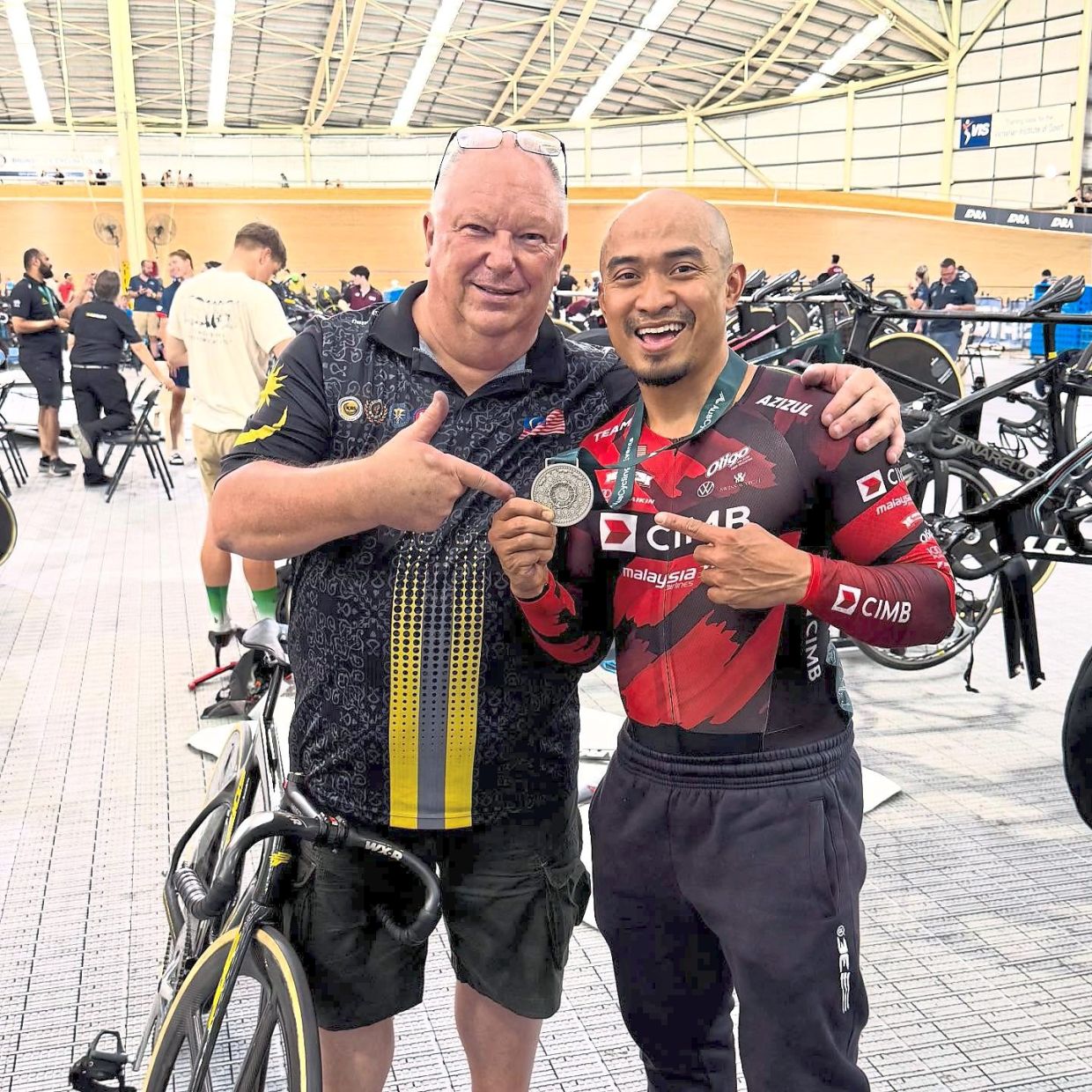
National track cyclist Azizulhasni Awang has acknowledged the personal and professional risks attached to his public defence of technical director John Beasley, signalling a willingness to absorb potential criticism in support of a figure he believes has transformed Malaysian cycling over two decades. The two-time Olympic medallist's candid admission reveals the complex dynamics within national sports, where loyalty to individuals can carry tangible consequences when performance metrics fall short of expectations.
Azizul's backing of Beasley comes amid growing scrutiny of the Australian coach's methods and influence within the national cycling programme. By stepping into a public role as Beasley's advocate, the Tokyo 2020 Olympics silver medallist has essentially painted a target on himself, particularly in an environment where results speak louder than credentials. He appears acutely aware that should Malaysia's cyclists fail to meet ambitious targets at the Commonwealth Games and Asian Games, the spotlight will inevitably shift from Beasley to those who championed him.
Yet Azizul has shown little hesitation in articulating his position, suggesting a deeper conviction about Beasley's contributions to Malaysian cycling's development. The cyclist emphasised that the technical director's two decades of involvement have yielded tangible success, producing a generation of world-class competitors. This perspective matters because it contextualises Beasley's role not merely as a contemporary figure but as an architect of Malaysia's cycling infrastructure and talent pipeline.
Rather than shying away from potential fallout, Azizul has framed his willingness to defend Beasley in spiritual and moral terms. He expressed confidence that his decisions are guided by divine will, suggesting that outcomes ultimately lie beyond human manipulation or interference. This framing allows him to maintain conviction without needing to anticipate or pre-emptively defend against every possible criticism that may emerge from a disappointing performance.
The cyclist's stance reveals interesting tensions within Malaysian sports governance and the broader culture of accountability. Public figures defending their colleagues face a delicate balancing act—acknowledging genuine contributions while remaining sensitive to legitimate concerns about performance and methodology. Azizul's approach suggests he has chosen the path of unwavering support, accepting that this carries reputational risk.
For Malaysian readers, Azizul's position underscores how elite athletes often operate within complex institutional environments where personal relationships, professional loyalty, and results expectations can collide. The fact that a two-time Olympic medallist feels compelled to publicly defend a technical director signals that questions about Beasley's direction have acquired sufficient momentum to require management at the athlete level.
The Malaysia National Cycling Federation has already taken formal action against individuals who publicly criticised Beasley, issuing show-cause letters to two representatives from state affiliates for circumventing official channels and damaging the federation's reputation. This disciplinary measure, announced by MNCF president Datuk Amarjit Singh Gill, suggests that institutional attempts to control the narrative have already begun. Azizul's public support may be interpreted partly as a response to these internal tensions.
Looking ahead to the Commonwealth Games and Asian Games, the pressure on Malaysian cyclists will intensify. These are flagship competitions where medal expectations run high, and performance shortfalls often trigger recrimination across multiple levels of the sports system. Should results disappoint, Azizul has already acknowledged that he and Beasley will likely face intense scrutiny, with media coverage and public opinion potentially shifting against both figures.
The strategic calculation underlying Azizul's defence appears to rest on the belief that Beasley's methodologies will ultimately deliver medals and vindicate the faith placed in him. This is a high-stakes gamble, particularly for an athlete like Azizul whose credibility and legacy remain valuable assets. If Malaysia's track cyclists perform strongly at the upcoming competitions, his defence of Beasley will be retrospectively validated, and the support may even enhance his standing as someone who stood by a proven mentor during moments of doubt.
Conversely, if results disappoint, Azizul faces the prospect of being tarred alongside Beasley, with critics potentially arguing that both should have anticipated problems and corrected course earlier. The two-time medallist's invocation of faith and divine will may provide personal comfort, but it offers limited protection against the harsh realities of sports performance metrics and public expectation.
For the broader Malaysian cycling community, Azizul's stance signals that internal dissent exists regarding Beasley's direction, but that influential voices within the athlete cohort remain convinced of his value. Whether this reflects genuine confidence in Beasley's methods or a calculated effort to maintain team unity remains an open question. Nevertheless, Azizul has put his credibility on the line in a manner that demands results to justify the considerable faith he has publicly invested.
The coming months will determine whether Azizul's defence of Beasley represents principled loyalty to a dedicated mentor or a misjudgment about institutional dynamics within Malaysian cycling. Either way, his willingness to accept personal risk in support of his position demonstrates the high stakes that surround technical direction and performance expectations in elite sports, particularly in Southeast Asia where cycling has emerged as a significant medal source for the region.

