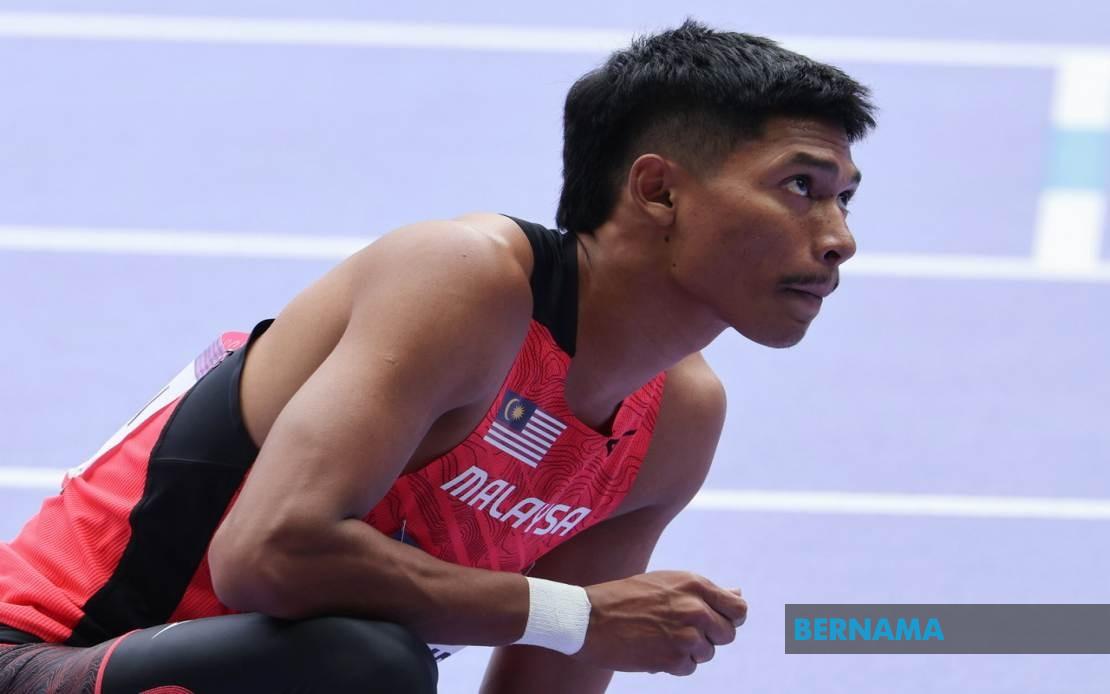
Muhammad Azeem Mohd Fahmi, Malaysia's national 100-metre record holder, has chosen to settle back in Malaysia rather than extend his stay abroad, marking a significant moment for the country's sprinting programme as the 22-year-old transitions from his four-year stint at Auburn University in the United States. His decision to remain domestically comes after completing his studies and reflects a deliberate shift in priorities that places family reunification at the forefront of his immediate future.
The athlete, who holds the national 100-metre record with a time of 10.09 seconds, expressed during a recent media engagement that his foremost motivation centres on reconnecting with those closest to him. Having spent the better part of a decade away from Malaysia for training and education, Azeem recognises the accumulated toll of separation and views his return as an opportunity to rebuild those personal foundations while continuing to develop as a competitive sprinter.
Azeem's commitment to maintaining his athletic trajectory does not diminish his desire for family time. Rather, he frames both objectives as complementary rather than competing interests, understanding that emotional stability and support networks are crucial components of athletic performance. His statement that family, coaches, and friends have been instrumental in his development underscores a holistic view of success that extends beyond times and records to encompass the human relationships that sustain professional achievement.
The coaching arrangement Azeem has secured represents an innovative model that leverages international expertise while maintaining local infrastructure. Ken Harnden, his American coach from his Auburn days, will continue designing his training programmes remotely, ensuring continuity in the methodology that shaped his development. This international dimension remains crucial, as American collegiate athletics has become increasingly influential in elevating performance standards among Southeast Asian sprinters. However, the day-to-day operational supervision will fall to local coach Muhammad Amir Izwan Tan Abdullah, creating a two-tier system that balances external expertise with contextual familiarity.
Malaysia's athletics programme stands to benefit substantially from Azeem's decision to base himself domestically. His presence and training in-country provides visibility to the sport at a time when distance running has dominated national conversations around athletics participation. The sprinting disciplines, particularly in the shorter distances where explosive power development is paramount, require consistent investment and demonstration of viability. Azeem's commitment to maintain elite-level standards while training within Malaysia offers younger sprinters a local reference point and proves that world-class performance is achievable without permanent relocation to traditional powerhouse nations.
The decision also carries implications for Malaysia's broader athletic infrastructure. As more athletes return from overseas stints, questions emerge about whether domestic coaching and training facilities can adequately support continued progression. Azeem's hybrid arrangement suggests confidence that this is achievable, though it also implies that complete autonomy from international coaching input remains impractical for athletes operating at his level. This reality shapes policy discussions around investment in coaching development and facility modernisation within Malaysian athletics.
Azeem's interest in pursuing postgraduate education adds another dimension to his post-university trajectory. His stated intention to pursue a master's degree, while temporarily deprioritising it in favour of athletic focus, reflects a sophisticated understanding of career longevity in individual sports. The window for competitive sprint performance operates within narrow age parameters, and his decision to maximise this period while still young demonstrates prudent career management. The master's programme remains an option for when competitive intensity naturally decreases or following retirement, offering a structured pathway to transitioning from athletics into other professional domains.
The timing of Azeem's return coincides with Malaysia's ongoing efforts to rebuild its athletics competitiveness following several years of transition. His 10.09-second hundred-metre time positions him as one of the region's fastest sprinters and provides a benchmark against which emerging talent can measure progress. Whether his decision to remain domestically translates into mentorship of younger athletes or serves as motivation for the broader programme remains an open question, but his visibility within the country certainly enhances the profile of sprinting among potential recruits.
Azeem's statement reflects broader patterns among Southeast Asian athletes who have historically felt compelled to remain overseas to maintain competitive edge. His return challenges that assumption, at least for the Malaysian context, suggesting that with appropriate coaching support and training discipline, elite performance need not require permanent expatriation. This cultural shift, if it gains traction among other athletes and federations, could reshape how Malaysian sport develops its talent pipeline and retains internationally competitive performers within national borders.
The sprinter's four-year immersion in American collegiate athletics has exposed him to training methodologies, nutritional science, and competitive standards that represent the contemporary frontier of the sport. His repatriation of this knowledge through continued collaboration with Harnden while training in Malaysia creates a technology transfer mechanism that benefits not only Azeem but potentially the wider Malaysian athletics ecosystem. How effectively this knowledge disseminates beyond his immediate circle will partly determine whether his return catalyses broader improvement in the sport.

